When you search “mera peak climbing” or “mera peak nepal,” you’ll find countless guides calling it the “perfect beginner mountaineering experience. Colourful blog posts and expedition company websites paint a picture of a straightforward climb, something between a serious trek and a real mountain.
Here’s what they don’t tell you: mera peak is nothing like that simple narrative.
Yes, it’s one of Nepal’s most popular mountaineering peaks, and yes, many people summit successfully each year. But there’s a significant gap between what the brochures promise and what you actually experience at 6,476 meters. The isolation, the cold, the mental battle, and the technical glacier work catch thousands of climbers off guard.
This isn’t a scare tactic. It’s reality. And understanding it before you commit could be the difference between an unforgettable triumph and a regrettable experience, or worse, an unsafe decision.
The Biggest Misconception About Mera Peak
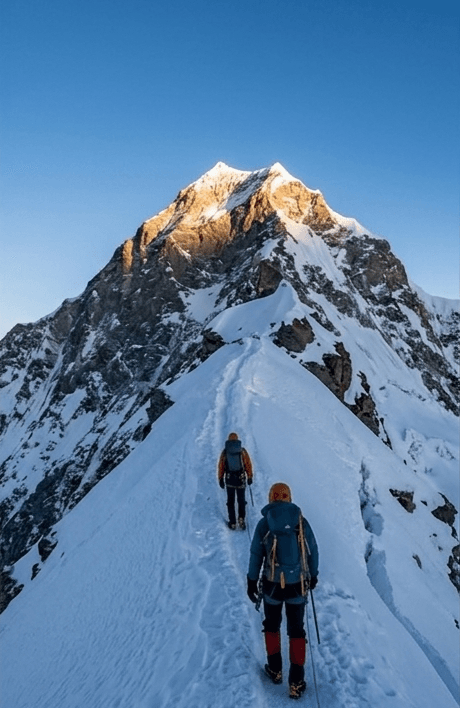
If there’s one lie perpetuated about mera peak difficulty, it’s this: It’s just a trekking peak. Altitude is the only challenge.
Wrong.
The confusion stems from conflating two entirely different types of climbing difficulty:
Technical Difficulty vs. Altitude Challenge
Most climbers understand altitude is measurable, it’s documented, and it’s unavoidable. But technical difficulty is where people fundamentally misunderstand mera peak.
A “trekking peak” typically means:
- Established, well-worn routes
- Minimal rock scrambling
- No major glacier crossings
- Few rope-work requirements
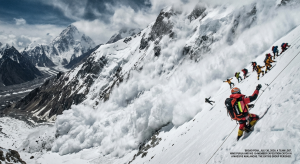
Mera Peak is technically more demanding than this suggests. You’re not just walking uphill. You’re navigating glacier terrain, using crampons, managing rope systems, and making decisions on exposed slopes. A weak ice axe technique or poor footwork becomes genuinely dangerous at altitude when your oxygen is limited and your judgment is compromised.
Why People Underestimate It
The marketing works. Operators emphasize that no technical climbing experience required which is technically true, but wildly misleading. You can climb Mera Peak without rock climbing experience. You cannot safely climb it without respect for its hazards.
Most climbers arrive with the mindset of an advanced trekker. They’re in for a shock.
What the Experience Actually Feels Like
Let’s walk through the reality.
The Transition: From Lukla to Remote Wilderness
You land in Lukla, one of the world’s most dramatic airports. The runway is a slanted strip carved into a mountainside. From there, it’s a scenic trek to Chutok. Beautiful, manageable, feels doable.
Then you enter the Hinku Valley.
This is where the tourism thins out. The trails narrow. The villages become smaller. Cell signal becomes nonexistent. You realize you’re genuinely in wildernessnot just “nature,” but actual, remote, isolated wilderness. If something goes wrong here, evacuation is not a helicopter away. It’s a multi-day trek out.
This mental shift is profound. Many climbers report it as the first moment when the climb feels real.
Physical Fatigue Buildup
Days 1-4 are deceptive. You feel strong. Your lungs feel fine. You’re hiking, but the altitude is only 3,500-4,000m. Your body hasn’t started fighting yet.
By day 6-8, at High Camp (5,400m+), everything changes. Your appetite vanishes. You can’t eat the dal bhat or noodles you need. Sleep is fractured, you wake gasping for oxygen. Your muscles haven’t fully recovered from the previous day’s climb.
Your head might throb. Your stomach might churn. Some climbers experience edema swelling in the hands, feet, or face. You’re at a level of physical discomfort you may have never experienced.
This is day 7. You still have the summit push ahead.
The Summit Push: The Long, Cold Reality
The alarm goes off at 2-3 AM. Outside, it’s -15°C to -25°C. Possibly colder.
You stumble out, attached to a rope, with your guide at the front. Your headlamp cuts a tiny circle into absolute darkness. Every breath is a conscious act. Your legs move in slow motion, not because you’re being cautious, but because your body simply cannot move faster.
Hours pass. 4 AM, 5 AM, 6 AM. The sun hasn’t risen yet. You’re still climbing. Still cold. Still breathing hard.
When sunrise comes, you can finally see where you’re going. But the view is simultaneously beautiful and demoralizing the summit still looks impossibly far. You’ve been climbing for 5+ hours, and you’re only halfway there.
The final push to the summit takes 10-12 hours total. Twelve hours. Moving slowly, in extreme cold, at extreme altitude, with legs that feel like concrete.
Many climbers report that the summit moment, while triumphant, feels almost dream like, you’re too exhausted and oxygen-deprived to fully experience it. The cold forces you to spend only 15-20 minutes at the summit before descending.
The descent is often worse than the ascent. Your muscles are destroyed. Your mind is numb. Mistakes happen on descents.
Why Mera Peak is More Challenging Than It Looks
Let’s break down the specific factors that make mera peak genuinely difficult:
High Altitude Impact (6,476m)
At 6,476 meters, you’re in the “death zone” of mountaineering not quite as severe as Everest, but serious.
Oxygen levels at this altitude are roughly 45% of sea level. Your body simply cannot generate enough ATP (cellular energy) to function normally. You move in slow motion. Your brain processes information slower. Your decision-making degrades.
Acute Mountain Sickness (AMS) isn’t just about a headache. It can escalate to High Altitude Cerebral Edema (HACE), where your brain swells. Without immediate descent, HACE is fatal.
Length of Summit Day
Expecting an 8-hour summit day? Plan for 12-14 hours. Some climbers take longer.
The combination of altitude, cold, and the technical glacier terrain means your pace is glacial (pun intended). You might cover 300 meters in an hour at sea level. At 6,000m, that same 300 meters might take 2-3 hours.
This extended exposure increases:
- Risk of exhaustion-related mistakes
- Frostbite exposure time
- Altitude-related illness development
- Mental fatigue and despair
Weather Exposure
Mera Peak’s location puts it directly in the path of the jet stream. Sudden weather changes are common.
In spring (pre-monsoon), clear windows can close rapidly. A visible summit in the morning can become invisible by noon due to cloud buildup. Temperature drops can be 5-10°C in an hour.
Wind is relentless. At High Camp, gusts can exceed 60 km/h. At the summit, speeds can hit 80+ km/h. Wind chill turns -20°C into -40°C+ effective temperature.
The “safe” weather window is often just 2-3 days. If you miss it, you’re either waiting (burning resources, wasting days) or climbing in dangerous conditions.
Glacier Travel Basics
The standard route includes approximately 4-5 hours of glacier travel on the summit day.
For inexperienced climbers, this is the technical reality check. You’re roped to your guide, but you still need to:
- Place your feet correctly in crampons (a twisted ankle at 6,000m is catastrophic)
- Use your ice axe for self-arrest capability
- Navigate around crevasses
- Maintain balance on slopes that angle 30-40 degrees
One client described it: “I thought I was fit and strong. The glacier humbled me. I was terrified, exhausted, and only 4 hours into a 12-hour day.”
Who Should Climb Mera Peak (And Who Shouldn’t)
This is the section that will save someone’s life.
Ideal Candidates: Who Will Actually Succeed
Strong Trekkers with High Altitude Experience
- Successfully completed treks above 5,000m (Kilimanjaro, Toubkal, or high-altitude routes in the Andes)
- Proven track record with altitude adaptation
- No history of altitude sickness
Fit Beginners (with serious preparation)
- Can sustain 6-8 hours of hiking daily, multiple days in a row
- No knee, ankle, or joint issues
- Willing to do 4-6 months of training (not 4-6 weeks)
- Honest with themselves about their fitness level (this matters more than you think)
- Access to high-altitude training or sea-level training with elevation gain
Mental Resilience
- Comfortable with risk and discomfort
- Can push through fatigue without giving up
- Not dependent on comfort or regular communication
Not Recommended: Who Will Struggle (Or Worse)
No trekking experience above 3,000m
- Your body has no idea how altitude feels
- Your acclimatization response is unknown
- You’re gambling with a potentially life-threatening condition
Poor cardiovascular fitness
- Can hike 3-4 hours comfortably but fatigue easily
- Haven’t exercised regularly in years
- Underestimate the endurance requirement
Previous altitude sickness history
- If you’ve had AMS on previous climbs, Mera Peak will test you harder
- Some people have genuine altitude limitations that their bodies won’t overcome
Climbers chasing a trophy
- “I want to say I summited a 6,000m+ peak”
- If your motivation is bragging rights, you’re in the wrong headspace
- This attitude leads to poor decision-making
Anyone with medical conditions
- Uncontrolled diabetes, asthma, or cardiac conditions don’t play well with altitude
- Consult with a mountaineering-experienced doctor
Hidden Challenges Most People Don’t Expect
Beyond the obvious physical and altitude challenges, there are factors that catch climbers emotionally unprepared:
Extreme Cold at Higher Camps
We mentioned it briefly, but let’s be specific: the cold is relentless.
At Camp 1 (4,160m), you might experience -5°C to -10°C nights.
At High Camp (5,400m), it regularly drops to -20°C to -30°C.
Sleeping in a tent when it’s -25°C is brutal. Your sleeping bag is rated to -20°C, but that’s the limit. Your feet stay cold. Your core is cold. Sleeping pills or altitude medication might make you groggy, leaving you only semi-conscious in a tent that’s an icebox.
Thermal batteries help. Hot water in bottles helps. But nothing makes it comfortable. Many climbers report lying awake, shivering, wondering why they paid for this privilege.
Basic Facilities in Remote Sections
This isn’t Everest. There are no high-altitude porters ferrying supplies. There’s no consistent lodge infrastructure.
- Water: You melt snow (when you have fuel to do so). Sometimes water runs out.
- Toilets: Outdoor pit toilets. In -20°C weather, this is miserable.
- Food: Limited variety. If your stomach is upset, you’re eating plain rice or dal. That’s it.
- Communication: No cell service. Some camps have satellite phone access (if the operator is present). Expect no contact with the outside world.
One climber summarised “I felt more isolated than I’ve ever felt. No WhatsApp, no internet, just me, my guide, and my thoughts for 12 days.”
Limited Emergency/Rescue Access
This is the serious one.
Mera Peak is remote. If you develop High Altitude Cerebral Edema (HACE) or High Altitude Pulmonary Edema (HAPE) at High Camp, the only treatment is immediate descent.
There is no helicopter evacuation. There is no rescue team. Your guide will help you down, but that’s a 6+ hour descent with a brain that’s actively swelling or lungs that are filling with fluid.
People have died on Mera Peak. It’s rare, but it happens. And it happens to people who thought they were prepared.
Mental Endurance Factors
Physical training gets you to the mountain. Mental strength gets you up the mountain.
Many climbers report a brutal moment around day 7-8:
- The summit still feels impossibly far
- Your body hurts in ways you didn’t know were possible
- You’re questioning every decision that led you here
- You’re doubting whether the summit is worth the suffering
Some push through and summit. Some turn back. Both are valid decisions.
But the climbers who struggle most are those who didn’t mentally prepare for this. They trained their legs and lungs but didn’t train their minds for sustained discomfort, isolation, and doubt.
What Makes Mera Peak Worth It
If all of the above sounds discouraging, understand this: thousands of people climb Mera Peak because it’s genuinely extraordinary.
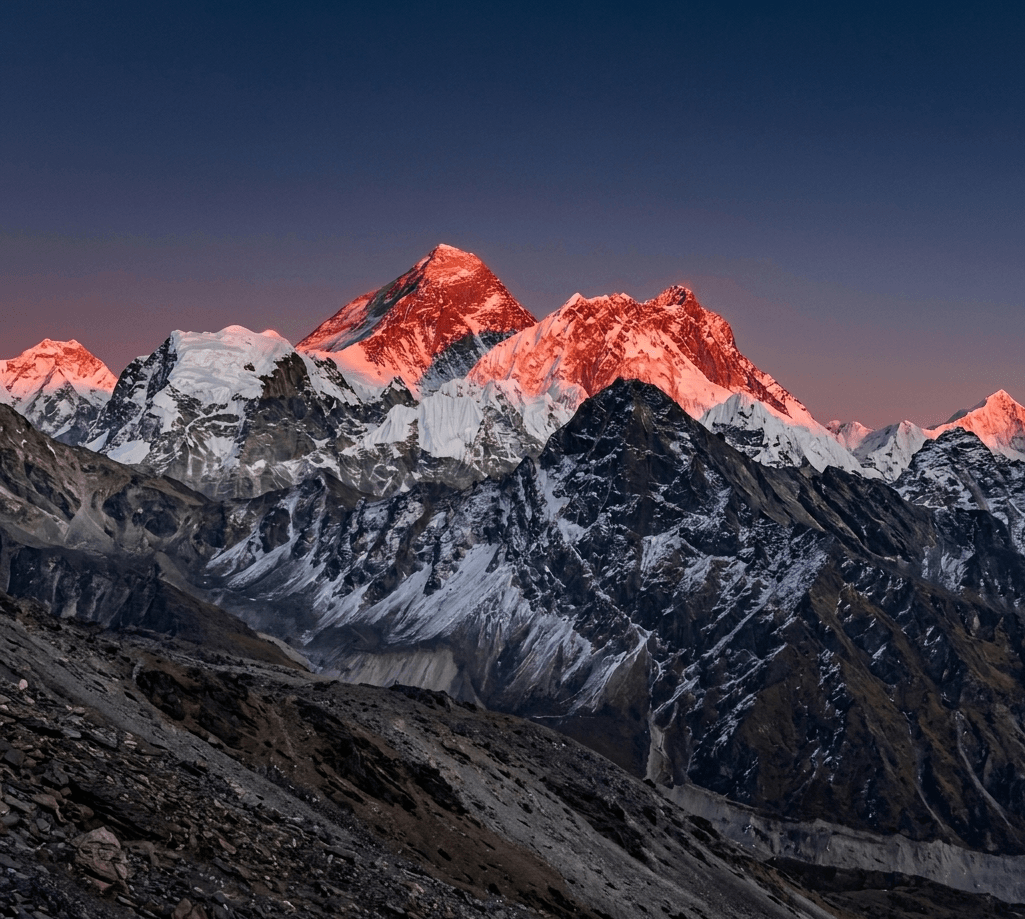
Panoramic Himalayan Views
From the summit, you’re standing on top of the world, literally.
The view extends across an impossibly vast landscape of white peaks. The horizon curves visibly due to altitude. The air is so clear that details emerge from peaks 50+ kilometres away.
One climber described it: “I’ve never felt smaller and more significant at the same time.”
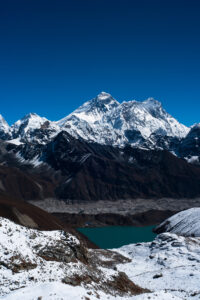
Visibility of Mount Everest, Makalu, and Kanchenjunga
On a clear summit day, you can see three of the world’s eight-thousanders:
- Mount Everest (8,849m)recognizable by its distinctive pyramidal shape
- Makalu (8,485m) is sharp, aggressive-looking, the third-highest mountain in the world
- Kanchenjunga (8,586m) is part of the Nepal-India-Sikkim border
These aren’t distant specks. They’re enormous, dominant features on the horizon. You’re not just seeing them; you’re comprehending the scale. Everest, from Mera Peak, looks like another step on a cosmic staircase.
Less Crowded Routes Compared to Everest Region Trails
The popularity of mera peak trekking is rising, but it’s nothing like the Everest Base Camp trail, which feels like a hiking superhighway.
On Mera Peak, you’ll see other climbing groups, but you won’t pass dozens of trekkers daily. The villages have minimal tourism infrastructure. It feels wild and genuine.
This remoteness is part of the reward. You’re accessing one of the world’s great Himalayan experiences without the crowds.
First Real Mountaineering Experience
Mera Peak bridges the gap between trekking and serious mountaineering.
It’s the first time most climbers will:
- Use crampons on significant terrain
- Manage a rope and harness at altitude
- Make life-or-death decisions in thin air
- Understand what their body can endure
For many, summiting Mera Peak is a transformative experience. It answers the question: “Am I actually capable of mountaineering?”
For most climbers who do this well, the answer is a profound yes.
Common Mistakes to Avoid
Learn from others’ failures:
Mistake #1: Choosing Based on Price Only
A $1,200 expedition versus a $2,500 expedition isn’t just a price difference, it’s often a guide quality difference.
Cheaper operators may:
- Rush acclimatization schedules
- Use less experienced guides
- Provide minimal safety equipment
- Skip important rest days
When your life depends on your guide’s judgment at 6,000m, this is not the place to save $1,000.
Better approach: Research guide credentials, read reviews from actual climbers (not the operator’s website), and verify safety protocols.
Mistake #2: Skipping Proper Acclimatization
Acclimatization isn’t punishment. It’s survival.
Some climbers see the 12-15 day itinerary and think, I can summit in 8 days if I’m fit enough.
You cannot.
Your body adapts at a specific speed. You cannot force faster adaptation. Attempts to rush it result in:
- Acute Mountain Sickness (AMS)
- Cerebral edema
- Pulmonary edema
- Summit failure (you won’t have the energy)
Standard itineraries exist for a reason. Follow them.
Mistake #3: Inadequate Gear Preparation
Budget gear fails in extreme cold.
If your sleeping bag is rated to -15°C and the temperature is -25°C, your sleeping bag will fail. Your thermal layers will fail. Your toes will start showing signs of frostbite.
This isn’t about having expensive gear. It’s about having adequate gear.
Critical items:
- 4-season sleeping bag rated to -25°C minimum
- High-altitude mountaineering boots (insulated, stiff sole)
- Proper down jacket (not a fashion jacket)
- Goggles (not sunglasses)
- Ski gloves rated to extreme cold (not just winter gloves)
Rent if you must, but don’t compromise.
Mistake #4: Underestimating Weather Conditions
The forecast shows clear skies, so we’ll summit.
Weather in the Himalayas changes with the same predictability as a toddler’s mood.
Clear at 8 AM can mean white-out conditions by 10 AM. A “safe” climb can become dangerous in an hour.
Correct approach: Have a flexible timeline, trust your guide’s judgment completely, and be willing to turn back if conditions deteriorate. A turned-back climb is infinitely better than a fatal one.
Practical Tips Before You Go
Assuming you’ve honestly assessed that Mera Peak is for you, here’s how to maximize your chances of success:
Training: Focus on Endurance, Not Just Strength
You don’t need to be able to bench-press 100kg. You need to be able to:
- Hike 20+ km with 15+ kg elevation gain, multiple days in a row
- Sustain this for 12-14 consecutive days
- Do this without your knees, ankles, or hips screaming
4-6 month training plan:
- Month 1-2: Establish baseline fitness (30+ min cardio, 4-5x/week)
- Month 3-4: Introduce elevation training (hiking with elevation gain, 3-4x/week, 2-3 hours per session)
- Month 5-6: Peak training (back-to-back hiking days, increasing distance and elevation, simulate the summit day)
Stair climbing, treadmill inclines, and ellipticals are useful, but they don’t build the specific endurance mountain hiking requires. Real hills and real trails are non-negotiable.
Prioritize Acclimatization Days (And Actually Rest on Them)
The itinerary includes acclimatization days. On these days:
- Don’t go on exploratory hikes (one operator still recommends a 6-hour “acclimatization hike” on acclimatization daythat defeats the purpose)
- Eat and hydrate continuously, even if not hungry
- Rest and sleep (your body is working hard even when you’re resting)
- Manage altitude medication (as prescribed by your doctor)
Some climbers treat acclimatization days as “bonus hiking days.” This is a mistake that costs summit attempts.
Invest in Proper Gear
Summarized above, but worth repeating: do not cheap out on gear.
A complete gear list with specifications can be 40+ items. Your expedition operator should provide a detailed gear list specific to the season and route.
Budget consideration: $500-800 in quality gear is a worthwhile investment.
Choose Experienced Guides
Your guide is literally the difference between summit success and failure. Or worse, between returning home and not.
What to verify:
- Number of Mera Peak summits (ideally 30+)
- Certifications (IFMGA, NNMG, or equivalent)
- Experience managing altitude sickness
- Communication ability in your language
- Safety track record
Ask your operator: “Who will be my guide?” Get a name. Research that person. If the operator can’t or won’t provide a specific guide, reconsider.
Is Mera Peak the Right Choice for You?
Before you commit, honestly answer these questions:
Physical Reality Check:
- Have I successfully completed a trek above 4,500m without significant altitude sickness?
- Can I hike 6-8 hours daily, multiple days in a row, without injury?
- Is my cardiovascular fitness genuinely strong, or am I overestimating?
Mental Reality Check: 4. Am I okay with being uncomfortable for 12+ days? 5. Can I handle isolation (no phone, no internet) without anxiety? 6. Do I have a genuine personal goal, or am I climbing for Instagram likes? 7. Am I willing to turn back if my guide says it’s unsafe?
Practical Reality Check: 8. Can I afford a quality expedition ($2,000-3,500) rather than the cheapest option? 9. Do I have 4-6 months to train properly? 10. Can I take 14-16 days off work/life for the expedition?
If you answered “yes” to most of these honestly, mera peak might be your climb.
If you answered “maybe” or “no” to several, consider a different peak. There are other options:
- Kilimanjaro (19,341m): High altitude, lower technical demand, no glacier work
- Elbrus (5,642m): Similar altitude and technical skills, more accessible logistics
- Aconcagua (6,961m): Higher but less technical, different acclimatization profile
The Reality vs. The Romance
Here’s the truth that most climbing articles gloss over:
Climbing mera peak nepal is not a recreational hike. It’s not an adventure for Instagram. It’s not something to do because you need a new hobby.
It’s a genuine mountain expedition that will test your body, mind, and spirit in ways you cannot fully predict until you’re there.
And for the right personsomeone who’s honest about their capabilities, properly trained, mentally prepared, and genuinely committedit’s one of the most rewarding experiences life offers.
The summit view lasts 20 minutes. The memory lasts a lifetime.
Ready to Take the Next Step?
If you’ve read this and still feel the pull to climb, your instincts might be right.
[Explore Mera Peak Climbing] → Discover our curated climbing packages, detailed itineraries, and pre-expedition training guides designed for climbers serious about success.
Our approach differs from other operators:
- Experienced guides with 50+ Mera Peak summits
- Flexible itineraries that prioritize safety over summit pressure
- Proper acclimatization protocols
- Transparent communication about difficulty and risk