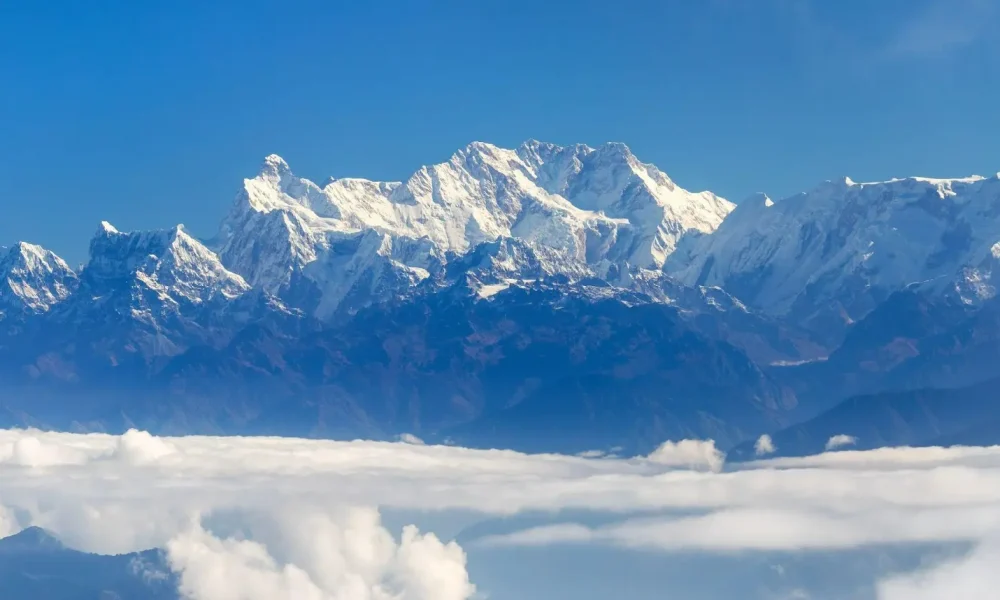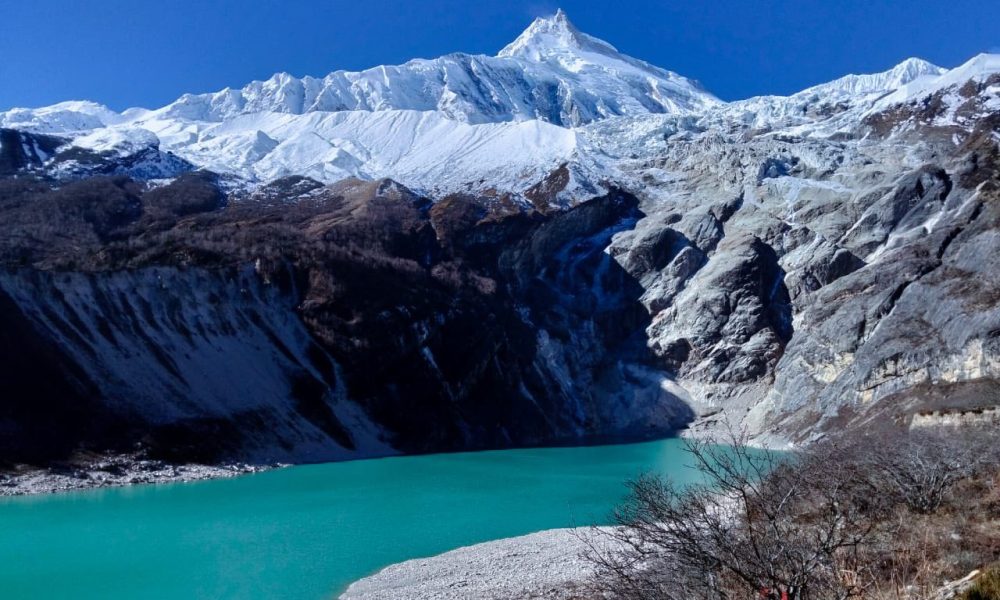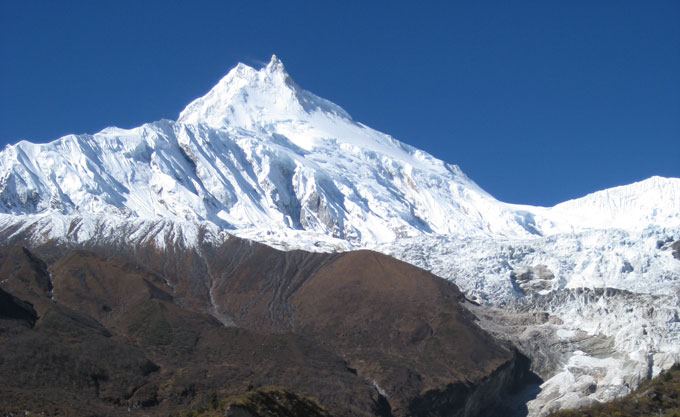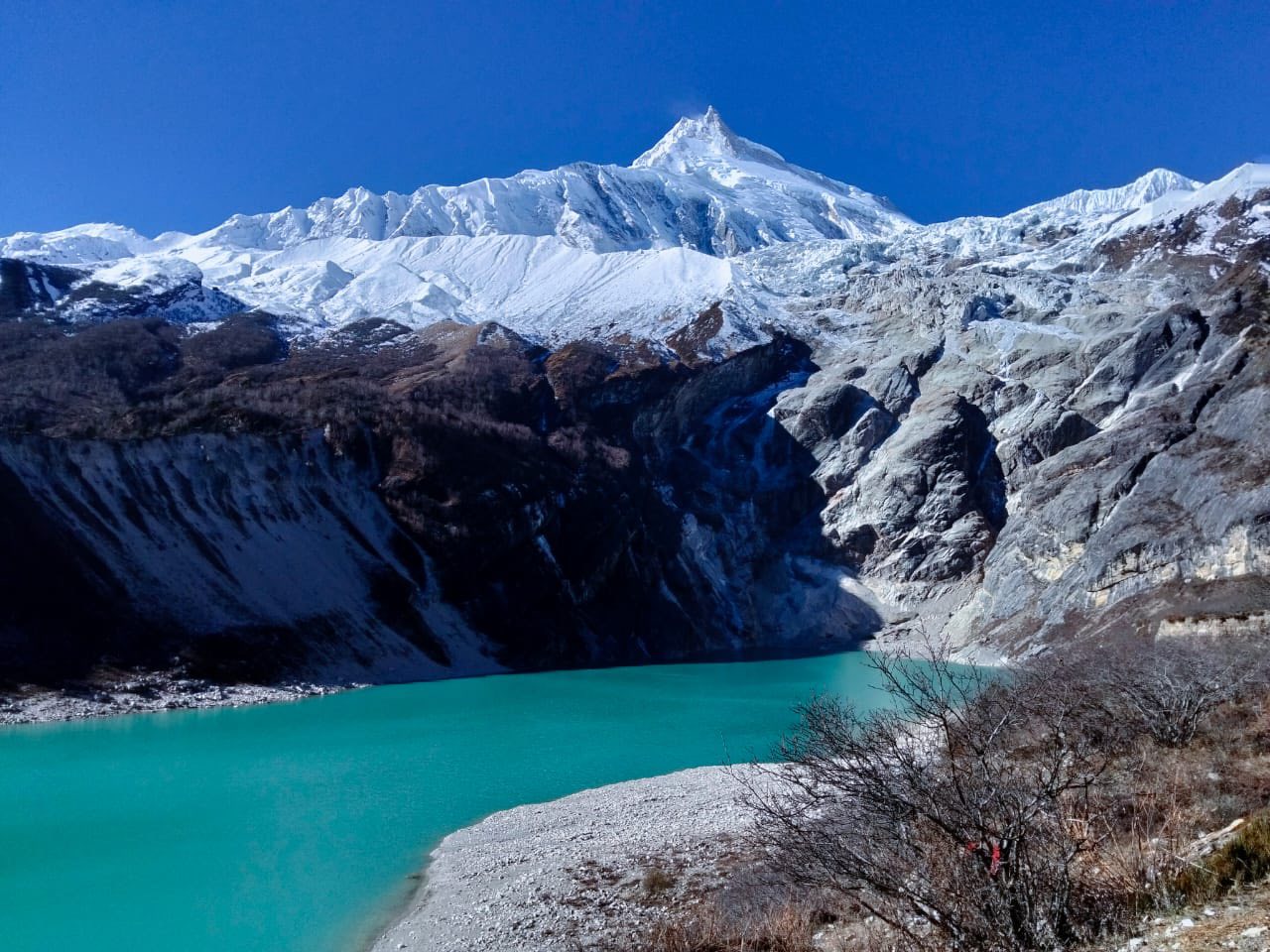
Manaslu Expedition (8163m) in the Mansiri Himal Range is the 8th-highest mountain in the world. It lies in the west-central part of Nepal. Manaslu Expedition (8163 m) in 2025 has been given different names by the locals, such as “Kutang I”, meaning flat land in Tibetan dialect and “Kampunge Himal”. The word Manaslu was derived from the Sanskrit language “manasa” meaning intellect, thus the “mountain of spirit”.
At 8,163 metres, Manaslu is the eighth-highest mountain in the world, and one of Nepal’s most revered Himalayan peaks. It is in the Mansiri Himal of Gorkha district and is named after Manasa, meaning “soul” or “spirit” in Sanskrit. For this reason, Manaslu is also referred to as the “Mountain of the Spirit”. The history of the Manaslu expedition does not start seriously until the early 1950s, when explorers and climbers began to map out potential routes to the summit.
Manaslu expedition was first explored by the British adventurer H. W. Tilman in 1950, but it was the Japanese climbers who had the most in-depth mountaineering association with the peak. From 1952 to 1955, Japanese parties made a number of reconnaissance and climbing attempts, primarily on north and east aspect routes.
The first time Manaslu was successfully climbed was on 9th May 1956 when a Japanese expedition led by Yuko Maki had Toshio Imanishi and Sherpa climber Gyalzen Norbu at the top. This was the first ascent of Manaslu and it was one of the major historic mountains in Japanese Himalayan mountaineering history. Manaslu is also considered as one of the mountains that has close association with Japanese climbers due to the strength of Japan in exploration and climbing of the peak.
Summit attempt on Mount Manaslu (8,163m), the world’s 8th-highest peak
Scenic helicopter access to Samagaun and Manaslu Base Camp, reducing approach time and fatigue
Well-structured acclimatization rotations through Camps I, II, and III
Traditional puja ceremony at Base Camp for cultural and spiritual significance
Professionally fixed ropes and experienced high-altitude Sherpa support
Carefully planned summit push via Camp IV with oxygen support
Extended rest and contingency days for safety and weather flexibility
Less crowded route compared to Everest, offering a quieter 8,000m experience
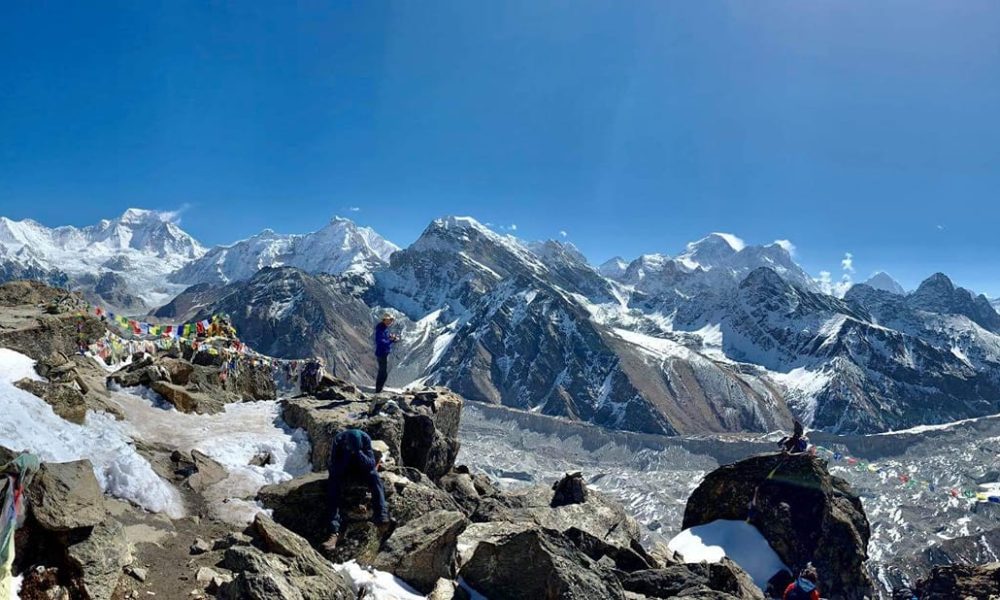
Breathtaking views of the Manaslu massif and surrounding Himalayan giants
Fully supported expedition logistics from Kathmandu to summit and return
Upon arrival in Kathmandu, expedition members are welcomed and transferred to their hotel. This day is mainly for rest and recovery after international travel, allowing climbers to relax and prepare mentally for the expedition ahead.
A full day is dedicated to expedition briefing, detailed discussions with the expedition leader, equipment inspection, and final logistical arrangements. Official paperwork and last-minute shopping for personal gear are also completed.
The expedition begins its mountain journey with a scenic helicopter flight directly to Samagaun. This flight significantly reduces trekking time and provides a gradual yet efficient altitude gain. The remainder of the day is spent resting and hydrating.
Two full rest days are spent in Samagaun to allow the body to adapt to altitude. Light walks, short acclimatization hikes, and hydration help prepare climbers for higher elevations while enjoying the local culture and scenery.
The team treks gradually from Samagaun to Manaslu Base Camp, following glacial moraines and alpine terrain. Upon arrival, climbers settle into base camp and begin adapting to expedition life.
These days are reserved for complete rest and acclimatization. Climbers organize gear, attend briefings, and adjust to sleeping and eating at high altitude.
A traditional puja ceremony is performed by a Buddhist lama to seek blessings for a safe and successful ascent. This ritual is an important spiritual and cultural part of Himalayan expeditions.
The first rotation begins with an ascent to Camp I. Climbers practice movement on snow and ice and familiarize themselves with fixed ropes before spending the night at Camp I.
The team ascends higher to Camp II, navigating steeper terrain and colder conditions. An overnight stay helps further acclimatization before descending.
Climbers ascend toward Camp III to expose their bodies to higher altitude before descending back to Base Camp the same day. This “climb high, sleep low” strategy is essential for safe acclimatization.
Depending on weather and team condition, climbers either fly back to Kathmandu for rest and recovery or remain at Base Camp.
This day allows physical recovery, mental refreshment, and medical checks if necessary before the summit phase.
Climbers return to Base Camp by helicopter or continue resting, ensuring full recovery before the final push.
These critical rest days allow the team to regain strength, monitor weather conditions, and finalize summit strategies.
The summit rotation begins as climbers move back to Camp I with confidence and familiarity from earlier rotations.
Climbers progress steadily to Camp II, carefully managing energy and oxygen levels.
The ascent continues to Camp III, where conditions become more demanding. Climbers rest, hydrate, and prepare for the final push.
Climbers reach Camp IV, the final camp before the summit. This is a critical day requiring careful pacing, oxygen management, and rest.
Summit day begins early as climbers push toward the top of Mount Manaslu. After reaching the summit, climbers descend safely back to Camp III.
The team descends carefully back to Base Camp, marking the successful completion of the climbing phase.
Climbers fly back to Kathmandu by helicopter and transfer to their hotel for rest, celebration, and recovery.
After completing the Manaslu expedition, climbers depart Kathmandu for their onward journey.
These days are reserved for weather delays, summit window adjustments, or unforeseen circumstances, ensuring flexibility and safety.
Manaslu is often considered the best introductory 8,000m peak because it offers a comparatively straightforward route, strong Sherpa infrastructure, and fewer crowds than Everest, while still presenting a true high-altitude expedition challenge.
The expedition typically lasts 25 to 30 days, including acclimatization rotations, summit push, rest days, and contingency days for weather or delays.
The expedition is suitable for climbers with prior high-altitude mountaineering experience, ideally having climbed 6,000–7,000m peaks and possessing strong physical and mental endurance.
Prior 8,000m experience is not mandatory, but solid experience on high Himalayan peaks and familiarity with ice, snow, and rope techniques are essential.
Manaslu is considered extremely demanding, involving long periods at high altitude, cold temperatures, steep snow slopes, and extended summit days.
Key challenges include altitude sickness risk, extreme cold, avalanche-prone sections, crevasses, and rapidly changing weather conditions.
While inherently risky, safety is maximized through professional guides, experienced Sherpa support, fixed ropes, weather forecasting, and emergency protocols.
Helicopter evacuation is possible at lower elevations, but rescue options are extremely limited at higher camps. Comprehensive insurance is mandatory.
Climbers require a Manaslu climbing permit, Manaslu Conservation Area Permit (MCAP), Annapurna Conservation Area Permit (ACAP), and liaison officer arrangements.
Yes, all Manaslu expeditions must be operated by registered companies and follow Nepal government regulations for safety and environmental protection.
Acclimatization is managed through gradual ascent, multiple rotations to higher camps, and planned rest days to allow the body to adapt safely.
Yes, altitude sickness is one of the main risks. Proper acclimatization, medical monitoring, and experienced leadership significantly reduce danger.
There are no reviews yet. Be the first one to write one.

Explore Nepal Trails is your trusted partner for trekking, peak climbing, and mountaineering adventures in Nepal. From classic Himalayan treks to high-altitude expeditions and cultural journeys, we deliver safe, well-planned, and unforgettable travel experiences.
We Accept

Join our community of over 200,000 global readers who receive emails filled with news, promotions, and other good stuff.

WhatsApp us