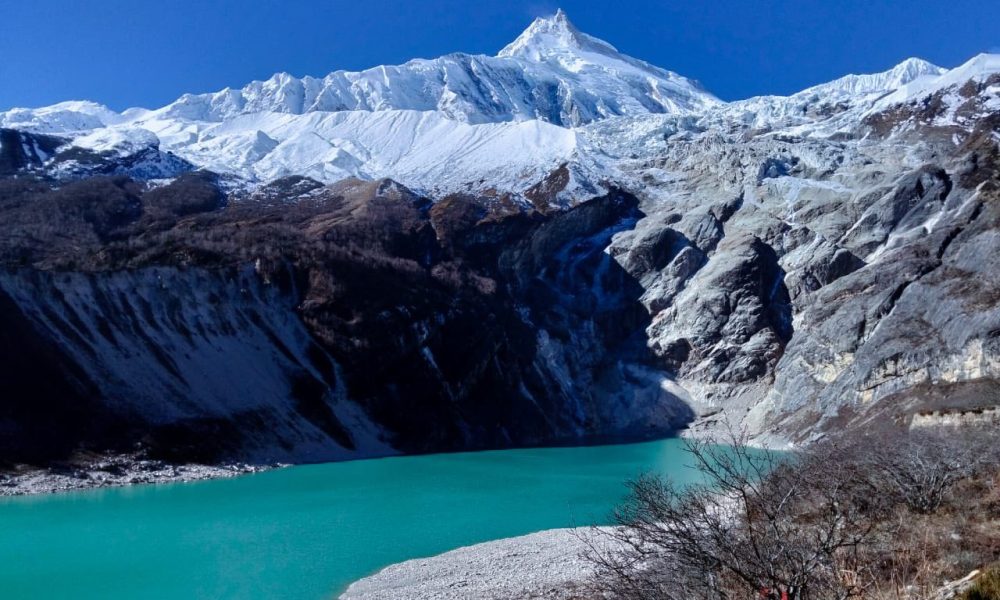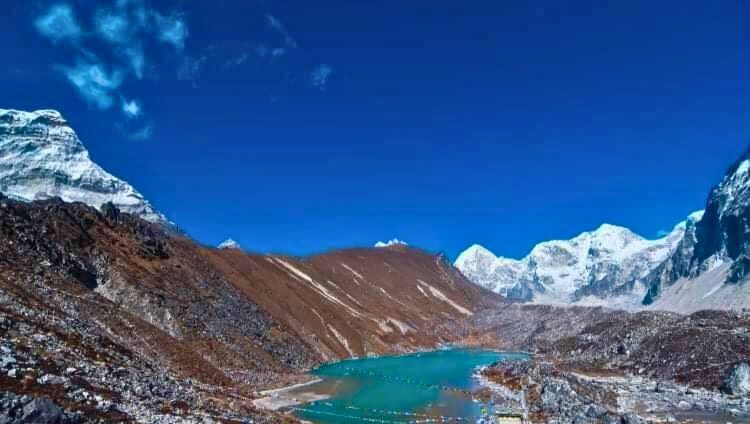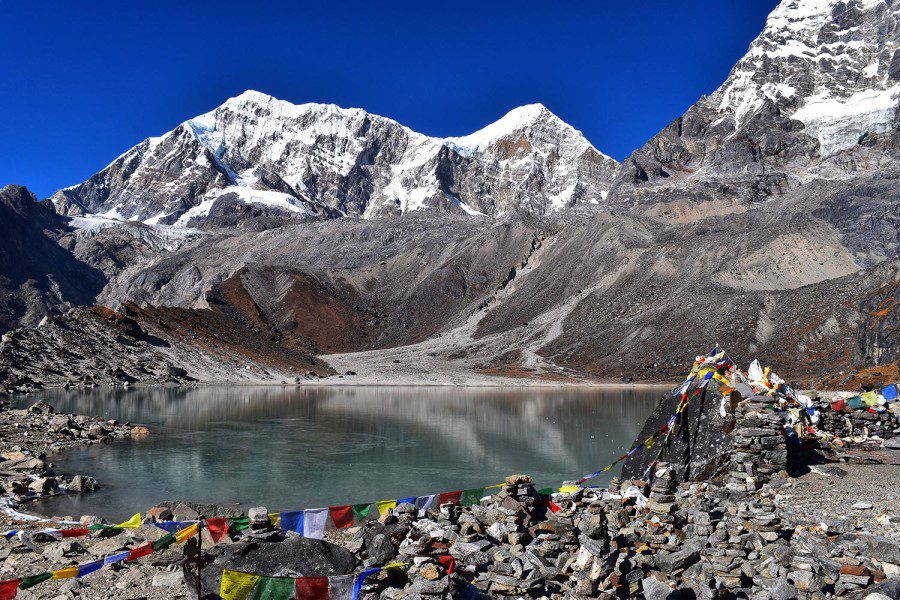
The Dudh Kunda Lake, meaning “Milky Lake” in Nepali, is a lesser-known but spiritually and scenically rewarding trekking route in the Solukhumbu region of eastern Nepal, beneath the southern face of Numbur Himal (6,959m) and close to the famous Everest region. The highlight of Dudh Kunda Lake Trekking is the sacred Dudh Kunda Lake (4,561m), revered by both Hindus and Buddhists, believed to be the abode of Lord Shiva.
This off-the-beaten-path trek offers an incredible mix of natural beauty, cultural richness, and religious significance. It winds through remote Sherpa and Rai villages, dense forests, alpine pastures, and serene yak grazing meadows, culminating in a dramatic approach to the pristine glacial lake set against snow-covered Himalayan giants.
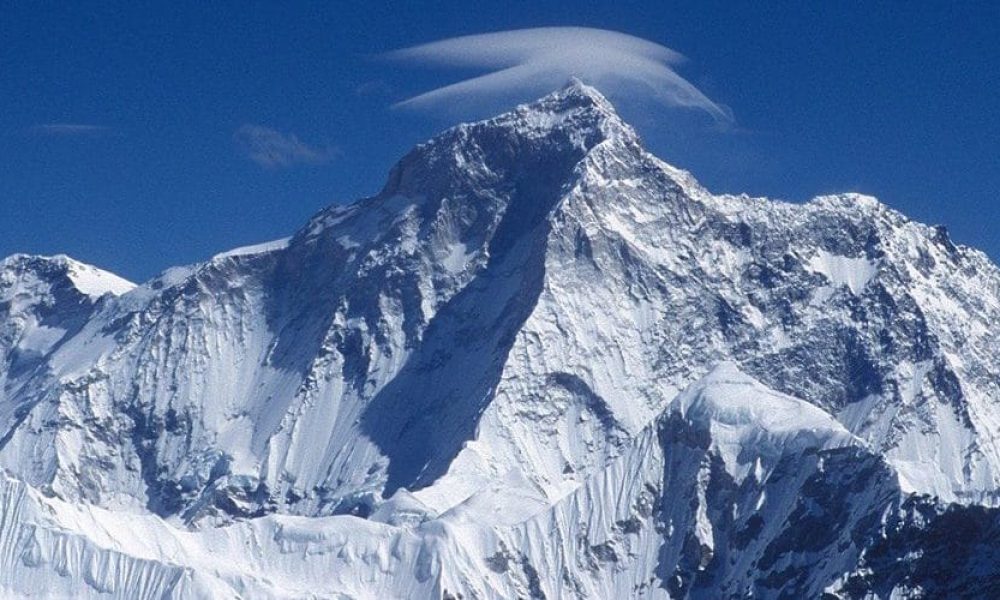
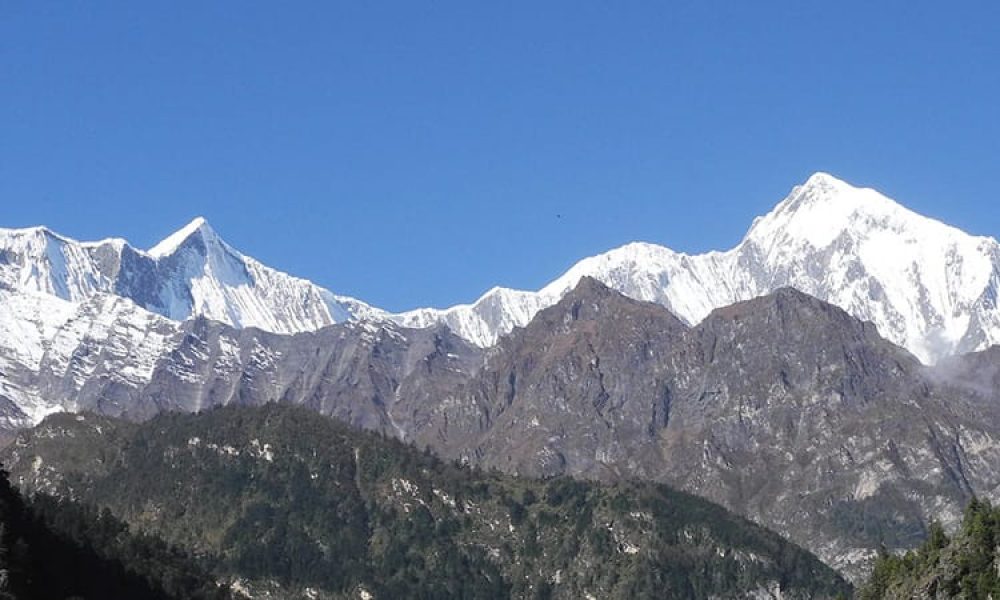
Unlike the crowded Everest Base Camp trek, Dudh Kunda Lake Trekking is peaceful and untouched, ideal for trekkers seeking solitude, authentic local experiences, and spiritual tranquillity. On a clear day, you can witness breathtaking views of Everest, Numbur, Karyolung, and other peaks of the Khumbu and Rolwaling ranges.
With its moderate difficulty and an 11-day itinerary, Dudh Kunda Lake Trekking is suitable for both seasoned hikers and adventurous beginners looking for a unique Himalayan experience away from the mainstream. Be sure to check the required trekking permits and recommended trekking equipment before booking.
Stunning Mountain Views: Views of Everest, Makalu, Lhotse, and Cho Oyu.
Dudh Kunda Lake: Sacred Milk Lake at 4,560 meters.
Serene Beauty: Crystal-clear blue waters surrounded by snow-capped peaks.
Cultural Immersion: Experience Sherpa culture in villages like Beni and Ringmo.
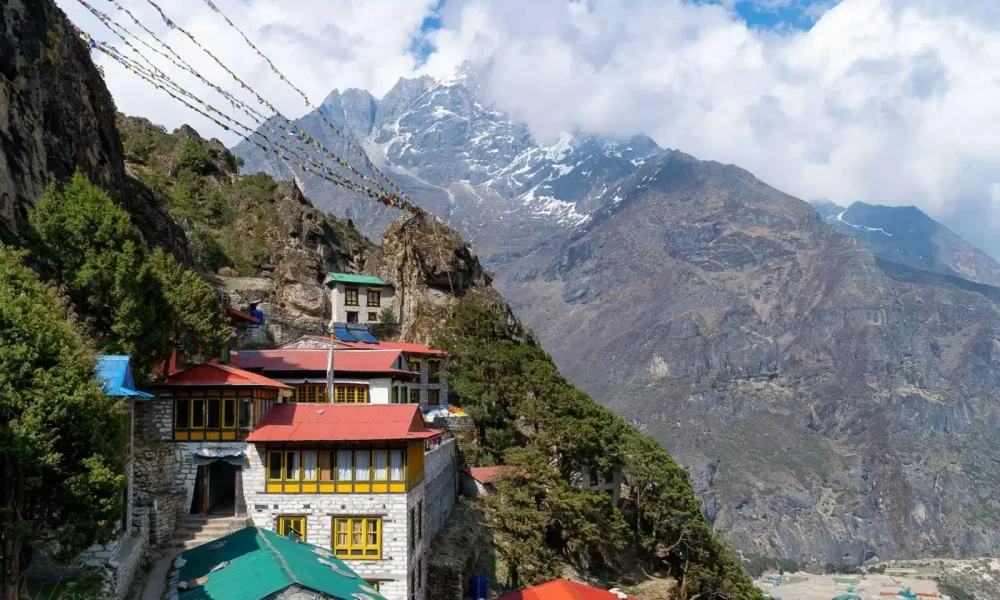
Spiritual Significance: Visit sacred sites like Thubten Choling Monastery.
Less Crowded: Off-the-beaten-path trek with fewer tourists.
Diverse Landscapes: Trek through lush forests, alpine meadows, and high-altitude terrain.
Authentic Sherpa Hospitality: Warm welcome from local Sherpa communities.
Upon your arrival at the Tribhuvan International Airport in Kathmandu and after clearing immigration and customs, you shall be welcomed by a representative of Explore Nepal trails shall transfer you to your respective hotel.
This day is dedicated to final preparations before beginning the trek. You will attend a detailed briefing with your guide to review the itinerary, trekking routes, altitude considerations, and safety procedures. A thorough equipment check is carried out to ensure all essential gear is in place, with time allotted for last-minute shopping or renting trekking equipment if needed. Necessary permits and documents are also finalized on this day.
The journey begins early in the morning, and we will leave the hustle and bustle of the Kathmandu Valley to Dhap Bazaar via Okhaldhunga by private vehicle. It is a 7-hour drive along the Sun Koshi, later joining Tama Koshi and becomes a roaring big Koshi River. We will stop en route for lunch in a small local restaurant. It takes about 4 hours of driving to arrive in Ghurmi. Then a smooth drive uphill towards the north through the sub-tropical forests of Pine to dense forests of Rhododendron follows. We will be passing several countryside villages, beautiful landscapes and valleys until we reach Dhap Bazaar (2850m) which takes about 3 hours. Exploring the fascinating village and several local shops will give you a different experience, of knowing local people, their culture and their way of life. In the clear sky, the awesome mountain view of Numbur Chuli makes you feel that you are already closed to the Himalayas.
Elevation: Max. altitude 2,840m / 9,318 ft.
Accommodation: Hotel / Lodge
Meal: Lunch , Dinner , Breakfast
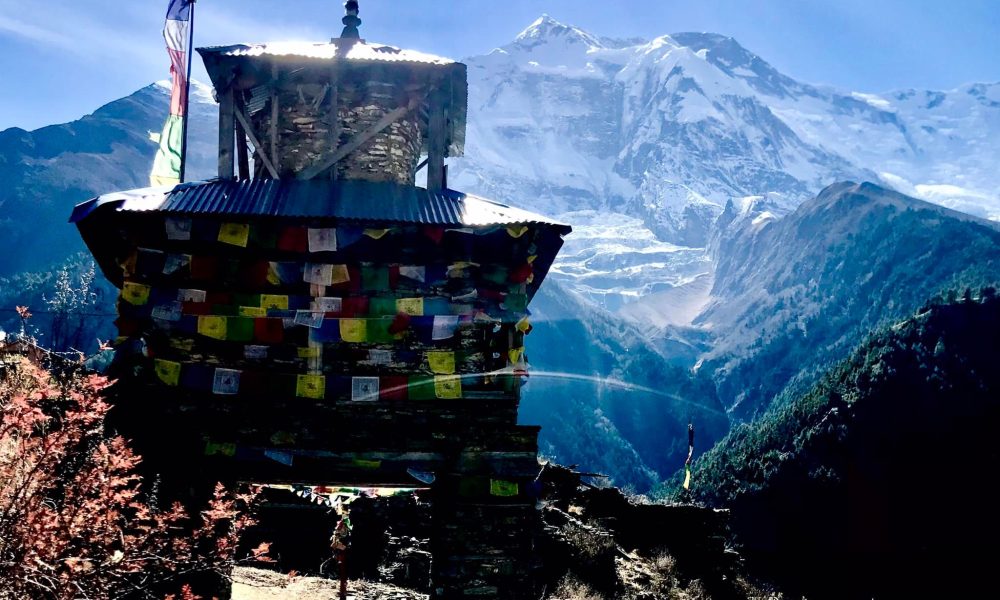
After breakfast, we set out on the walking trail, which stays on dusty roads for about two and half hours. Once we reach Sigane, the trail from there follows a road under construction for the first couple of hours. The first village enroute is called Jahpre (2860m). It’s perched above a deep valley with nice views of Everest and the Number Himal. There’s a pretty little Gompa and Stupa here. This is also another best view point for all high Himalayan range to north. Here you find few lodges with its comfort and plenty of food items.
Elevation: Max. altitude 2,860m / 9,383 ft.
Accommodation: Hotel / Lodge
Meals: Lunch , Dinner , Breakfast
The morning brings an awesome mountain scenery of Numbur Chuli and Everest, including the eastern Himalayan range. The Trekking Trail starts on dirt roads for a while and quickly goes through a gentle uphill route. We go through the Pine and Rhododendron forests until reaching Bhulbule (3210m) and it takes about 2 hours. You will find small tea shop there. We will then arrive in Lhamuje (3330m) which takes an hour. We will have lunch here in a newly built tea-house. In the spring season, you will enjoy different spices of Rhododendron flowers during the walk and the spectacular Himalayan range. Afterwards, the trail is mostly gentle ups and downs in the ridge till we arrive at the Yak pasture land where we can see many grazing Yaks. We will then climb steep hills with zigzag trails to arrive at Pikey Peak Base Camp (3585m) which takes about 2 hours and 30 minutes. You can visit Yak Cheese factory and they produce Cheese during Monsoon. The two lodges you will find serves basic local food.
Elevation: Max. altitude 3,585m / 11,762 ft.
Accommodation: Hotel / Lodge
Meals: Lunch , Dinner , Breakfast
Early morning, we set out on the uphill trail until reaching Pikey Peak (4065m) and it takes about an hour. The unobstructed view of the sunrise over the Himalayan range and the spectacular views of mountains including Mt. Everest, Number Chuli, Thamserku, Khangtega, Khatang, Karyoling to the north, Kanchenjunga to the east, Manaslu, Dhaulagiri, Gaurishankar, Dorje Lakpa, Langtang to the west is beautiful. We then go downhill in the gully stone trail for a few hours and enter to the Rhododendron and Pine forest until Jase Bhanjyang (3550m) and it takes about 2 hours.
Then trail then leads us to Lamjura (3530m) which takes about 2 hours. You can stop for lunch here. After lunch we continue on the trail and rhododendron forests until we reach Taktor. After that it a relaxed walk to Junbesi (2680m), passing several mani walls and stone chhortens. It takes 2 and half hours.
The Numbur Chuli ( peak) to the north looms high above the village. You may visit an old monastery in the village and explore the village, to know their culture and way of life. There are several nice lodges with good food.
Elevation: Max. altitude 4,065m / 13,337 ft.
Accommodation: Hotel / Lodge
Meals: Lunch , Dinner , Breakfast
The next morning, you follow the river once more, meandering through fields and flowers, towards a very special place; Thupten Choling, home to 800 monks living in tiny cottages dotting the hill behind the main Gompa. His Holiness, the late Trulsik Rinpoche founded the monastery in the 1960’s after fleeing Tibet. Thupten Choling houses, feeds, and educates a large population, 80% of whom are Tibetan refugees. This is one of the first contact points for the many Tibetans who find their way into Nepal each year. Although most refugees continue on to India, about 40 nuns per year stay on and join the monastery.
From here you continue up the valley for another hour to your first campsite where you are joined by the full camping crew for the first time. You will now be camping each night until you reach Taksindu.
Elevation: Max. altitude 2,700m / 8,858 ft.
Accommodation: Hotel / Lodge
Meals: Lunch , Dinner , Breakfast
As you will be ascending steadily in the next few days, it is important to pay attention to how your body is acclimatizing. Your visit to Pike Peak earlier in the trek would have helped considerably with your acclimatization. However, do pay attention to any of the early signs of altitude sickness and make sure you drink plenty of water. Today takes you through a magical forest up towards a pass near where you will spend the night.
Elevation: Max. altitude 3,030m / 9,941 ft.
Accommodation: Hotel / Lodge
Meals: Lunch , Dinner , Breakfast
Continuing our trail northward through rhododendron forest, we trek to the beautiful Pare Danda towards the peak of Numbur and Karyolung. The walking today is excellent along a high ridge with superb vistas. We will see the mountain glacier and close up view of mountains. In the rainy we too can see different species of migratory birds. At the base of these peaks lies the yak pastures below the holy lake of Dudh Kund. We make our camp tonight in yak pastures on the ridge.
Elevation: Max. altitude 3,250m / 10,663 ft.
Accommodation: Hotel / Lodge
Meals: Lunch , Dinner , Breakfast
On the following day, we will have a free day or a short hike for exploration around this beautiful and remote area. You could also have an excursion around the holy lake. This is also a day for acclimatization. We will spend overnight at Dudh Kunda.
Dudh Kund (Milk Lake) is an important site of pilgrimage for both Hindus and Buddhists. During the full moon of July/August many Hindus make the long trek to bathe in the lake while the Sherpas come to build cones of tsampa porridge like mix of barley flour and butter) in honor of local deities. At this time the lake is very busy but at the time of our arrival we are likely to be the only people present. From Dudh Kunda there is another breathtaking panorama of Everest, Numbur, and down into the forested valley. After our explorations we return to camp at the yak pastures.
Elevation: Max. altitude 4,561m / 14,964 ft.
Accommodation: Hotel / Lodge
Meals: Lunch , Dinner , Breakfast
Today, we start our trekking early in the morning. Leaving the high pastures we now turn south. Passing through the Sherpa village of Temba we descend to Ringmu on the main trail from Jiri to Everest. Ringmu is situated on the main trail from Jiri to Lukla. It is renowned for its apple orchards and here you can buy all manner of apple-based products from cider to apple pie. We set up our camp in this small village. You can spend an overnight at Ringmu.
Elevation: Max. altitude 2,860m / 9,383 ft.
Accommodation: Hotel / Lodge
Meals: Lunch , Dinner , Breakfast
We trek back again to the same route to Phaplu leaving back the Everest Trail. We have a relatively short final day of trekking following an easy trail beside the Dudh Kund Khola down to Phaplu where we make our last camp. On the way we will experience an extreme wilderness. Beside this we will also find many Sherpa hamlets. On evening, we can also explore the town of Phaplu and view the local culture and their settlement there.
Elevation: Max. altitude 2,410m / 7,907 ft.
Accommodation: Hotel / Lodge
Meals: Lunch , Dinner , Breakfast
Early in the morning catch a flight for Kathmandu. In the airport our representative will receive you and get you transferred to the hotel. The remaining day is leisure for self-exploration.
Elevation: Max. altitude 1,350m / 4,429 ft.
Accommodation: Hotel
Meals: Breakfast
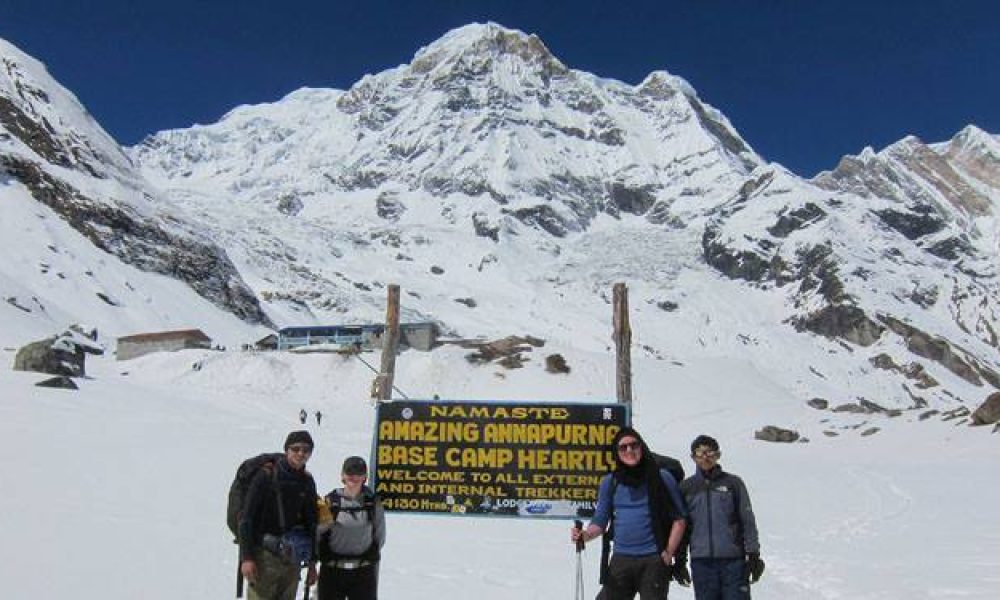
A representative from Explore Nepal trails will transfer you to the airport for your international flight. Your memorable Annapurna Base Camp trekking adventure comes to a close, until next time!
Dudh Kunda is not just a scenic high-altitude lake, it’s one of the most sacred pilgrimage sites in Eastern Nepal, revered by both Hindus and Buddhists as the abode of Lord Shiva.
Every year during the full moon of Janai Purnima (July–August), Dudh Kunda transforms from a remote alpine lake into an active pilgrimage site. Hindu pilgrims undertake the demanding trek to bathe in its glacial waters, believing the lake holds the same purifying power as Gosaikunda, Nepal’s more famous pilgrimage lake in the Langtang region. At the same time, local Sherpa communities make their own pilgrimage to the lake, building small cone-shaped offerings of tsampa – a mix of roasted barley flour and butter, to honor the local deities believed to reside there. It’s a rare example of two distinct faiths converging on the same sacred site, each with their own rituals, without conflict.
Trekkers who visit outside of Janai Purnima, which most of ENT’s scheduled departures do will likely have the lake entirely to themselves, a striking contrast to how crowded it becomes during the festival.
En route, the trail passes Thubten Choling Monastery, home to roughly 800 monks and nuns living in small cottages around the main gompa. It was founded in the 1960s by the late Trulsik Rinpoche after he fled Tibet, and today it remains one of the most important points of contact for Tibetan refugees arriving in Nepal, about 40 nuns join the monastery each year, while most refugees continue on toward India. Walking through Thubten Choling offers a rare, unscripted look at a still-functioning refugee monastic community, not a museum piece.
For many visitors, Dudh Kunda’s spiritual weight is what separates it from a purely scenic trek. You’re not just walking to a high-altitude lake for a photo, you’re walking a route still actively used by pilgrims today, past a monastery still sheltering displaced communities, through villages where Hindu and Buddhist practice sit side by side. That lived-in, ongoing significance is a large part of why this trek is often described as more contemplative than the busier trails nearby.
Dudh Kunda’s high altitude (4,561m) and remote location mean timing your trek right matters more here than on lower-altitude routes. The two trekking seasons: spring and autumn, offer very different experiences of the trail.
Autumn (September to November) – Best Overall
Autumn is the most reliable season for Dudh Kunda lake trekking. Post-monsoon skies are at their clearest, giving the strongest chance of unobstructed views of Everest, Numbur, and Karyolung from the lake itself. Daytime temperatures on the trail sit comfortably in the range of 10–15°C, dropping toward freezing at higher camps overnight. Trails are dry and well-defined after the monsoon rains, making the Dhap Bazaar approach and the yak pasture sections easier underfoot.
Spring (March to May) – Best for Rhododendrons
Spring brings Nepal’s rhododendron forests into full bloom along the lower and mid sections of the trail, a highlight the itinerary notes but doesn’t emphasize. Temperatures are similar to autumn, though afternoon cloud buildup is more common, which can occasionally obscure high-altitude views later in the day. Early morning trekking is recommended in spring for the clearest mountain photography.
Winter (December to February) – For Experienced and Cold-Ready Trekkers Only
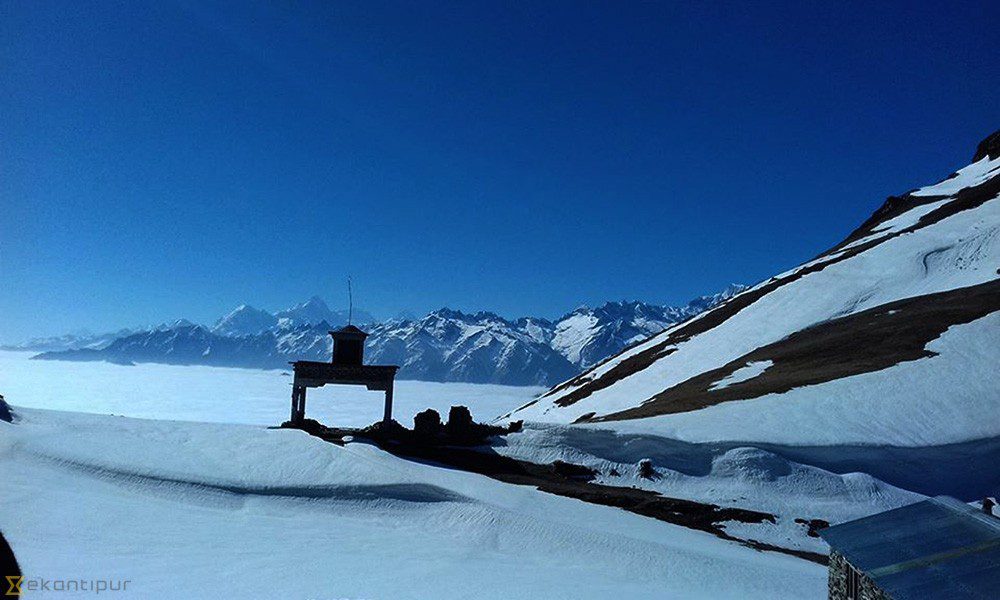
Winter is technically possible but demanding. Snow accumulates heavily above 3,500m, and the high pastures near Dudh Kunda itself, can become difficult or unsafe to reach without proper winter gear and experience. Lodges at higher camps may also close or run limited services. Not recommended for first-time high-altitude trekkers.
Monsoon (June to August) – Avoid, With One Exception
Monsoon rains make the lower trail muddy and leech-prone, and cloud cover regularly blocks mountain views entirely. The one exception is Janai Purnima (the full moon of July/August), when the lake becomes an active pilgrimage site but this is a trip for cultural/spiritual purposes rather than trekking comfort, since trail conditions are at their worst.
The best time to do the Dudh Kunda Lake Trekking is during spring (March to May) and autumn (September to November). These seasons offer clear skies, pleasant temperatures, and the best views of the surrounding peaks, making it ideal for trekking.
The highest point on this trek is Dudh Kunda Lake, situated at 4,560 meters (14,957 feet). While this altitude is not extremely high compared to other Everest region treks, proper acclimatization is still necessary to avoid altitude sickness.
You will need the following permits:
Sagarmatha National Park Entry Permit
TIMS (Trekkers’ Information Management System) Permit
These permits can be obtained in Kathmandu or at the entry points of the trek.
Yes, the Dudh Kunda Lake Trekking is suitable for trekkers with moderate fitness levels. It is not as physically demanding as the Everest Base Camp Trek, but it does reach higher altitudes, so some previous trekking experience is recommended.
The highlights include:
Dudh Kunda Lake: A sacred, crystal-clear lake surrounded by towering peaks.
Mountain Views: Incredible views of Everest, Makalu, Lhotse, and Cho Oyu.
Sherpa Culture: Visiting traditional Sherpa villages like Ringmo and Jhapre.
Spiritual Significance: The lake is a sacred site for Hindus and Buddhists.
To avoid altitude sickness, ensure proper acclimatization by taking it slow, drinking plenty of water, and eating well. Spend extra time resting in higher altitudes and avoid ascending too quickly. If symptoms like headache or dizziness occur, descend immediately.
Essential items include:
Warm layers: Down jackets, fleece, base layers for cold nights.
Trekking boots: Comfortable and durable for long trekking days.
Sleeping bag: Rated for cold weather.
Sun protection: Sunscreen, sunglasses, and a hat.
Water purification system: Tablets or a filter for clean water.
First aid kit: For minor injuries or illnesses.
The main challenges are:
Altitude: Reaching 4,560 meters requires proper acclimatization to avoid altitude sickness.
Remote Trail: Parts of the trek pass through less-developed areas with fewer amenities.
Weather: Conditions in higher altitudes can be unpredictable, with possible cold temperatures and snow.
There are no reviews yet. Be the first one to write one.

Explore Nepal Trails is your trusted partner for trekking, peak climbing, and mountaineering adventures in Nepal. From classic Himalayan treks to high-altitude expeditions and cultural journeys, we deliver safe, well-planned, and unforgettable travel experiences.
We Accept

Join our community of over 200,000 global readers who receive emails filled with news, promotions, and other good stuff.

WhatsApp us