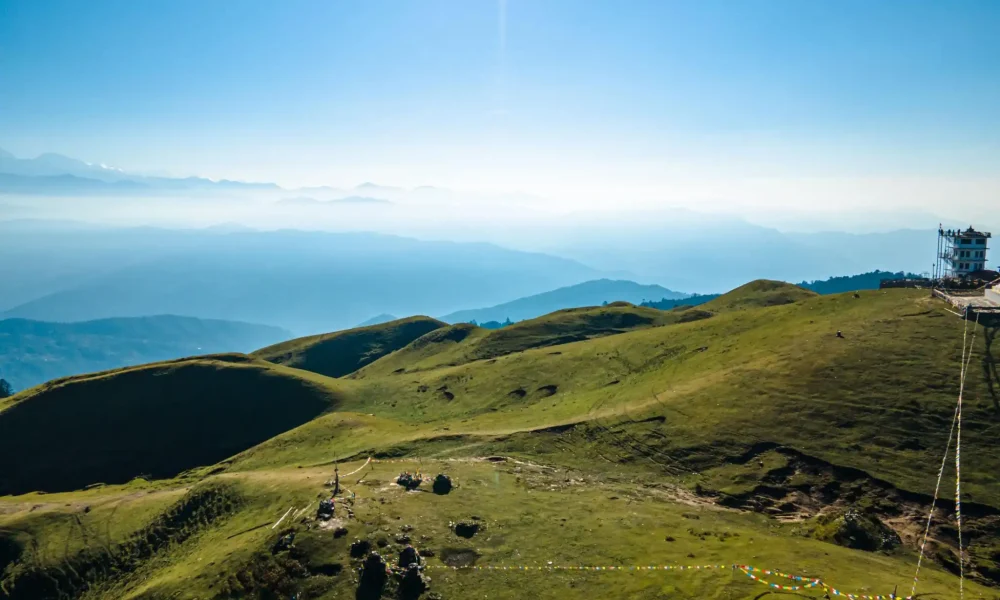
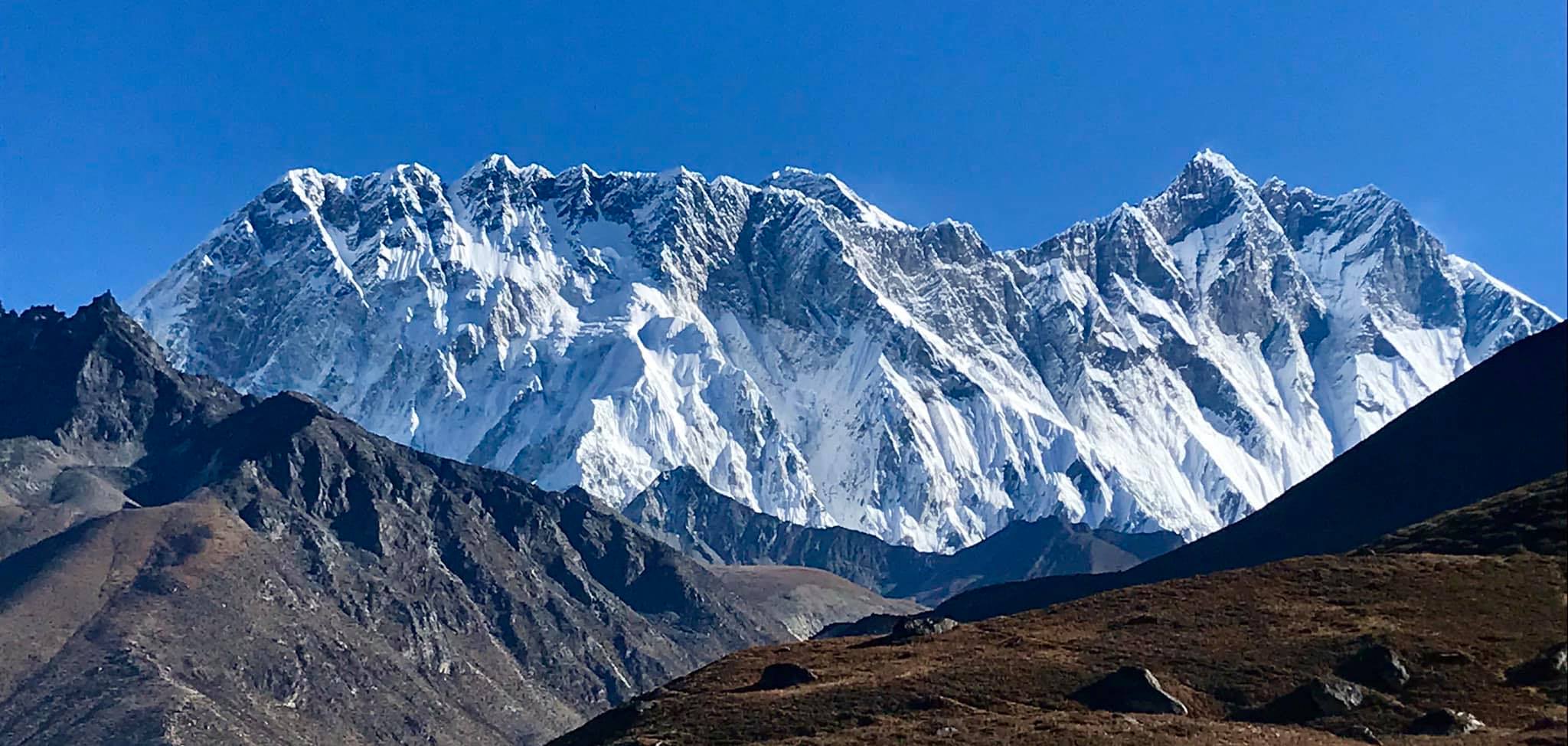
Everest Panorama Trek begins with a flight from Kathmandu to Lukla. You then embark on one of the shortest Everest treks towards the top of the hill; from the Sherpa capital of Namche through the blooming colors of Sherpa village, to Buddhist Monasteries, Chorten, and Sagarmatha National Park with various species of wild birds and animals, including flora and fauna.
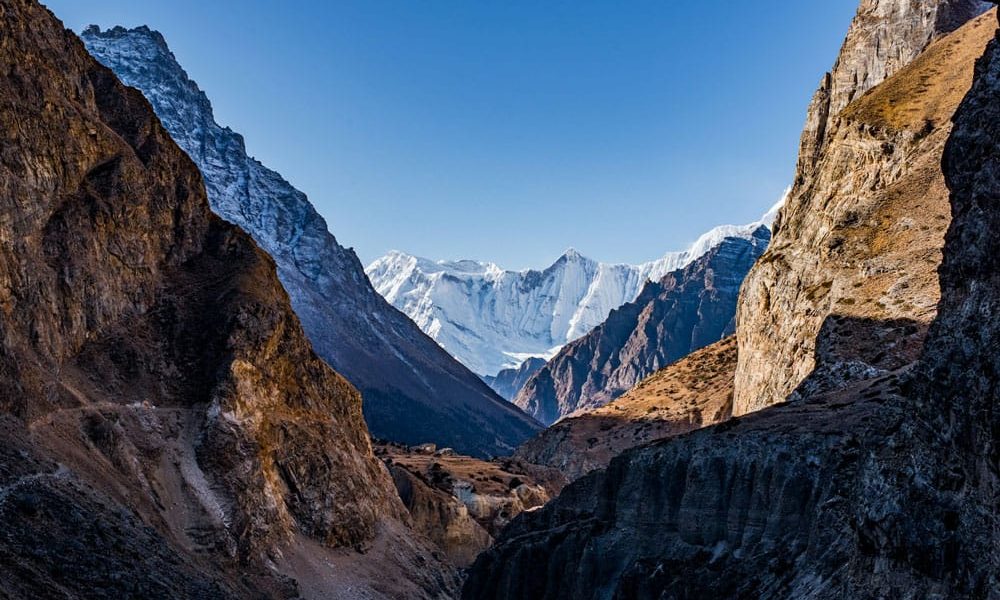
Moving through the path, you come across the deep valley, the Himalayas (Milk River), until Tengboche village, which is well known for its monastery at the highest altitude (3,890m).
Everest Panorama Trek neither requires prior trekking experience nor extensive time, making it ideal for beginners, families, and trekkers with limited time. You start from Lukla and spend a leisurely day at Namche for acclimatization. Then move on gently as far as Tengboche to enjoy the view of Everest. You will meet and interact with trekkers and mountaineers, including those bound for the Everest expedition. During the trek, you will discover some superb Himalayan scenery without the demanding efforts and arduousness usually accompanying such trips.
Tengboche also has its famed Monastery, a prototype of Buddhist-Tibetan cultural heritage bearing intricately carved, exquisite artworks. The Mani Rimdu festival is held in this monastery annually during the October/November full moon; it draws flocks of visitors to the area with its colorful masked dances.
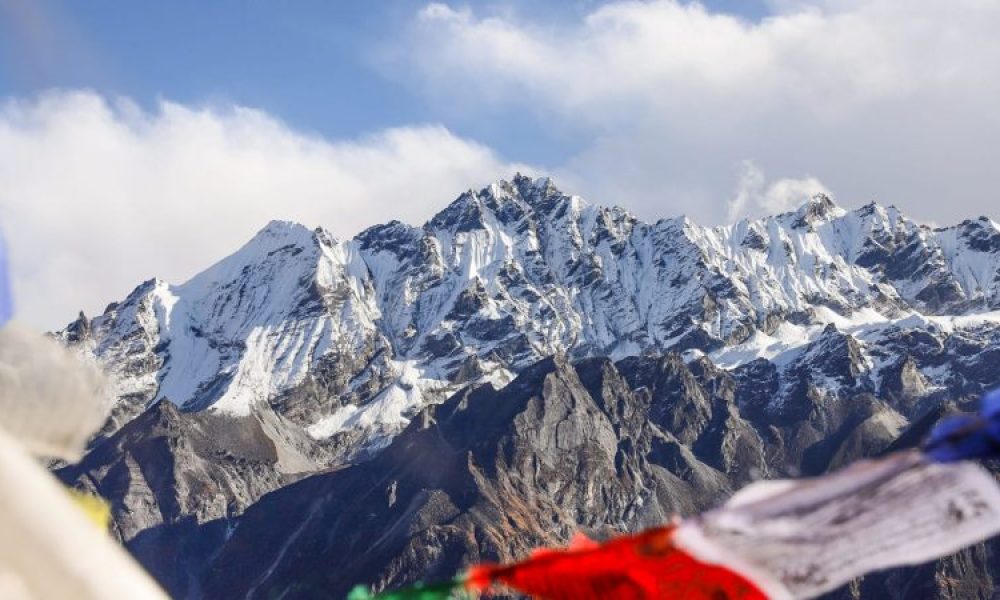
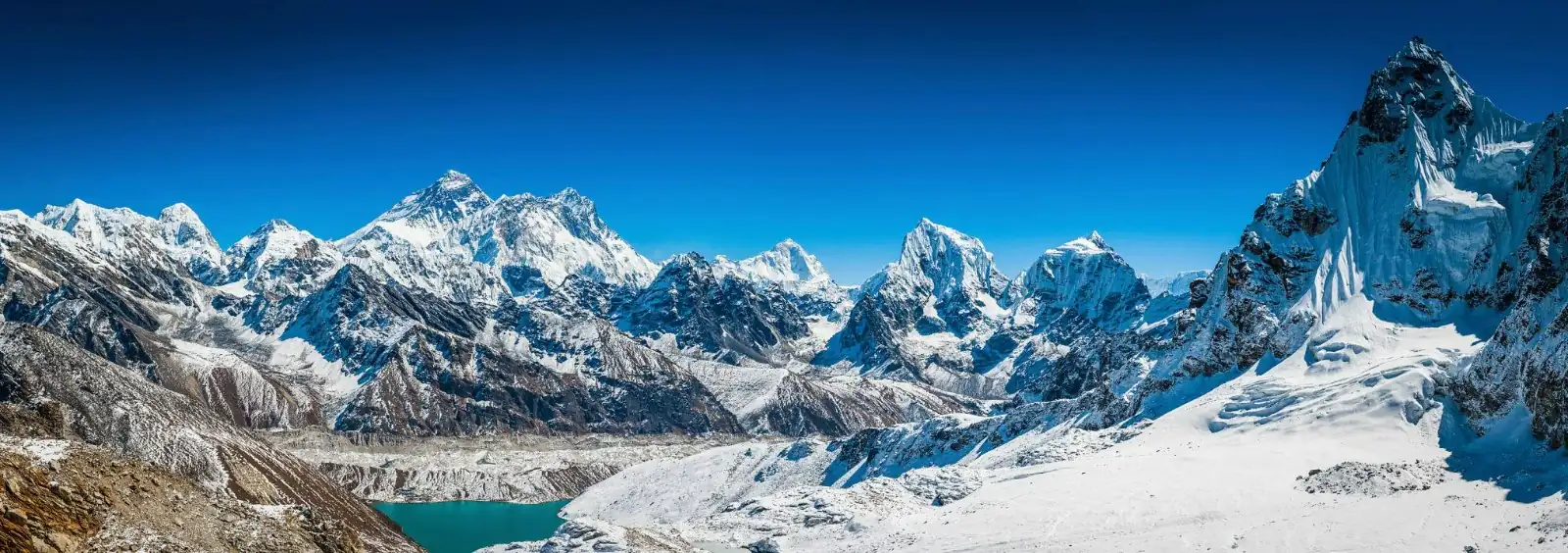
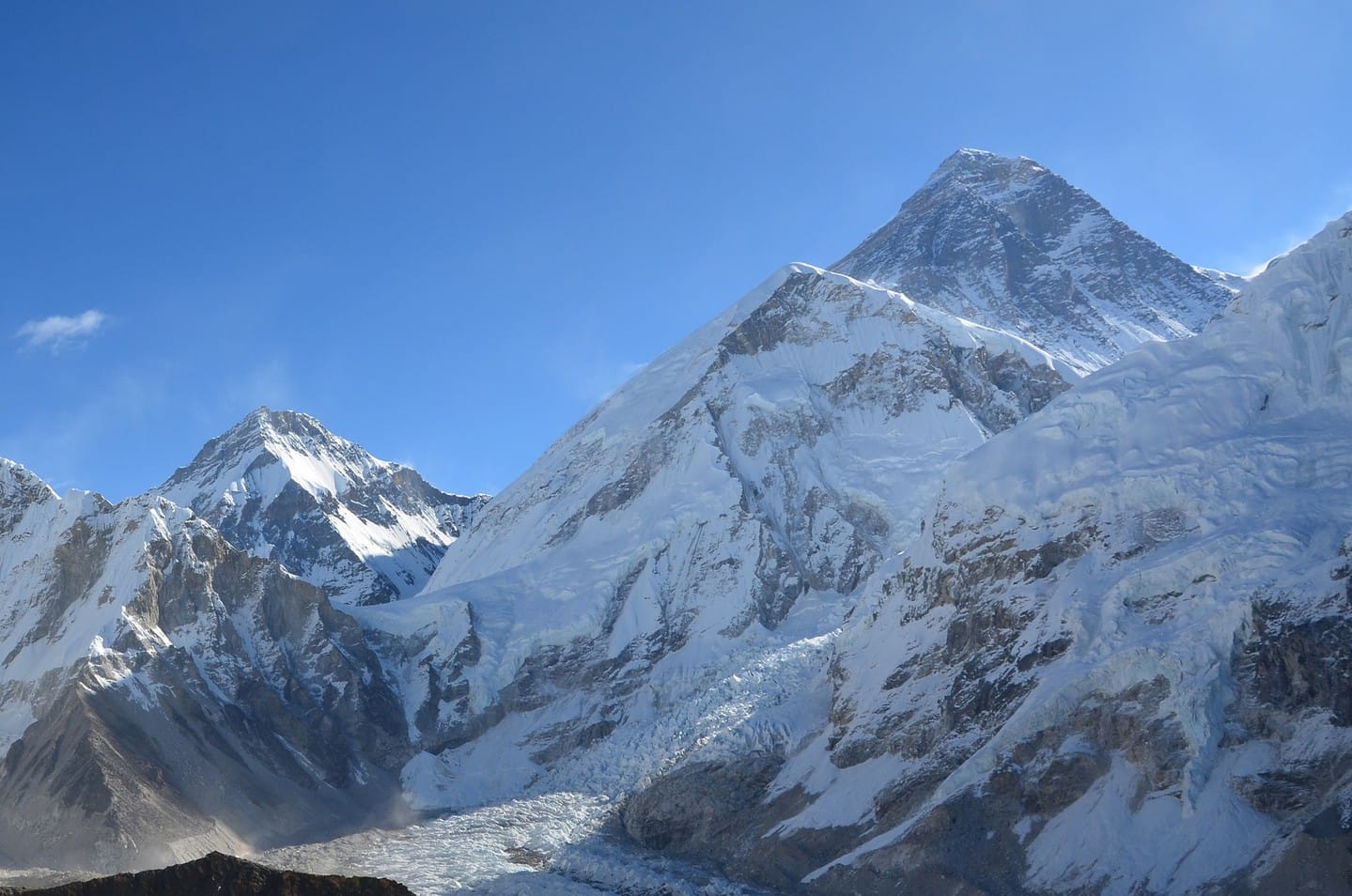
This iconic 7-day trek offers you the stunning views of Mt. Everest, Ama Dablam, Lhotse, Thamserku, and the iconic Sherpa villages of the Khumbu region. Likewise, do not forget to bring your camera along, because you cannot resist the temptation to take great photos of the Everest panorama.
Enjoying the incredible views of the Himalayas. and green hills, you will land at Tribhuvan International Airport, Kathmandu. After completing airport formalities, representatives from Explore Nepal Trails will receive and drive you to the hotel.
Later in the evening, attend a small team meeting where your guide will share trip details.
Early in the morning, we finish our breakfast and drive towards the domestic terminal of Tribhuvan International Airport. The flight from Kathmandu to Lukla is pretty short. Enjoying the aerial view of the mighty Himalayan Mountain range, you will land on a steep mountain runway.
Upon arrival at Tenzing Hillary Airport at Lukla, start your trek towards Phakding village. Trek downhill to the Thado Koshi River, cross the suspension bridge, and get an impressive close view of Mt. Kusum Kanguru. Finally, after crossing a small village of Gha and walking a short distance, you will reach Phakding.
Namche Bazaar is the capital of the Khumbu region of Nepal, located at 3,440 meters After having breakfast, we head towards Namche Bazaar, the main destination of the Everest Panorama Trek. Leaving Phakding, we will walk for 6-7 hours to reach the Sherpa town of Namche Bazaar, which is popular as the stopping point for altitude acclimatization.
Gradually, we will climb uphill through the dense forest’s tail. In the clear weather, you will get the first close sight of mighty Mt. Everest. After a few hours of walking and crossing the Hillary suspension bridge, we will finally arrive at Namche Bazaar, a famous Sherpa town or gateway to Mt. Everest. It has a large number of guest houses, restaurants, and bakery-cafes. Also, it was once a major trading center of the Khumbu region.
We will reach Ama Dablam from near Namche with close-up views of the Himalayas in the Everest region, including Mt. Everest. We will then hike up to the Everest View Hotel & enjoy mesmerizing views of Everest, Nuptse, Lhotse, and Ama Dablam from the hotel. This hotel was listed in the Guinness Book of World Records (2004) as the highest-placed hotel in the world. Generally, trekkers stop here for a break on an acclimatization walk.
We will explore Khumjung Monastery and witness the ancient Yeti’s scalp and a giant statue of Guru Rinpoche. You can also visit the Khumjung School established by Hillary. Likewise, you can also explore the Sherpa Culture Museum, built in traditional Sherpa architecture. It has a collection of photographs of Sherpa climbers who climbed Mt. Everest, including the legendary Tenzing Norgay Sherpa.
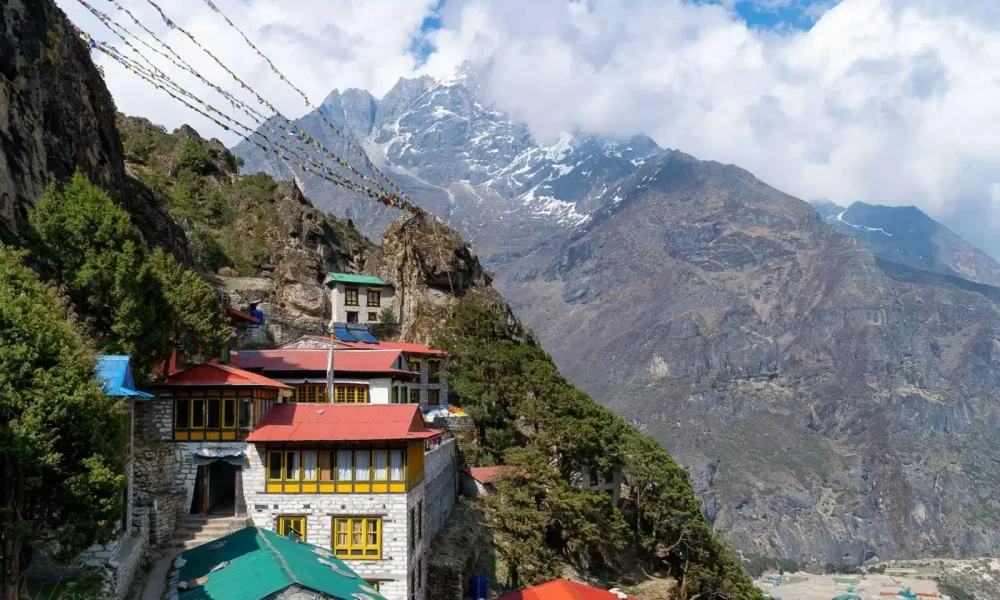
Tengboche Monastery The Largest monastery in the Khumbu.
We will follow the trail descending to Dudh Koshi. The trail bestows stunning views of Everest, Ama Dablam, Lhotse, and surrounding peaks. Traverse through rhododendron forests, cross the suspension bridge over the refreshing white water, and hike up the rocky trail to the village of Tengboche.
Tengboche is famous for its monastery and the highest bakery in the world. Tengboche monastery, set against the backdrop of Ama Dablam, is the largest monastery in the Khumbu region of Nepal. You can visit the monastery and soak up its beauty of the monastery. Grab an opportunity to witness monks performing rituals, praying, and chanting sacred mantras.
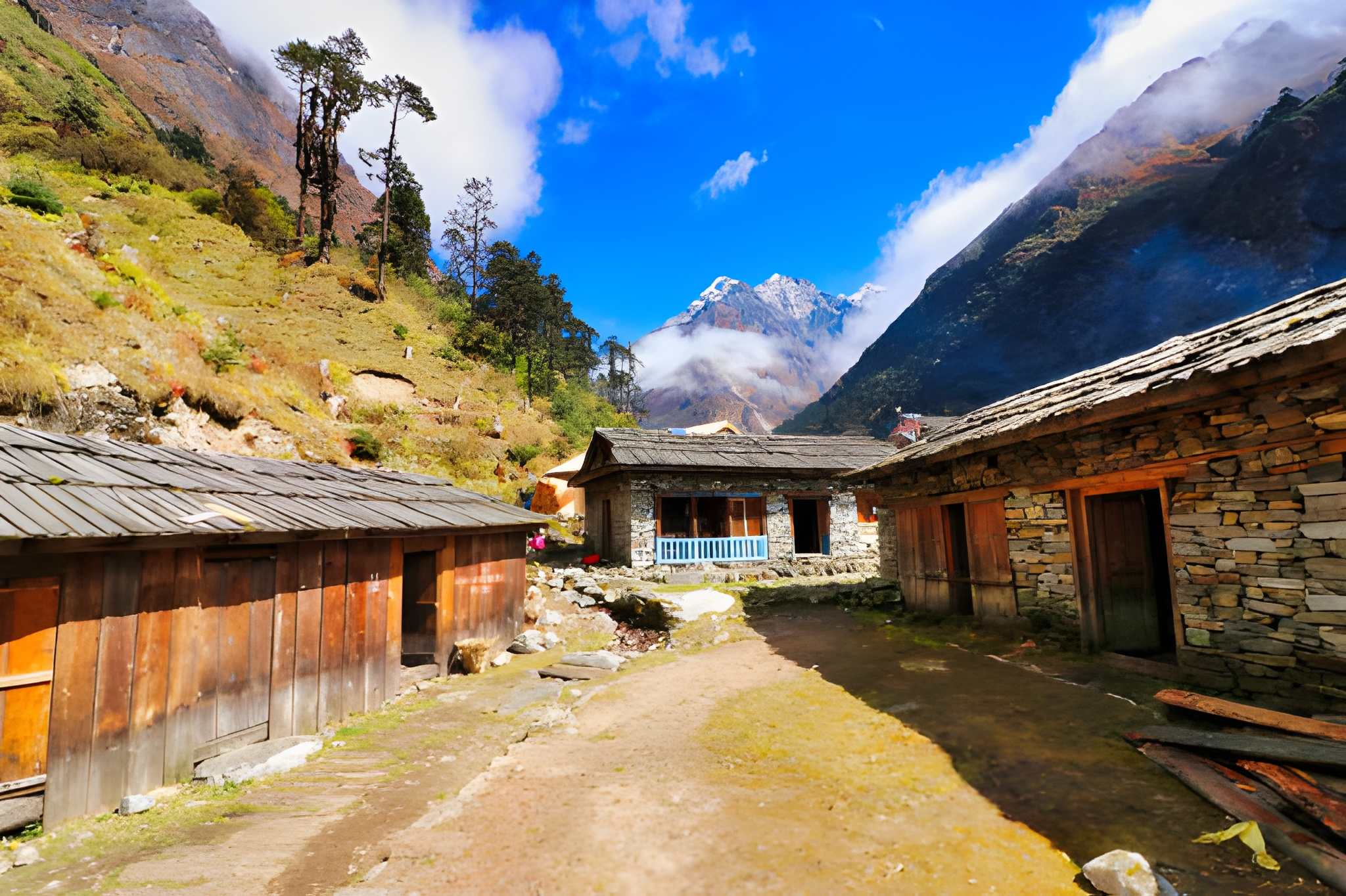
The trekking trail today leads to Monjo, a small village at an altitude of 2,835m. The trail is adorned with Mani walls and prayer flags, and a few monasteries. Monjo is a stopping point for trekkers, boasting several guesthouses and tea houses.
After having breakfast, we will follow the Dudh Koshi River trail. After crossing the suspension bridge, we head to Ghat before trekking towards Phakding village. We will then walk through lush birch and juniper forests, gradually ascending and descending to reach the Pasang Lhamu Memorial gate.
We begin our journey towards the Tenzing Hillary Airport, also known as Lukla Airport. After an early morning breakfast in Lukla, you will take an early morning flight back to Kathmandu Valley. Upon your arrival, drive back to your hotel.
A representative from Explore Nepal Trails will transfer you to the international airport to connect flights for onward destinations. Get back home with a fantastic experience of the Everest Panorama Trek.
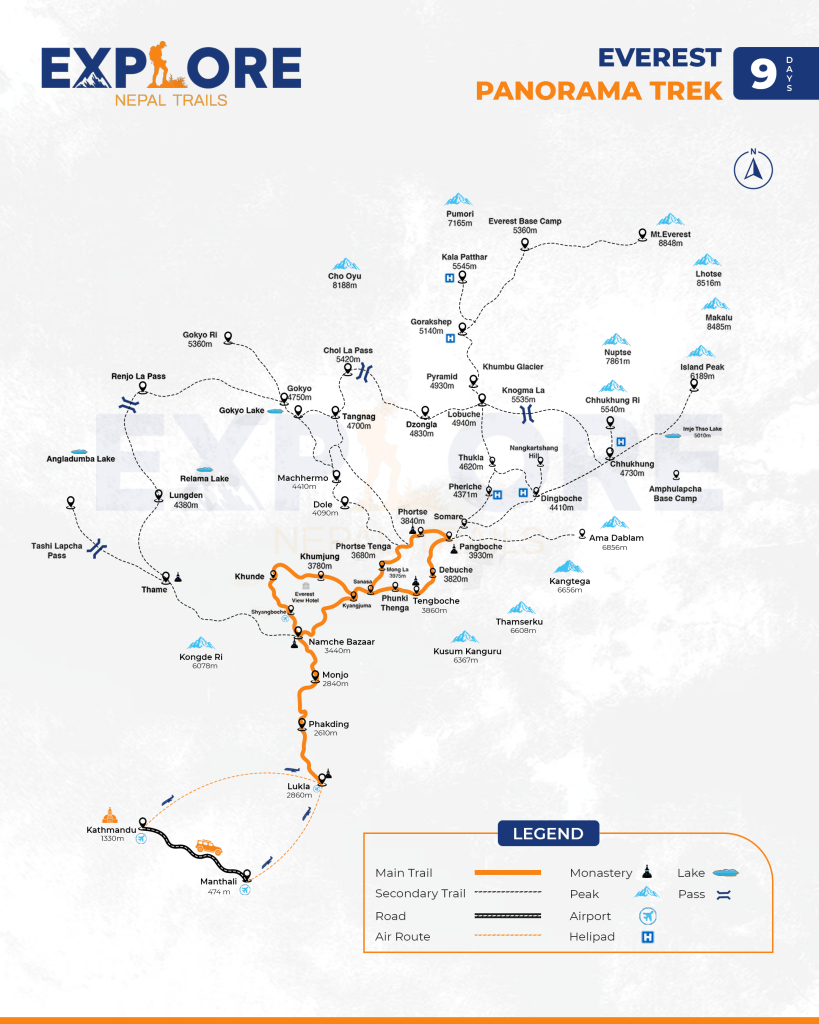
The difficulty level of the Everest Panorama Trek is easy to moderate. Anyone with no prior trekking experience can embark on this trek. This trek itinerary is devised by trekking experts and is suitable for all age groups. On a normal day, you will be walking for an average of 5-6 hours, and the trek from Tengboche to Monjo demands 7-8 hours of trekking. If you are physically fit and can walk for a couple of hours on a rugged trail, this trek is doable.
Grade: Easy to Moderate
Perfect for beginners
Maximum altitude: 3,867m (Tengboche)
No technical climbing skills required
The Everest Panorama Trek usually takes around 7 to 9 days. It’s a shorter and more relaxed version of the Everest Base Camp Trek, making it ideal for those with limited time or those looking for a less challenging option.
The best seasons for the Everest Panorama Trek are spring (March to May) and autumn (September to November). These months offer clear skies, pleasant temperatures, and stable weather, providing the best trekking conditions.
You will need two main permits: the Sagarmatha National Park Entry Permit and the TIMS (Trekkers’ Information Management System) Permit. These can be obtained in Kathmandu or at the entrance to the Sagarmatha National Park in Monjo.
Since the trek does not go above 4,000 meters, the risk of altitude sickness is relatively low. However, it is still important to follow proper acclimatization practices, drink plenty of water, and avoid rushing to higher altitudes too quickly.
Essential items to pack include proper trekking boots, warm clothing (layers are key), a sleeping bag, a waterproof jacket, a hat, gloves, sunscreen, and a first aid kit. Don’t forget your passport, permits, and some cash in Nepali rupees for small expenses.
Yes, the Everest Panorama Trek is perfect for beginners as it is less demanding than the Everest Base Camp Trek. It provides a great opportunity to see the stunning views of Mount Everest and surrounding peaks without the strenuous challenges.
The highest point on the Everest Panorama Trek is the Tengboche Monastery, which is at an altitude of around 3,860 meters (12,664 feet). This makes it a moderate trek, with less risk of altitude sickness compared to the longer Everest Base Camp Trek.
There are no reviews yet. Be the first one to write one.

Explore Nepal Trails is your trusted partner for trekking, peak climbing, and mountaineering adventures in Nepal. From classic Himalayan treks to high-altitude expeditions and cultural journeys, we deliver safe, well-planned, and unforgettable travel experiences.
We Accept

Join our community of over 200,000 global readers who receive emails filled with news, promotions, and other good stuff.

WhatsApp us