Introduction: Overview of the Himalayas Journey.
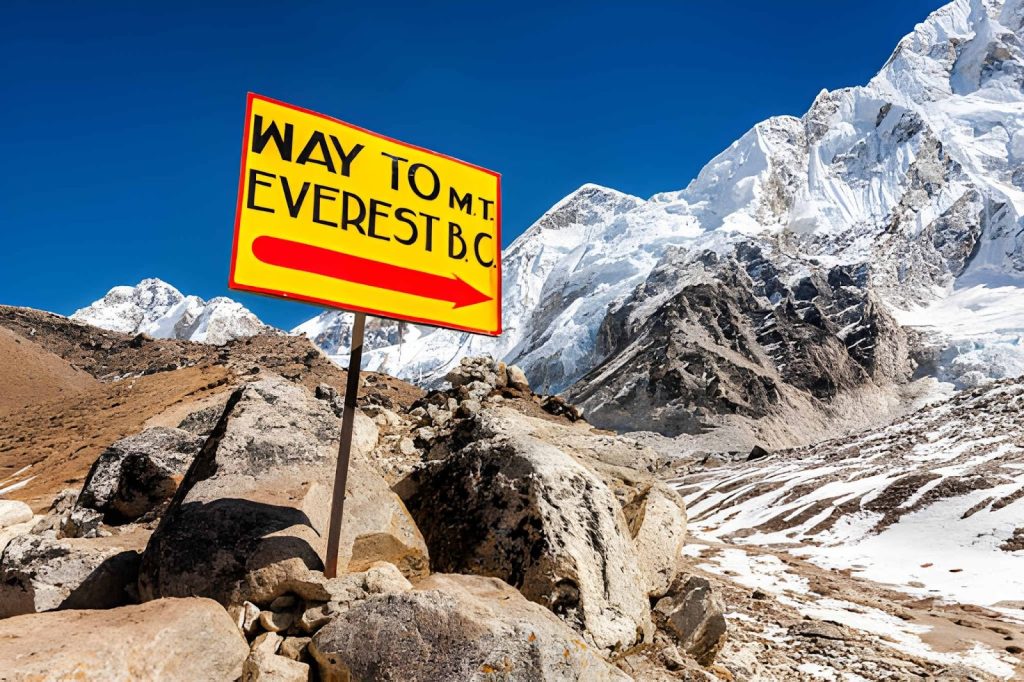
Imagine being at an elevation of 5,364 meters above the sea level, among towering giants of the Himalayas, prayer flags waving in the thin mountain air, and the famous pyramid of Ama Dablam hanging in the sky behind you. At the Everest Base Camp, it is not the place that you simply visit; it’s somewhere you are standing at the gate of normal human imagination, where climbers are already assembling to attempt the summit of every mountain on earth.
This is a climax, which is gained through days of walking through ancient Sherpa villages and suspension bridges crossing paths over rushing glacial rivers; it is an experience gained by fewer than 40,000 people yearly, which can be counted as people loving the adventure.
The question is, why am I writing this guide? All the people have already done that, the answer goes – I have experience of almost 25 years of normal human life! I was born on the lap of mountains with a beautiful scenic view of the Solukhumbu region, where I have always wanted to exist, because of that, still a big NO!!!!. Why then? – Done all the collective knowledge of 25 years of life into the travel sector to help fellow tourists and travellers around the world to properly visit Nepal for the Everest Base Camp Trek.
Overall, this will serve as a guide for all adventure seekers to follow when committing to any trek with proper research and with the best authorized articles on it.
It is a complete guide to the adventurous traveller who wants to safely explore one of the most beautiful scenes on planet earth, as well as the hardcore adventure seeker who has decided to tackle the task of conquering the high altitude. You would get all the details to know about the physical readiness and equipment necessities to the cultural details, and security to make your dream of the Everest Base Camp Trek come true. You can be attracted by the adventure of high-altitude trekking or by the attraction of the experience with Sherpa culture in the country of its origin; in any case, this guide will assist you in preparing for the experience of the journey of your life.
What’s with the Everest Base Camp Trek?
Let’s start with its history on our god Everest began with the exploration of Mount Everest, which in Nepal is often called Sagarmatha and Chomolungma in Tibet. For centuries, the Khumbu region remained isolated, inhabited primarily by the Sherpa people who lived a traditional agricultural and trading lifestyle.
At the beginning of the 20th century, Everest started gaining the interest of British explorers. One of the earliest expeditions to reach Everest was in the 1920s when the Tibetan side was approached. Nepal was closed to foreigners until 1951. These expeditions provided a foundation for mapping paths and the hardships of high-altitude acclimatization.
Historic 1953 Everest expedition
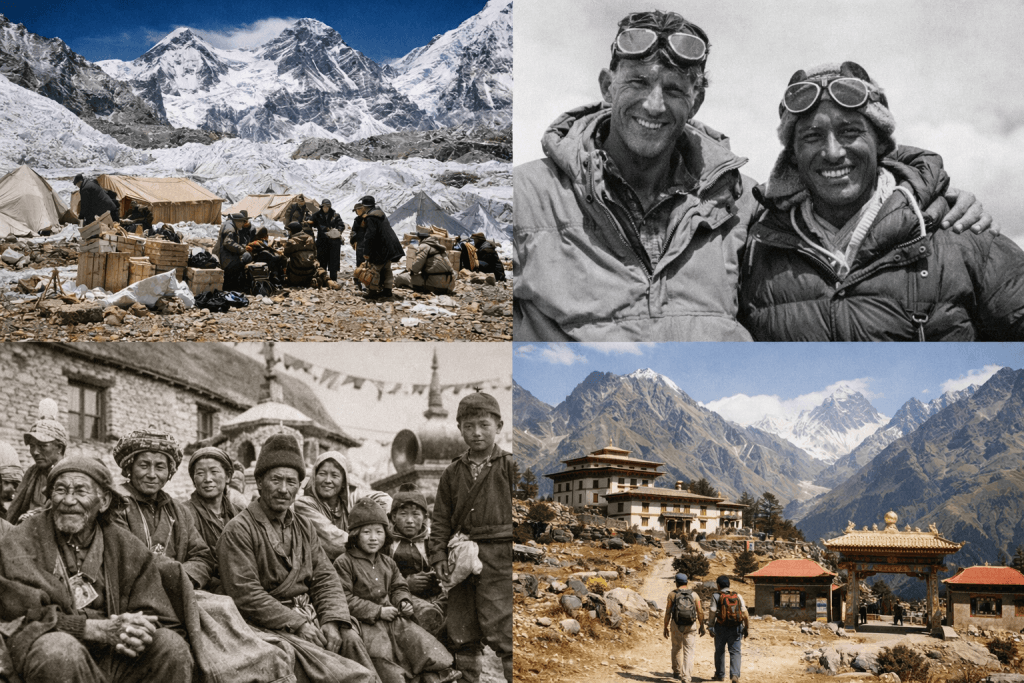
The expedition went through what is known today as the standard Everest Base Camp Trek path, beginning in the Khumbu region. This expedition was successful, which underscored the importance of the Sherpa people and their mountaineering capabilities, stamina and terrain experience, which played a crucial role in the exploration of the Himalayas.
Sir Edmund Hillary and Tenzing Norgay are the first people said to have all attained the top of Mount Everest on May 29, 1953.
Their expedition went through the now traditional Everest Base Camp trail, beginning with the Khumbu area. This expedition also brought to light the critical importance of the Sherpa community, whose mountaineering expertise, stamina, and understanding of the terrain played an important role during Himalayan exploration.
This historic climb made Everest a far-off mountain, which has become a world icon of human survival and adventure.
Role of the Sherpa Community establishment
The history of the Everest Base Camp Trek is based on the Sherpa people. As they were initially migrating south of eastern Tibet more than 500 years ago, Sherpas have adapted remarkably well to a high-altitude livelihood. Their culture, Buddhism, and strong admiration of the mountains still influence the trekking experience in the present times.
As more and more Everest expeditions were taking place, Sherpas were made world-famous as elite high-altitude guides and climbers. Numerous other villages were formed along the path, including Namche Bazaar and Tengboche, which eventually became places of trade and support of expeditions, slowly accommodating trekkers worldwide.
Everest Base Camp Trek | Is it worth the hype?
The Everest Base Camp Trek is now the final frontier of the bucket-list experience, appearing all over Instagram pages and travel bloggers claiming it to be the trip of a lifetime. However, at a cost of $1,500-2,500 a ticket, two weeks of your life, and the ability to make the trail look like a mountain highway in the busy season, it’s understandable to question, is this trek really worth the hype, or is it just a tourist trail that is charging by the notoriety of the name of Everest?
The answer isn’t simple. Sure, the mountain sceneries are truly magnificent, Ama Dablam shining at sunrise and Everest peak at Kala Patthar providing the sceneries that prove all the photos were worth the visit. The Sherpa culture is also genuine and rewarding, the feeling of accomplishment of reaching 5,364 meters is true, and the infrastructures make serious high-altitude trekking simple with no technical expertise. But the base camp itself is usually anti-climactic (simply rocks and ice), altitude sickness may turn days into miserable miseries, the commercialism pattern cannot be disputed, and you will be with hundreds of other trekkers on the trail in the high season.
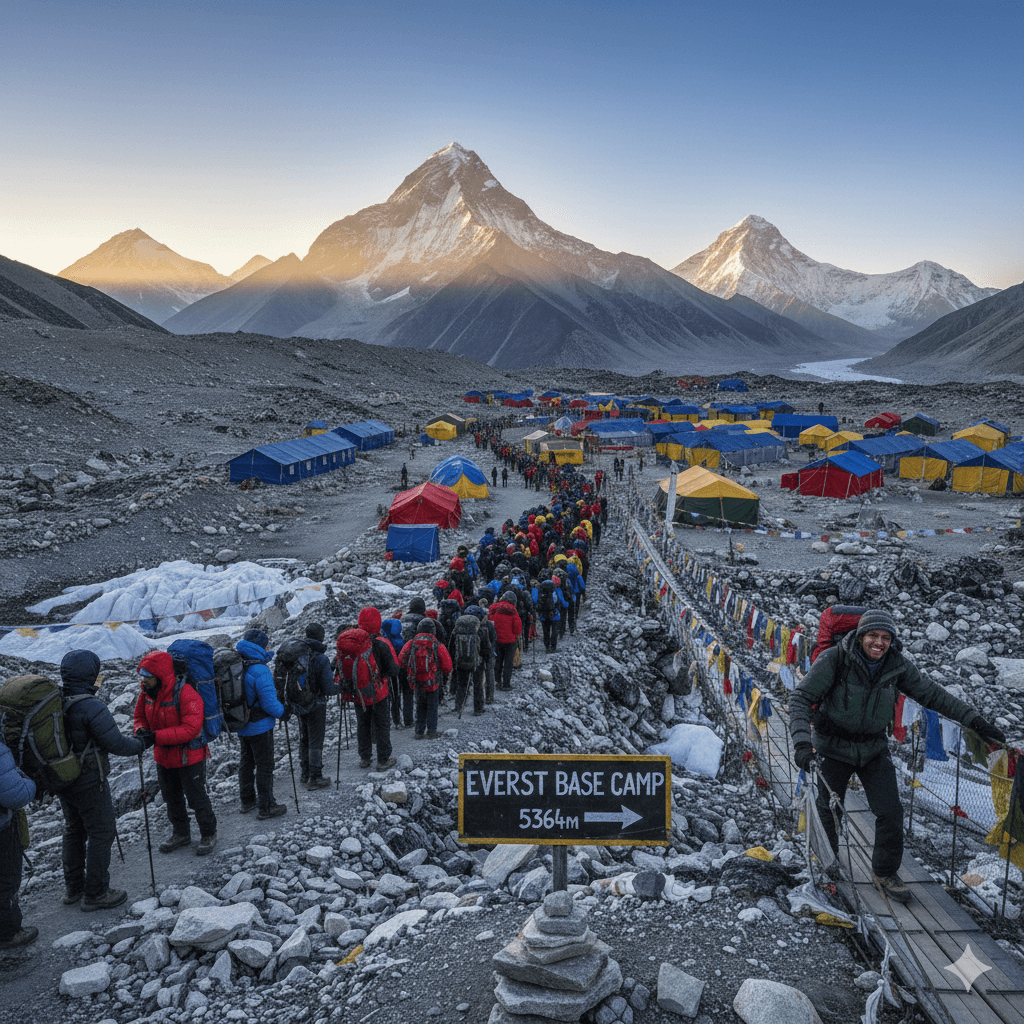
So is it worth it? Provided you are especially attracted to the experience of standing on the base of the tallest mountain in the world, appreciate both the panorama and the cultural experience, and can cope with people and simple assumptions, then yes, by all means. The majority of the trekkers, including those who had a hard time, walk away with the impression that it was worth the hustle. But, when you value being alone, have a low budget, or just want to do it to check in on social media, you will probably be able to find a more affordable option in alternatives to the Himalayas, like the Manaslu Circuit or the Langtang Valley.
It is not necessarily a life-changing experience, and the base camp is a disappointment to many an explorer, but the two weeks of trekking through Sherpa villages, over suspension bridges, and to the top of the world provide something truly unique, as few other available adventures can exist. The hype is not only justified, but it is exaggerated because the trek truly is an amazing one, but it has been mythologised, and it can never be brought to reality. Go with your eyes uncovered to the magic and the discomfort, and you will almost definitely find it worth it.
So, know with a detailed itinerary. We will be clearer on this adventure
The best time to trek to the Everest Base Camp
The weather is not the only factor that determines the ideal time to hike to Everest Base Camp. Your experience of the Everest base camp trek can be impacted by a number of factors, including visibility, temperature, trail conditions, general atmosphere, flight reliability to Lukla, and even the energy of the locals. Depending on the season, all of these variables can also change significantly.
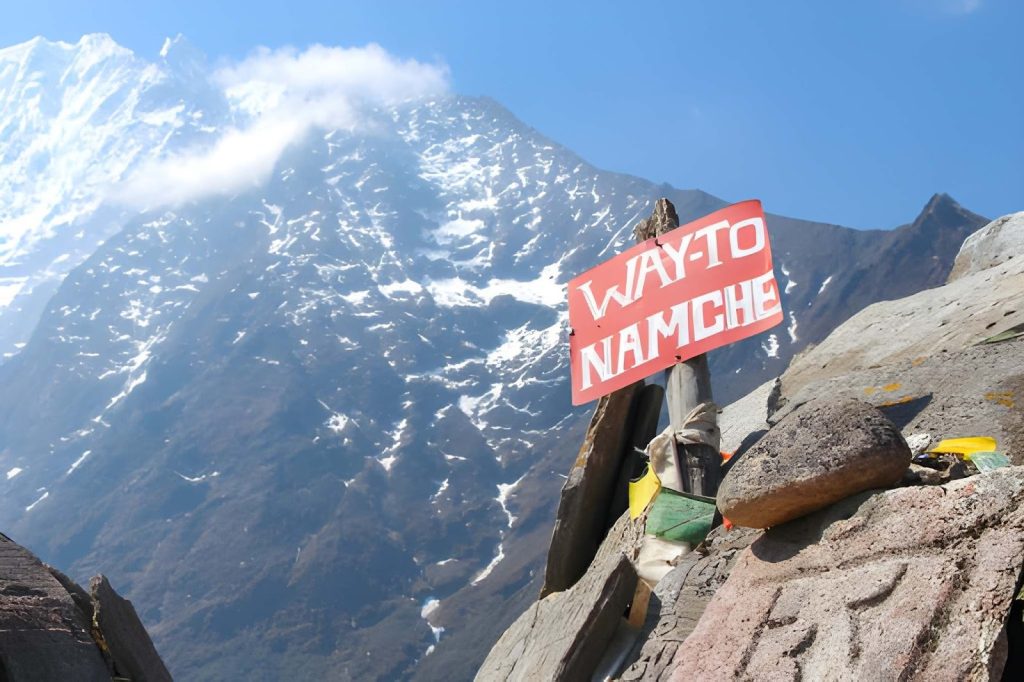
Although many people only think that “spring” and “autumn” are the best seasons, it’s wise to realize that the trail is open practically year-round. Now, it depends on how each season truly feels and how well it matches your expectations.
Best Seasons for the Everest Base Camp Trek
The best times of year to trek to Everest Base Camp are always thought to be spring and fall. Almost everyone trekking there, whether beginner or experienced, prefers these seasons, as everything from the temperature to the culture is favorable.
Spring (March–May)
Spring is one of the most popular seasons for the Everest Base Camp trek, especially for trekkers visiting the trail for the first time.
- Weather: Generally stable with increasing warmth as the season progresses; not much changes
- Temperature: Around 10–20°C during the day, colder at night, at higher altitudes
- Visibility: Good mountain views, though occasional morning haze is possible
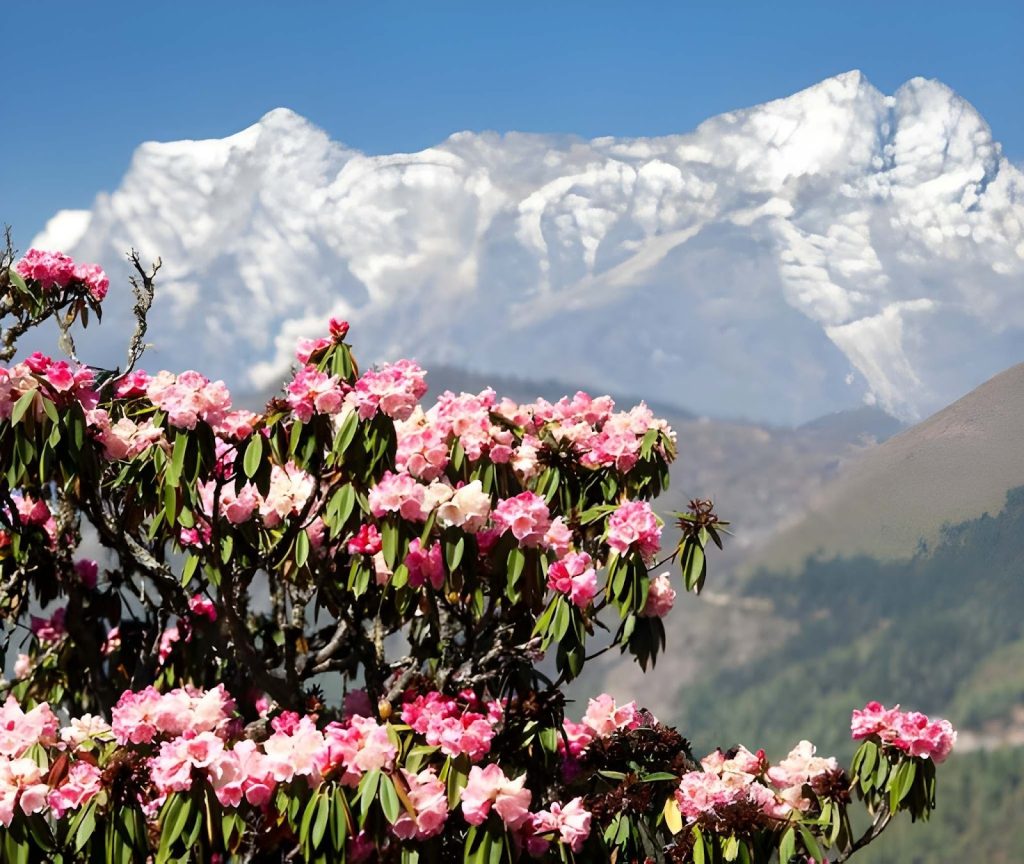
- Landscape: Rhododendron forests in full bloom at lower elevations
- Trail Atmosphere: Energetic and social, with climbers preparing for Everest summit attempts, but it has the potential to be overcrowded.
Remember that spring coincides with the Mount Everest climbing season, so trekkers often encounter a large number of expedition teams, climbers, and a vibrant buzz in villages like Namche Bazaar and Lobuche.
Best for: First-time trekkers, social travelers, nature enthusiasts
Autumn (September–November)
Autumn is a very popular season for being the best time to trek to Everest Base Camp, especially for those prioritizing clear skies and long-distance Himalayan views.
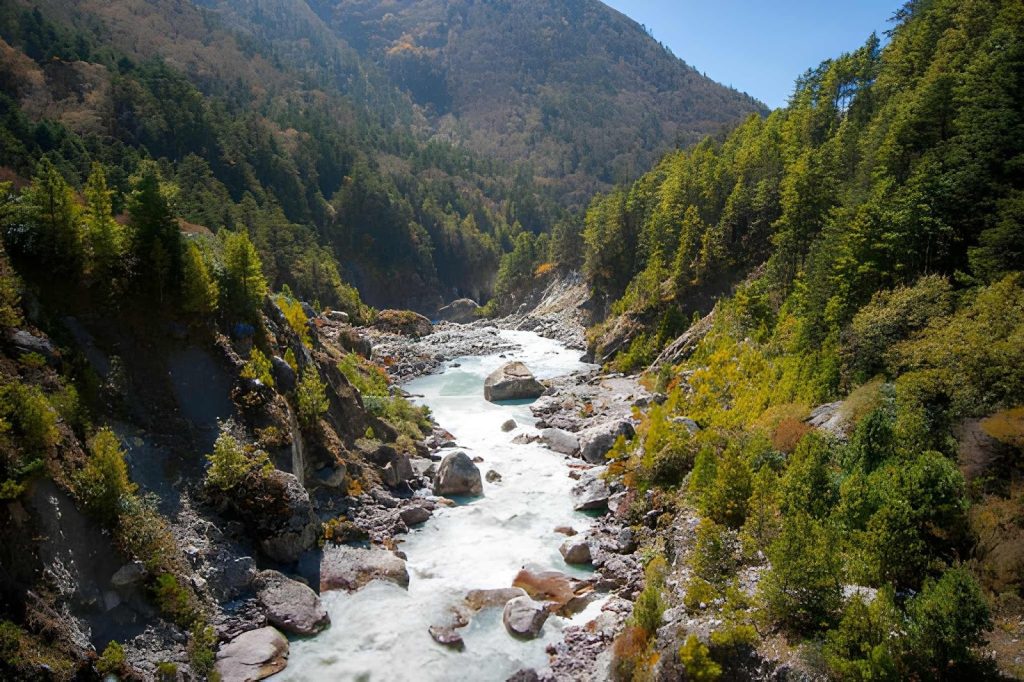
- Weather: Stable and dry after the monsoon, but could show some aftermath if the monsoon is heavy
- Temperature: Approximately 15–22°C during the day at lower elevations, but relatively colder temperatures at higher altitudes, especially at night
- Visibility: Excellent. We can see the clearest views of Everest, Lhotse, Nuptse, and Ama Dablam
- Cultural Vibe: Major Nepali festivals such as Dashain and Tihar fall on this season, bringing added color and celebration
- Crowds: This is the busiest trekking season, especially in October. So, expect a huge crowd of trekkers
Autumn offers the most reliable conditions for photography and trekking efficiency, but it also means busier trails and teahouses, especially between Namche Bazaar and Dingboche.
Best for: Photographers, trekkers with limited time, those seeking ideal conditions
Off-Season Everest Base Camp Trekking
Now, while the seasons above are always the go-to for almost every trekker, winter and monsoon are picked up more by adventurous and experienced trekkers. These seasons offer more of “high-risk, high-reward” challenges due to the obstacles faced on the trail and the experience they offer.
Winter (December–February)
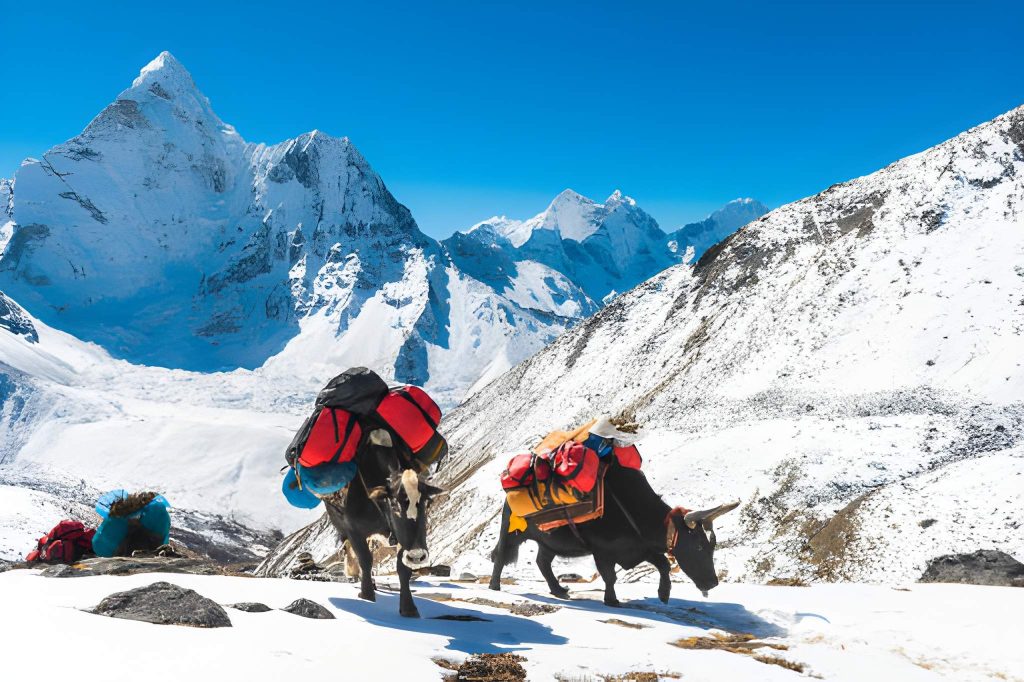
Everest Base Camp winter trekking is quieter and more challenging, but it offers a very different trekking experience, especially if you’re looking for a challenge
Pros:
- Minimal crowds and peaceful trails
- Snowy peaks and views
- Clear skies on calm days
- Lower accommodation costs and more lodge availability
Cons:
- Temperatures at night drop to extreme levels
- Heavy snow at higher elevations
- Some lodges close above Dingboche
- Greater risk of Lukla flight delays & difficulties
Best for: Experienced trekkers, solitude seekers, flexible travelers
Monsoon/Summer (June–August)
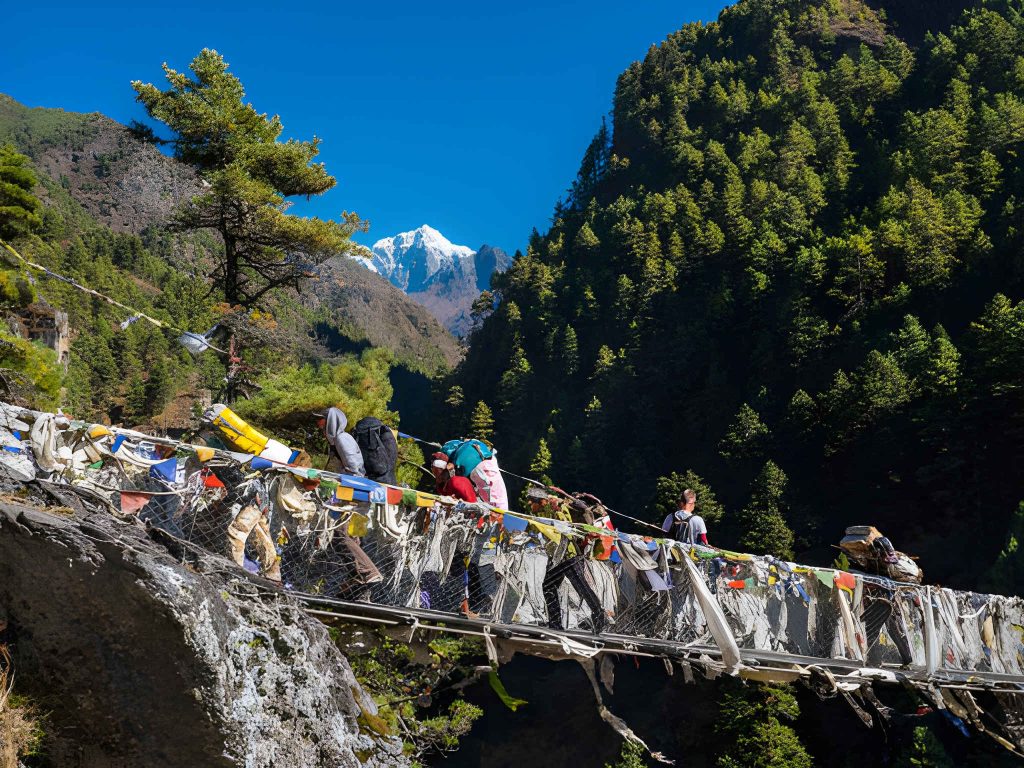
The monsoon season is the least popular time to trek to Everest Base Camp. Barely anyone treks there during this season.
Pros:
- Very few trekkers are on the trail
- Lush green landscapes at lower elevations
Cons:
- Heavy rainfall and cloud cover
- Limited mountain visibility
- Slippery trails, leeches at lower altitudes
- Frequent flight cancellations and delays
Best for: Adventure-focused trekkers who value solitude and experience over scenery
Everest Base Camp Trekking Seasons Compared
| Factor | Spring | Autumn | Winter | Monsoon |
| Weather | Mostly stable, warming | Stable, dry | Cold, dry | Wet, humid |
| Daytime Temperature | 10–20°C | 15–22°C | 5–10°C | 18–25°C |
| Visibility | ★★★★☆ | ★★★★★ | ★★★☆☆ | ★☆☆☆☆ |
| Crowds | High | Very High | Low | Very Low |
| Cultural Vibe | Expedition season | Dashain & Tihar festivals | Quiet villages | Minimal activity |
| Trail Conditions | Dry, busy | Dry, very busy | Snowy in parts | Muddy, lush greenery, and leeches at a lower altitude |
| Lukla Flight Reliability | Medium | High | High | Low |
| Trek Difficulty | Moderate | Moderate | High | High |
Which Season Is Best for You?
The season you pick for your Everest Base Camp trek should also align with what you’re going there for. If you are:
- Photographers: Late October to early November for crystal-clear skies
- First-time trekkers: April or October for balanced weather and strong trail support
- Budget trekkers: Late February or early December, with flexible schedules
- Solitude seekers: January, provided you are prepared for cold and delays
- Cultural travelers: October, to experience Dashain and Tihar along the trail
- Adventure and thrill-seekers: Late December to early February for a snowy experience. Late June to early August if you’re looking for a jungle trip.
We believe there’s no one-size-fits-all season for this trek. As said earlier, it depends on what you’re going there for. Make sure to always check and enquire about the conditions before you head there.
Climate Change in EBC & Trekking Realities Today
In recent years, weather patterns in the Everest region have become less predictable. Trekkers now face:
- More frequent Lukla flight disruptions, even during peak seasons
- Unexpected snowfall outside traditional winter months
- Faster weather changes occur at higher elevations
For this reason, adding buffer days to your Everest Base Camp itinerary is more important than ever, especially if you are trekking outside the peak months.
So, the ideal season for the EBC trek is
There is no universally “perfect” season for the Everest Base Camp trek. The best time is the one that aligns with your experience level, expectations, budget, and tolerance for crowds or uncertainty.
Therefore, the ideal time to trek to Everest Base Camp comes down to what you want from the journey. Spring and autumn offer the most suitable weather and the clearest mountain views, making them the easiest seasons to plan around.
The off-season can be equally satisfying, but only with the right attitude and preparation. You should also be prepared to compromise comfort for a more adventurous experience and a quieter trail.
Regardless of when you are visiting, the key to making a difficult adventure into a safe and rewarding experience in the Himalayas is to know the conditions in the season and to be prepared.
Basic Itinerary to Everest from Kathmandu
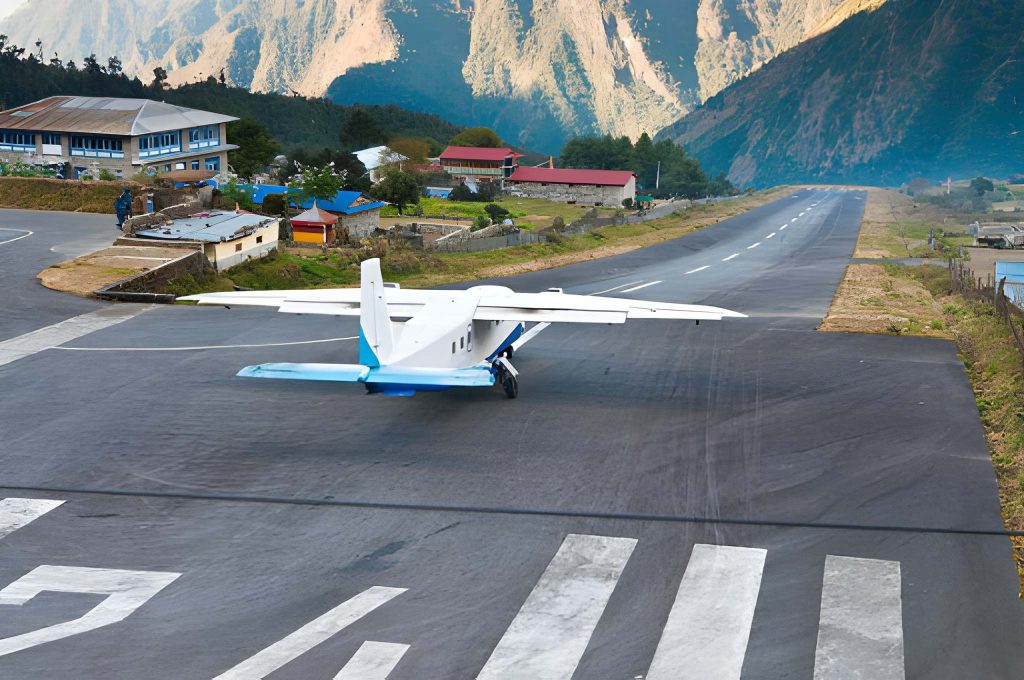
This is the classic route that will lead you through Kathmandu to the Khumbu region to as far as Everest Base Camp Trek, and back, accompanied by acclimatization and cultural attractions.
| Day | Activity | Overnight Stay |
| Day 01 | Arrival in Kathmandu, transfer to hotel | Kathmandu |
| Day 02 | Trek preparation, briefing, and sightseeing | Kathmandu |
| Day 03 | Flight to Lukla & trek to Phakding | Phakding |
| Day 04 | Trek from Phakding to Namche Bazaar | Namche Bazaar |
| Day 05 | Acclimatization day, hike around Namche | Namche Bazaar |
| Day 06 | Trek from Namche Bazaar to Tengboche | Tengboche |
| Day 07 | Trek from Tengboche to Dingboche | Dingboche |
| Day 08 | Acclimatization day in Dingboche | Dingboche |
| Day 09 | Trek from Dingboche to Lobuche | Lobuche |
| Day 10 | Trek to Gorak Shep & hike to Everest Base Camp | Gorak Shep |
| Day 11 | Hike to Kala Patthar & trek to Pheriche | Pheriche |
| Day 12 | Trek from Pheriche to Namche Bazaar | Namche Bazaar |
| Day 13 | Trek from Namche Bazaar to Lukla | Lukla |
| Day 14 | Flight from Lukla to Kathmandu | Kathmandu |
| Day 15 | Free day or buffer day in Kathmandu | Kathmandu |
| Day 16 | Departure from Kathmandu | — |
Day 01: Arrival in Kathmandu
Fly to Kathmandu (1,300 m), and to the hotel. Gather strength and collect equipment.
Day 2: Group Meeting + Pre-Trek Kathmandu.
Introduction to your trekking guide and crew; get final permits and equipment.
Day 03: Lukla Flight and Trek to Phakding.
Flight Kathmandu to Lukla Airport (access point to the Everest region) to Phakding.
Day 04: Trekking between Phakding and Namche Bazaar.
Tracing the valley of the Dudh Koshi River, pass through Sagarmatha National Park on the way to Namche Bazaar.
Day 05: Acclimatization at Namche Bazaar.
Altitude acclimatization rest day; sightseeing of the Sherpa capital and acclimatize.
Day 06: Trek to Tengboche
Moving uphill to the Tengboche, see the famous monastery that looks at the Everest and Ama Dablam.
Day 07: Trek to Dingboche
Go up the mountain towards the alpine region along Pangboche.
Day 08: Dingboche Acclimatization Day.
Relax and acclimatize, sometimes with a short walk in the area to improve the adjustment to altitude.
Day 09: Trek to Lobuche
Keep climbing, going through the memorials and going through the glacial land to the Lobuche.
Day 10: Hiking to Gorak Shep and Everest Base Camp.
Gorak Shep Trek and continue to Everest Base Camp (5,364 m).
Day 11: Kala Patthar and Back to Phoriche.
Rise early in the morning with hiking to Kala Patthar and see the sunrise and then hike down to Pheriche.
Day 12–15: Return Trek to Lukla
Tracing the steps through Dingboche, Tengboche, Namche Bazaar to Lukla.
Day 16: Fly Back to Kathmandu
Flight Lukla Kathmandu; this concludes the trekking part.
Day 17: Departure or Onward Travel.
Last parting with Kathmandu or further Nepal sightseeing.
For the detailed itinerary, please visit our main parent Everest page.
How much does the overall trek cost?
We will jump right to the figure: the trek itself (without international flights) costs between 1,500 USD and 2,500 USD. The broad spectrum is based on your preferences, like ultra-budget solo hiking to comfort with all the drills. This is precisely where all the money goes and how to spend wisely.
Quick Everest Base Camp Trek Cost Overview
Three Budget Scenarios:
- Ultra-Budget Solo: $868-$1,058
- Mid-Range with Guide: $1,908-$2,408
- Everest Base Camp Luxury Trek (Guide + Porter): $2,738-$3,348
What will not be included: International flights ($800-1,800), Kathmandu accommodation, Nepal visa ($30-50), sightseeing.
Complete EBC Trek Cost Breakdown Table
| Expense Category | Budget Option | Mid-Range Option | Comfortable Option | What You Get |
| Kathmandu-Lukla Flights (Round Trip) | $350 | $400 | $450 | • 35-minute scenic flight• Higher in peak season (Oct, Apr-May)• Weather delays common budget buffer days• Book 2-3 months ahead for best rates |
| Permits (Total) | $38 | $38 | $38 | • Sagarmatha National Park: $23• Khumbu Municipality: $15• Get in Kathmandu or at checkpoints• TIMS card no longer required |
| Accommodation (12-14 nights) | $50-70 | $70-100 | $100-140 | • Basic teahouse: $3-5/night• Better lodges (Namche): $8-15/night• “Luxury” lodges: $25-40/night (lower villages only)• Rooms = 2 beds, shared bathroom, no heat above Namche |
| Food & Drinks (14 days) | $280-350 | $400-500 | $500-700 | • Dal bhat only: $20/day• Varied menu + snacks: $30-35/day• Western food + extras: $40-50/day• Prices triple at high altitude |
| Guide (14 days, all costs) | Not hired | $630-700 | $700-840 | • Daily wage: $25-35• Plus meals, insurance, tips• Navigation, safety, cultural insights• Essential for first-timers |
| Porter (14 days, all costs) | Not hired | $490-560 | $560-630 | • Daily wage: $20-25• Carries a 15kg duffel bag• Plus meals, insurance, tips• Dramatically reduces physical strain |
| Travel Insurance | $100-150 | $150-200 | $200-250 | • Must cover trekking to 6,000m• Helicopter evacuation coverage ($5,000-10,000)• NON-NEGOTIABLE expense |
| Gear Rental (if needed) | $0 | $140-210 | $0 | • Sleeping bag: $1-2/day• Down jacket: $1-2/day• Trekking poles: $0.50-1/day• Consider buying used in Kathmandu |
| Extras | $50-100 | $100-200 | $200-300 | • Hot showers, charging, WiFi• Tips, souvenirs• Contingency for flight delays |
| TOTAL | $868-1,058 | $1,908-2,408 | $2,738-3,348 | Excludes international flights |
Speaking of the truth: Foods cost more when the altitude elevates
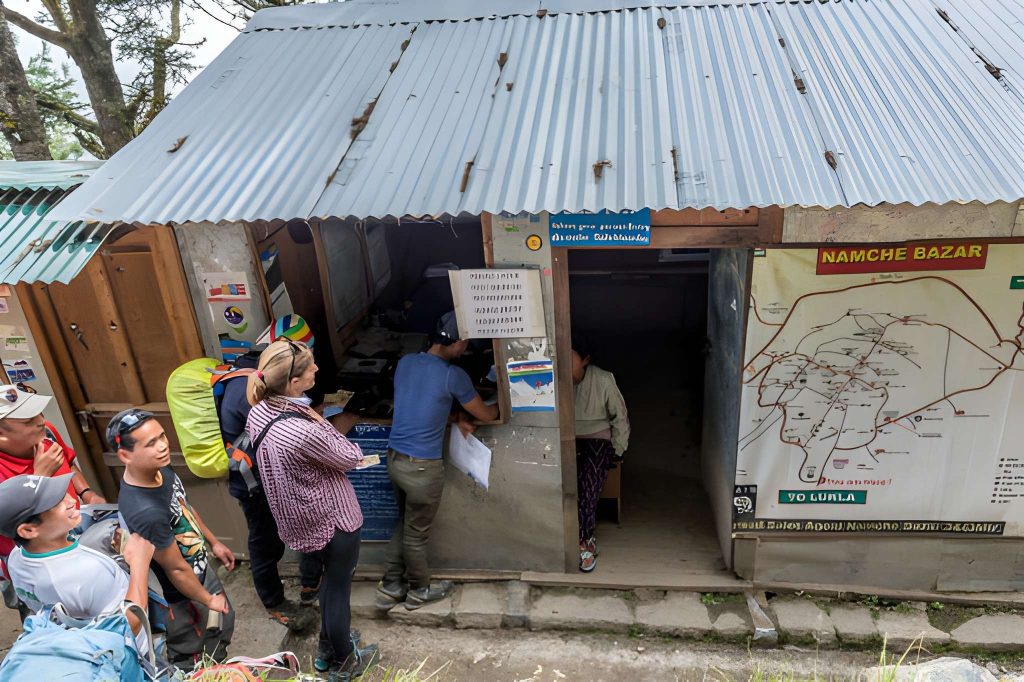
Breakdown for the costing of the foods:
| Location/Elevation | Breakfast | Lunch | Dinner | Hot Drinks | Snacks | Daily Total |
| Lukla to Namche(2,600-3,440m) | $3-5 | $4-7 | $5-8 | $1-2 | $1-3 | $20-30 |
| Tengboche to Dingboche(3,860-4,410m) | $4-6 | $5-8 | $6-10 | $2-3 | $2-4 | $25-35 |
| Lobuche to Gorak Shep(4,940-5,164m) | $5-8 | $7-12 | $8-15 | $3-4 | $3-5 | $35-50 |
Let me suggest to you the very best value meal, which is Daal Bhaat with lentils(with Unlimited rice can be added)
Breakdown of the Guide and Porter Costing
| Service | Daily Wage | Additional Costs Per Day | Total Daily Cost | 14-Day Total |
| Experienced Guide | $30-35 | $10-15 (meals + insurance) | $40-50 | $560-700 |
| Basic Guide | $25-28 | $10-12 (meals + insurance) | $35-40 | $490-560 |
| Porter | $20-25 | $8-10 (meals + insurance) | $28-35 | $390-490 |
What guides provide:
- Direction and course determination.
- Monitoring of altitude sickness (life-saving).
- Cultural understanding and translation.
- Accommodation arrangements
- Emergency support
What porters provide:
- Carry main duffel bag (15kg max)
- You carry a light daypack only.
- Lessens the knee strain and injury.
- Makes the expedition much more comfortable.
Hidden Costs that can add up
Electronics & Connectivity:
- Charging equipment: 2-4 dollars per charge (more expensive at the highlands)
- WiFi: 3-8 a day (slow, intermittent above Namche)
- Total over 14 days: $80-150
Facts: Our charging on our gadgets drains faster than the normal time
Hot Showers:
- Price: Solar cost is 3-7 per unit (cheap), and gas is costly.
- Rare/impractical above 4,400m
- The average number of times that trekkers take a shower is 2-3 times.
- Total: $15-25
Water:
- Bottled water: 1-4 litres (produces plastic waste)
- Alternative: Purification pills = $10-12 whole trek.
- Savings with purification: $40-70
Snacks:
- Kathmandu prices: $0.50-1 per item
- Mountain top prices: $3-5 each.
- Intelligent action: Shopping in Kathmandu ($30-50), can save 80-120.
Alcohol:
- Beer in Namche: $4-5
- Beer at high villages: $7-8
- Budget effects: $50-100 in case of regular drinking.
Try to avoid alcohol, which can affect you at high altitudes
Flight Delay Contingency:
- The delay at Lukla = 1-3 additional days.
- Accommodation + meals: $35-65 per day
- Recommended buffer: $100-200
- Weather conditions are unpredictable in the mountains. So we must be prepared for any situation
Let’s move on to the fitness and health section, where we learn what to do for the full preparation of the trek
Preparation for the Everest Base Camp Trek.
The Everest Base Camp Trek is a physically and mentally demanding undertaking that requires prior preparation, as climbing the mountain is not an easy task unless one has prepared well. This trek is not a technical climb by any means, but it is a long, high-altitude journey that demands a lot from you.
Proper preparation dramatically increases your chances of enjoying the trek rather than merely surviving it. Success on this trek has less to do with strength and more to do with endurance, pacing, mental resilience, and smart planning.
Whether you are trekking solo, with a guide, or as part of a group, proper planning significantly improves your safety, comfort, and overall experience in the Himalayas.
Why Preparation Matters More Than Fitness Alone
The Everest Base Camp trek does not require any level of mountaineering skills, ropes, or high-altitude experience. What it does require is maintained effort over 12–14 days, often above 3,500 meters, where oxygen availability drops to nearly 60–65% of sea-level levels.
Preparation for EBC rests on these three pillars:
- Physical readiness for long, repetitive days of walking
- Altitude awareness to support safe acclimatization
- Mental resilience to manage discomfort, uncertainty, and slow progress
Gym or physical strength alone does not translate well to trekking at altitude. Consistency, recovery, and pacing matter far more.
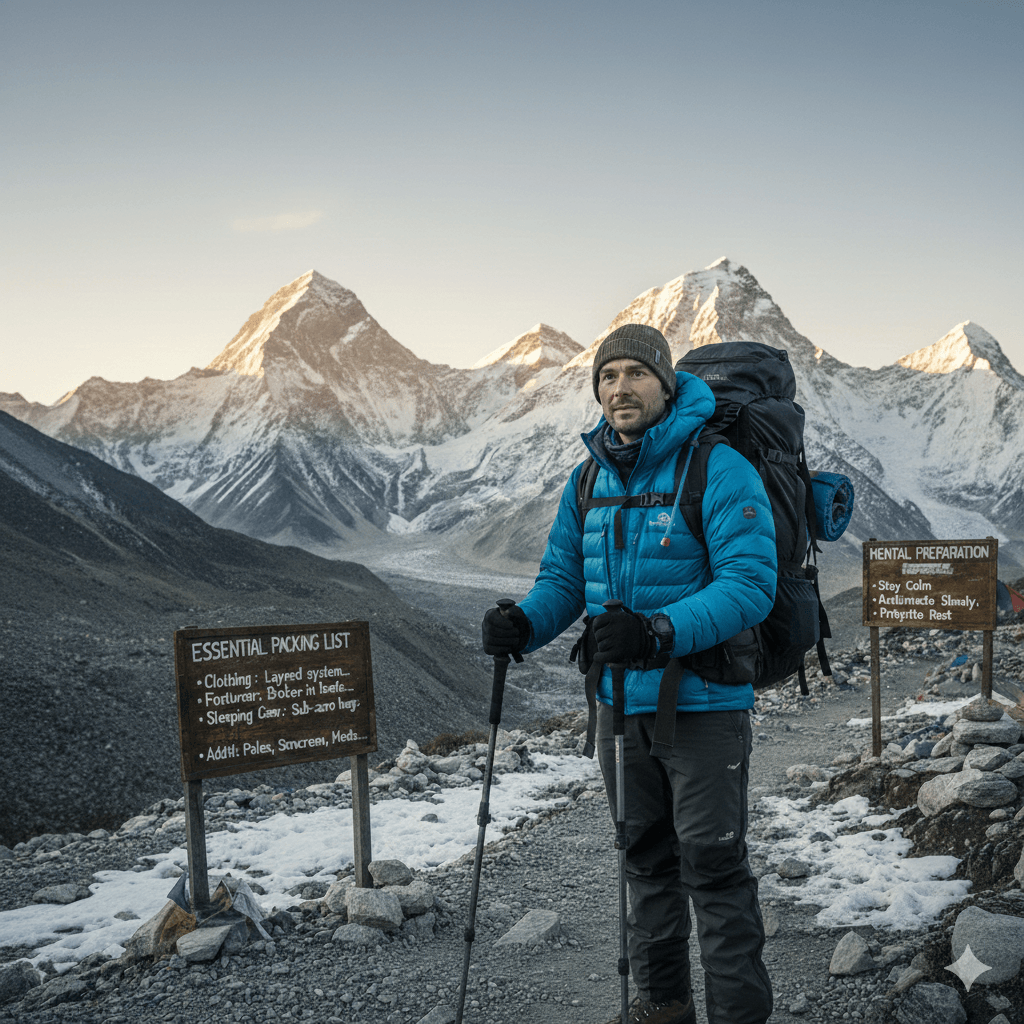
Physical Preparation for EBC: A 12-Week Readiness Framework
Train for Endurance, Not Speed
On the EBC trail, most days involve 5–7 hours of walking, often on uneven ground, with sustained ascents and long downhill sections that tax knees and quads. The goal is not explosive power but durability and endurance.
Weeks 1–4: Base Conditioning
This phase is focused on building the foundation. It involves movement and slowly having your body adapt to motion.
Focus: lungs and joints with consistency
- Cardio: 30–45 minutes, 4 times per week
- Brisk walking, light hiking, cycling, or swimming
- Brisk walking, light hiking, cycling, or swimming
- Keep intensity moderate. You should be able to hold a conversation
- Prioritize joint health: ankles, knees, hips
You are training your body to recover efficiently and establish a routine you can sustain.
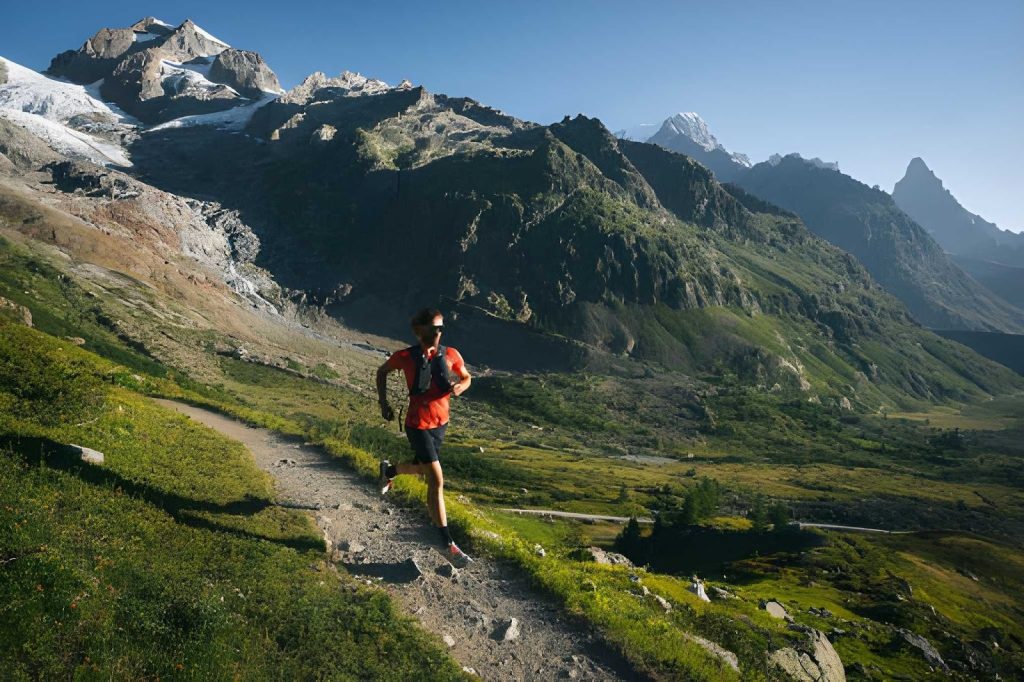
Weeks 5–8: Load & Elevation Simulation
The phase focuses on preparing your body for real elevation stress. You are focusing on adapting your body to climb ascended and elevated surfaces.
Focus: legs, balance, climbing strength
- Stair climbing or hill repeats with a backpack
- Weekend hikes with elevation gain
- Introduce strength training:
- Quads and glutes (step-ups, lunges)
- Calves (raises, eccentric lowering)
- Core (planks, rotational stability)
- Quads and glutes (step-ups, lunges)
This is where trekking-specific strength develops, particularly for long uphill and downhill sections that cause most injuries.
Weeks 9–12: Trek Simulation Phase
This phase is for training your body to manage fatigue. You’ll be focused on building stamina and endurance for long, elevated distances.
Focus: duration, recovery, pacing
- Back-to-back long walks or brisk runs on consecutive days
- Backpack weight: 6–8 kg (similar to a daypack on the trail)
- Walk slower than your normal pace
- Practice eating, hydrating, and resting during long efforts
If you can walk comfortably for several hours on tired legs, you are physically ready for EBC.
Altitude Training & Acclimatization: What Actually Helps
Can You Train for Altitude at Sea Level?
Short answer: To be honest, no.
You cannot replicate low-oxygen conditions at a lower level. However, you can prepare your body to cope better by:
- Building a strong aerobic base
- Improving breathing efficiency
- Developing disciplined rest and recovery habits
Fitness does not mean you’re immune to altitude sickness, but poor fitness does make acclimatization harder.
Altitude Tents and Masks: Are They Necessary?
Altitude tents and hypoxic masks simulate reduced oxygen during sleep or exercise. They are often used by elite athletes to simulate training at low oxygen levels. They can also help those with limited acclimatization time, but for most EBC trekkers:
- They are optional, not essential
- A well-designed itinerary is far more effective
For Everest Base Camp, slow ascent beats simulated altitude every time.
The Golden Rule of Acclimatization: “Climb High, Sleep Low”
This principle means:
- You may hike to a higher altitude during the day
- But you return to a lower elevation to sleep
Sleeping lower allows your body to adapt gradually, producing more red blood cells and improving oxygen delivery. This is why proper EBC itineraries include acclimatization days in places like Namche Bazaar and Dingboche.
Mental Preparation for EBC: The Part No One Talks About
Expect Slow Days, but Learn to Appreciate Them
Unlike most summit-driven expeditions, the EBC trek is intentionally slow. You may walk for hours without many changes in the scenery. But this is normal on the Everest Base Trail.
Mental readiness means accepting:
- Gradual progress
- Repetitive routines
- Days focused on adaptation rather than achievement
Discomfort Is Normal
Cold mornings, shared teahouse rooms, limited showers, and basic meals are part of the experience. Trekkers who struggle most are usually those who expect comfort rather than resilience.
A calm mindset turns inconvenience into character-building moments.
Let Go of Any Ego
The goal of Everest Base Camp is arrival, not conquest. Pushing too fast, comparing pace, or “proving fitness” often leads to illness or forced descent.
Patience is not a weakness at altitude, but survival intelligence.
Altitude Sickness: A Fatal Nuisance of the Everest Base Camp Trek
Understanding Altitude Sickness
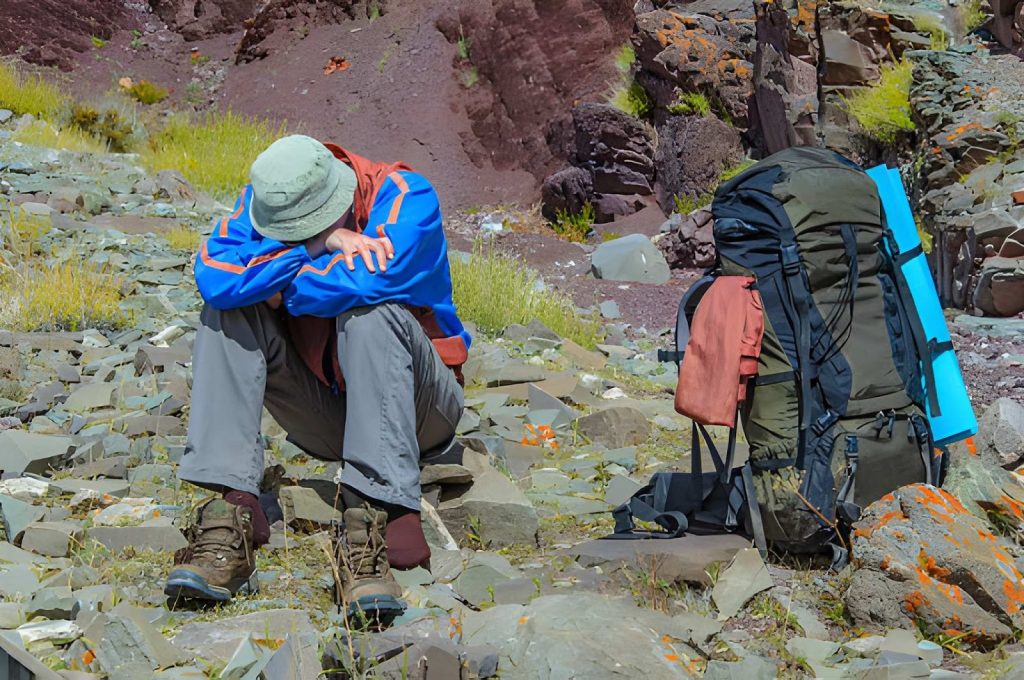
Altitude sickness occurs when your body cannot adapt quickly enough to reduced oxygen. It can affect anyone, without much regard for age, fitness, or experience.
Common Symptoms (Acute Mountain Sickness – AMS)
- Persistent headache
- Nausea or loss of appetite
- Fatigue or dizziness
- Poor sleep
These are common and manageable when addressed early.
Serious Conditions (Rare but Critical)
- HAPE (High Altitude Pulmonary Edema): breathlessness, cough, chest tightness
- HACE (High Altitude Cerebral Edema): confusion, loss of coordination
These require immediate descent and medical attention. There is no negotiation with altitude.
What Actually Prevents Altitude Sickness
- Slow ascent
- Proper hydration
- Adequate rest days
- Listening to your body
What Does Not Work
- “Toughing it out.”
- Ignoring symptoms
- Relying solely on medication
Descending early is not failure. It is actually a good decision.
Packing for Everest Base Camp Trek: A Decision-Based Guide
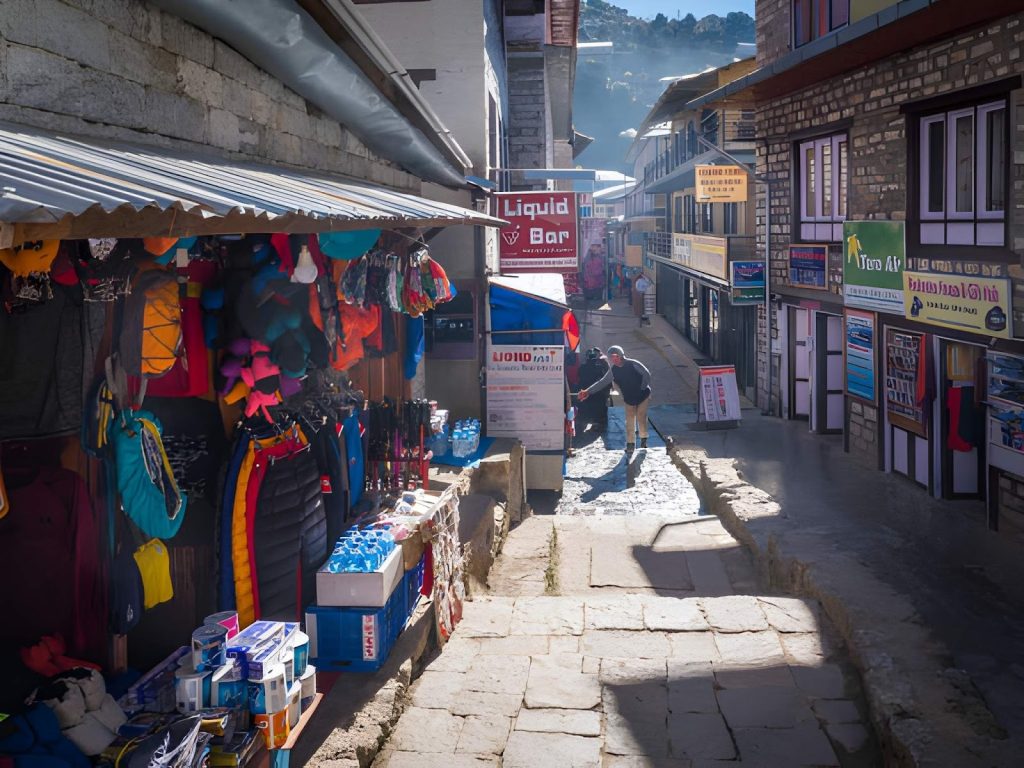
The Layering System (Simplified)
- Base layer: moisture control
- Insulation layer: heat retention
- Shell layer: wind, rain, snow protection
This system allows you to adapt to changing conditions, which can shift rapidly in the Himalayas.
Clothing Essentials (Why They Matter)
- Synthetic or merino base layers (cotton traps moisture and cold)
- Insulated jacket (down or synthetic)
- Waterproof shell jacket and pants
Warmth at altitude is about managing moisture & body heat, not bulk.
Footwear: Your Most Important Decision
- Well-broken-in trekking boots with ankle support
- Quality trekking socks to reduce friction and blisters
Foot pain is one of the most common problems trekkers suffer from.
Sleeping Gear & Warmth Strategy
- Sleeping bag rated to at least –10°C
- Teahouses provide blankets, but insulation varies at higher elevations
Cold disrupts sleep, and poor sleep worsens acclimatization. We also suggest using any sort of heating apparatus if it’s easy to carry, like a thermos bottle, at night.
Essential Accessories
- Trekking poles (reduce knee strain by up to 20–25% on descents)
- Sunglasses and sunscreen (UV exposure increases significantly with altitude)
- Water purification tablets or filters
- Basic first-aid kit and blister care
Overpacked vs Underpacked: Finding Balance
- Guides usually provide accommodation, meals, and group medical kits
- Can be rented in Namche: down jackets, sleeping bags
- Must bring from home: footwear, personal medications, fitted clothing
You should always aim for smart packing, as it reduces fatigue and anxiety.
The EBC Preparation Checklist Summary
Before you leave for Everest Base Camp, ensure you are:
- Physically prepared for long, consecutive walking days
- Mentally ready for slow progress and basic conditions
- Informed about altitude risks and acclimatization
- Confident in your gear and packing choices
Remember, preparation does not remove challenges. It transforms them into meaningful experiences.
Cultural Insights & Local Experiences Along the Everest Base Camp Trek
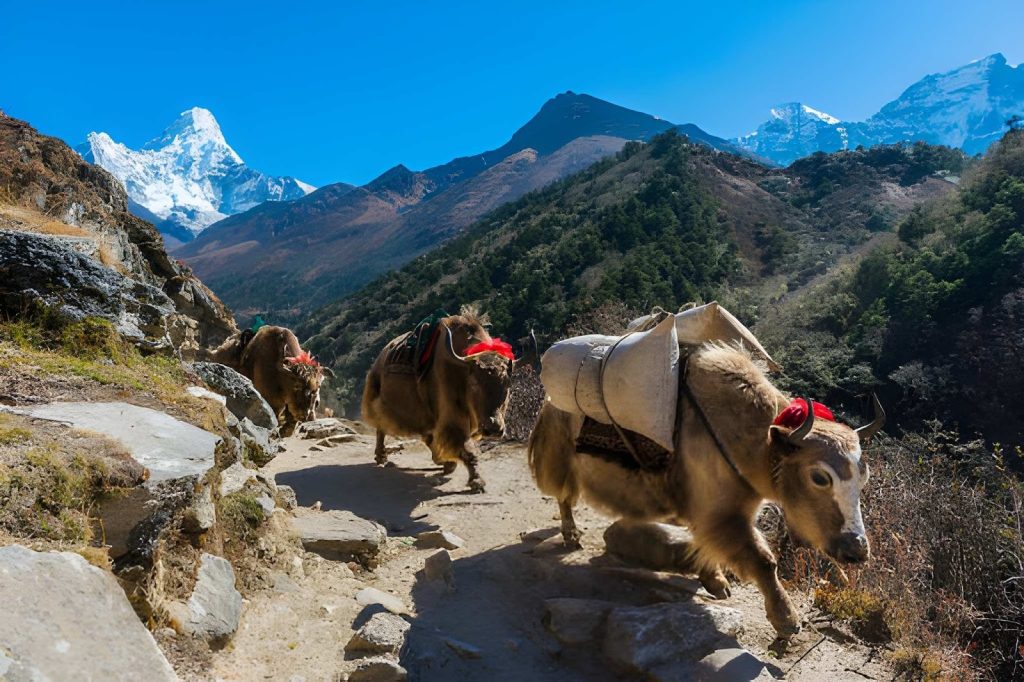
The Everest Base Camp Trek is not just a journey through the dramatic landscapes. It is also a walk through a living atmosphere shaped by generations living in the mountains and their culture. Having a curiosity for the people, their beliefs, and the customs of the Khumbu adds depth to the EBC trek. It also transforms the trek from a physical challenge into a more meaningful & peaceful human experience.
The Sherpa Life Beyond the Trail
Everyone has always seen Sherpas as “simple mountain guides,” but chooses to overlook the depth of their identity and expertise.
What they don’t realize is that the Khumbu’s Sherpa community has always included high-altitude professionals, farmers, traders, monks, lodge owners, and guardians of local knowledge that has been passed down from generations.
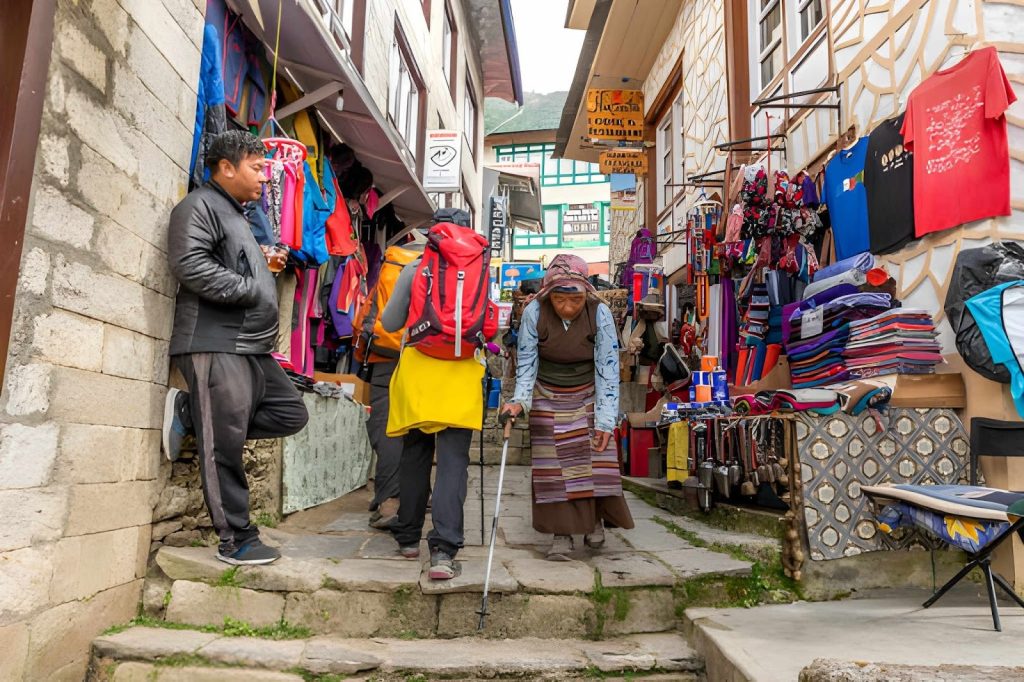
You’ll see people with yaks and dzopkyos transporting goods. The children walk long distances to school, while their families manage teahouses. Many Sherpas grow up fully adapted to altitude, developing a keen understanding of weather patterns, terrain, and how to move safely in the mountains.
Generational trekking knowledge is a unique feature of Sherpa culture. Skills such as finding routes, altitude judgment, and analyzing risks are learned early and refined over decades. This deep familiarity with the mountains is one of the key reasons Sherpas play a central role in ensuring safety and stability on the Everest Base Camp trek.
Cultural Moments Along the Everest Base Camp Trek
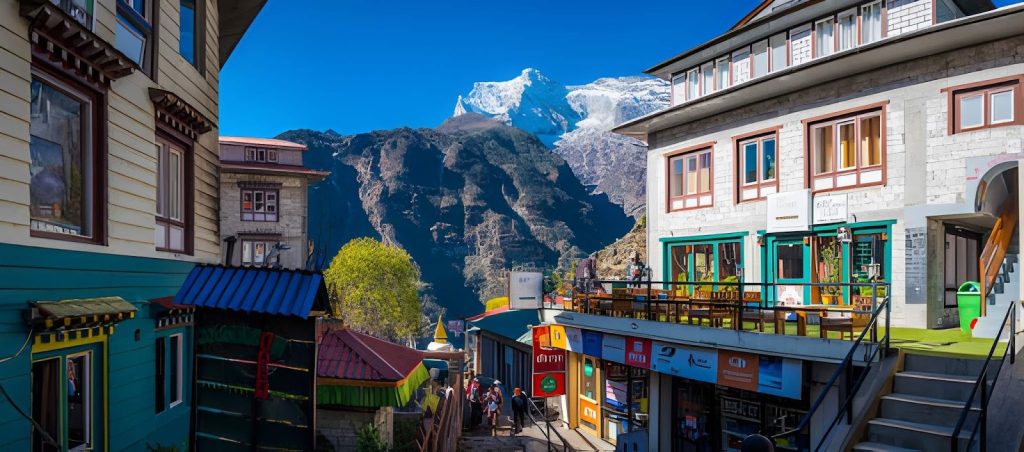
The daily life in villages such as Namche Bazaar, Pangboche, and Dingboche depends on a combination of tourism, agriculture, and tradition. As you move deeper into the Khumbu, the cultural understanding unfolds gradually.
You will experience these unfoldings in small, quiet moments rather than grand exposures. These villages are major cultural anchors, with each revealing a different facet of the Sherpa life.
Namche Bazaar: The Economic and Social Heart of the Khumbu
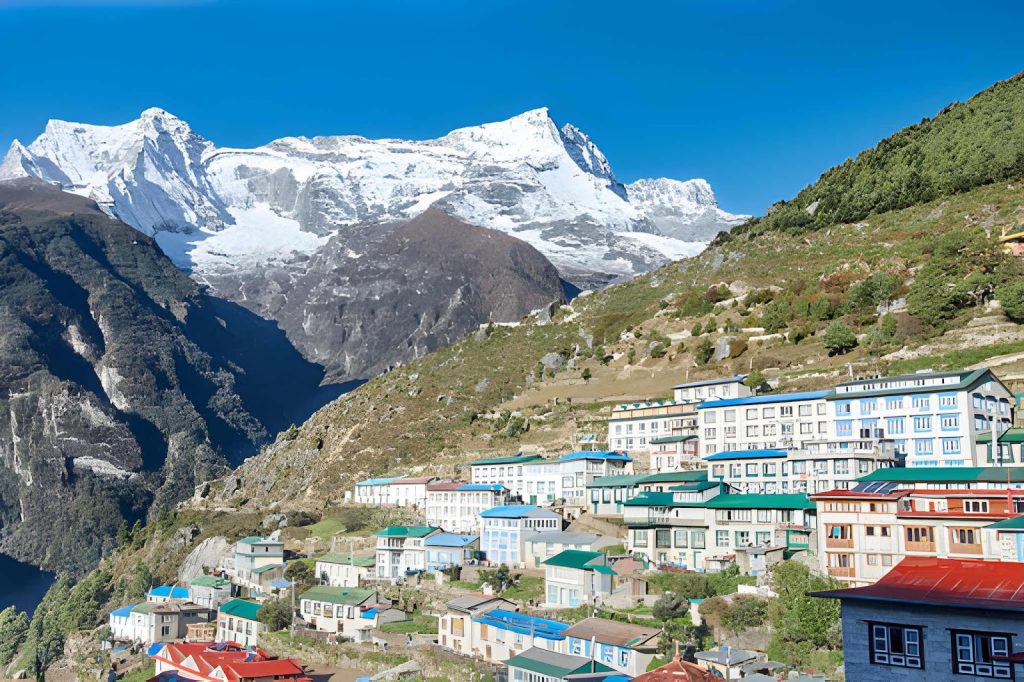
Namche Bazaar is more than a trekking hub now. It is also the commercial and cultural hot spot of the Everest region. On Saturdays, the weekly market draws people from surrounding villages to trade various items like salt, dried goods, trekking supplies, and more.
Simply understand that Namche is where modern trekking culture intersects with traditional mountain life.
You’ll notice:
- Sherpa families who are balancing lodge operations with farming and trade
- Young locals who are fluent in multiple languages due to tourism exposure
- And shockingly, internet cafés, bakeries, and gear shops coexist with centuries-old homes
- Namche also hosts museums and memorials that quietly honor Sherpa mountaineers who shaped Himalayan exploration.
You should spend an acclimatization day here and observe how tourism supports the ecosystem. You are also helping and reshaping local livelihoods with your stay here.
Tengboche: Spiritual Rhythm in the Mountains
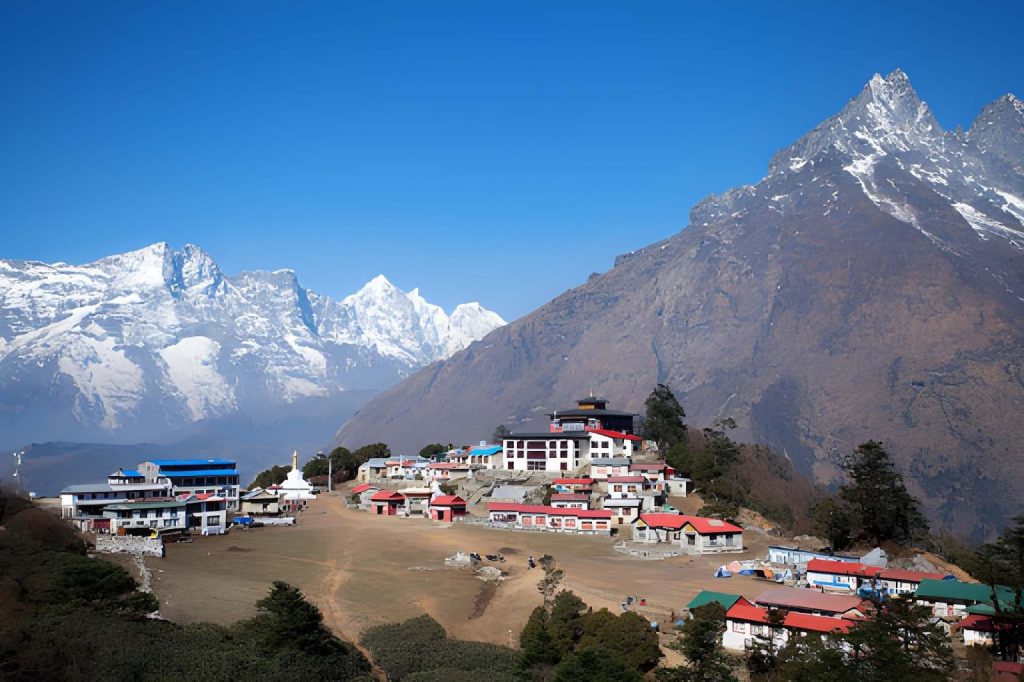
Tengboche is where the trek slows down, but not for any bad reason. The atmosphere entices you to spend your time there. The Tengboche Monastery, perched against the backdrop of Ama Dablam, sets a spiritual tone for the entire area.
Daily life here is shaped by:
- Morning and evening prayer rituals
- The sound of monks chanting carried across the valley
- Visitors pausing without any rush and continuing higher
If you trek during autumn, you may encounter Mani Rimdu. It is one of the most important Sherpa Buddhist festivals. The festival is celebrated with masked dances, prayers, and ceremonies, symbolizing the triumph of compassion over negativity. Even for non-Buddhists, this festival offers a rare window into the living Himalayan spirituality.
Pangboche: Ancestral Roots and Quiet Continuity
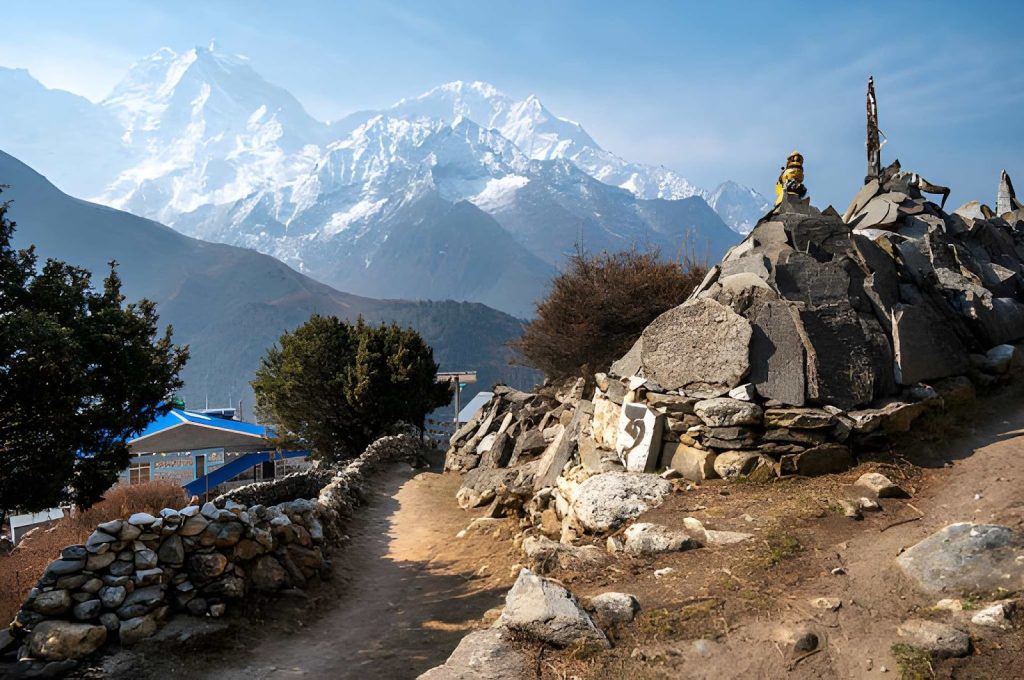
Pangboche is one of the oldest Sherpa settlements in the Khumbu. Life feels slower, less commercial, and deeply traditional here.
This is where you’ll see:
- Stone-walled fields cultivated at high altitude
- Homes passed down through generations
- Elder Sherpas sharing stories shaped by both farming and mountaineering
Pangboche Monastery is also culturally significant. Many believe the village has relics linked to early Himalayan legends. The village represents continuity. Here, life has existed long before the global trekking routes and destinations.
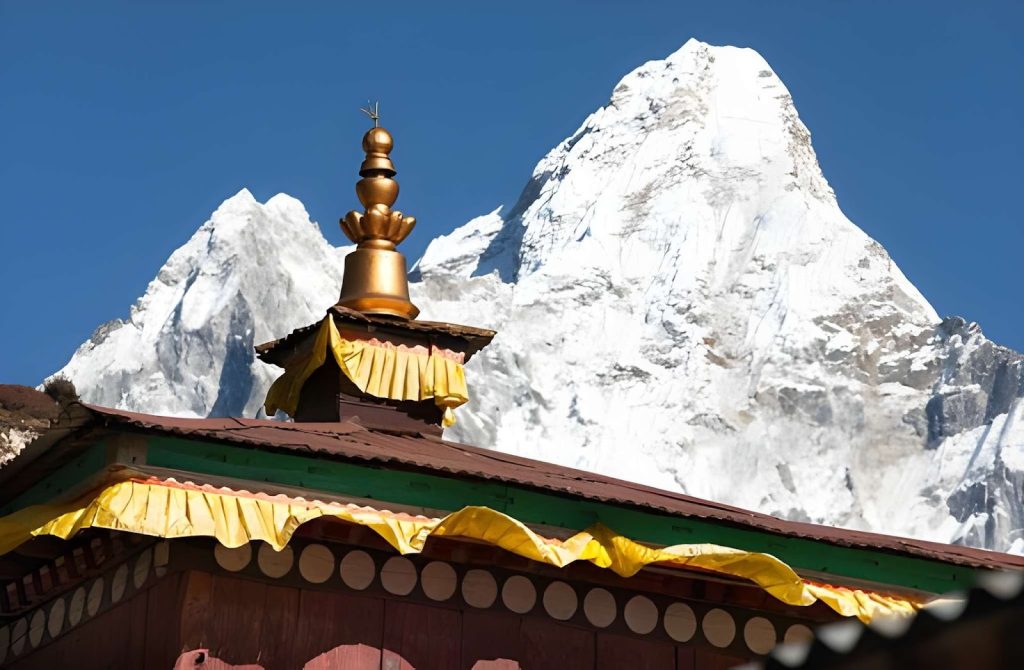
Buddhism in the Khumbu: Meaning Behind the Symbols
Buddhism shapes everyday life throughout the Everest region. It’s not only a religion but also a worldview centered on compassion, peace, and harmony with nature.
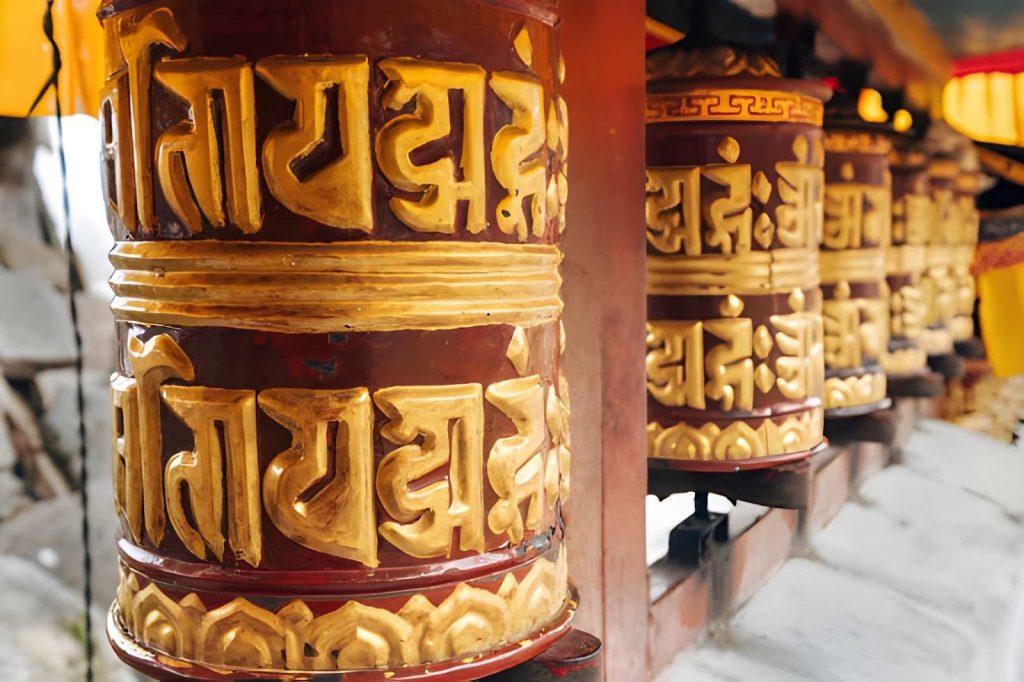
- Prayer flags & prayer wheels are not only decorative elements. Each color of the flag represents one of the five elements: sky, air, fire, water, and earth. The prayers printed on them are believed to be carried by the wind to benefit all beings.
- Sacred mantras such as Om Mani Padme Hum are carved on the Mani stones. They are expressions of inner peace and mindfulness and are often placed along trails as reminders to walk with awareness and respect.
- Tengboche Monastery, the spiritual heart of the Khumbu, is more than a stop to click pictures.
It serves as a religious center where monks perform daily rituals, seasonal festivals, and prayers for climbers and trekkers passing through the region.
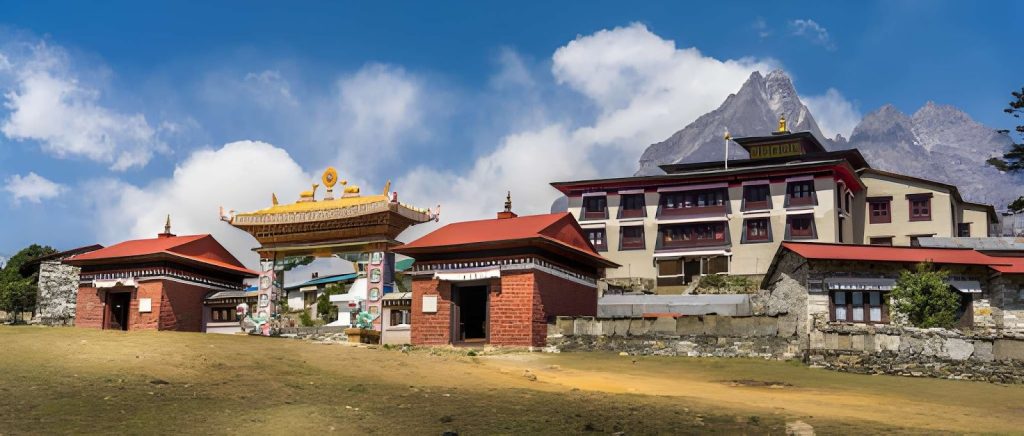
Understanding these elements helps trekkers move beyond sightseeing and appreciate the spiritual rhythm that drives life in the Everest region.
The Culture At Everest Base Camp Trek
The Sherpa culture is closely tied to the Buddhist calendar and agricultural cycles. They celebrate major festivals such as Lhosar, Dashain, and Tihar here, while regional events like Mani Rimdu hold special significance in the Khumbu.
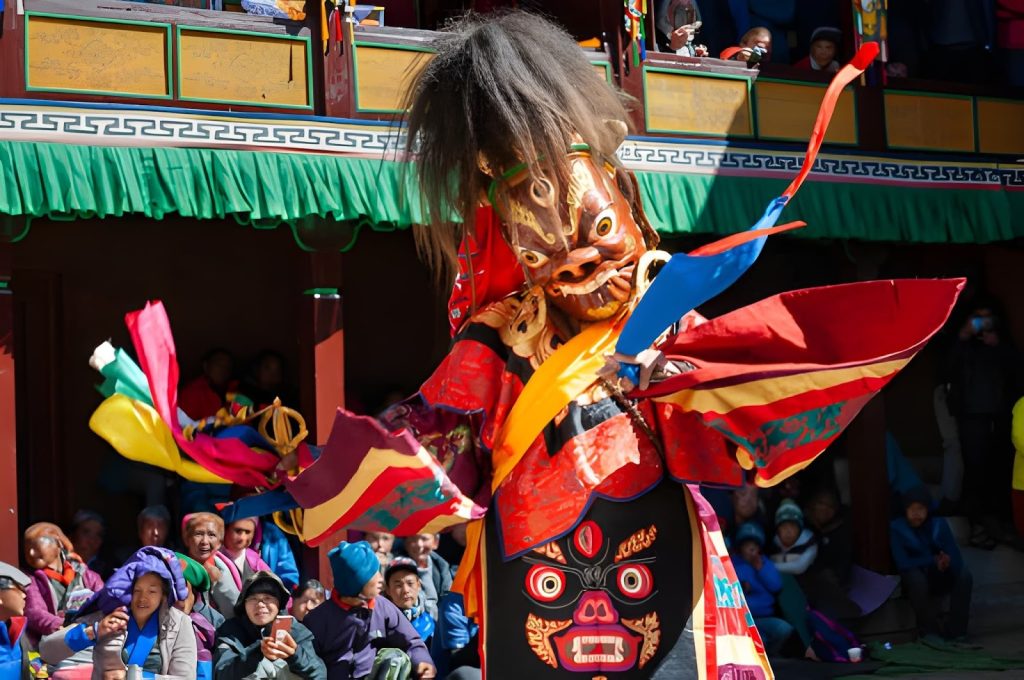
Their daily routines are affected by:
- Early mornings shaped by weather and prayer
- Seasonal shifts between farming, trekking, and monastery life
- A strong communal ethic where cooperation outweighs individualism
Understanding their way of life helps trekkers appreciate why patience, respect, and adaptability are valued traits in the mountains.
Interacting with Locals: Cultural Etiquette That Matters
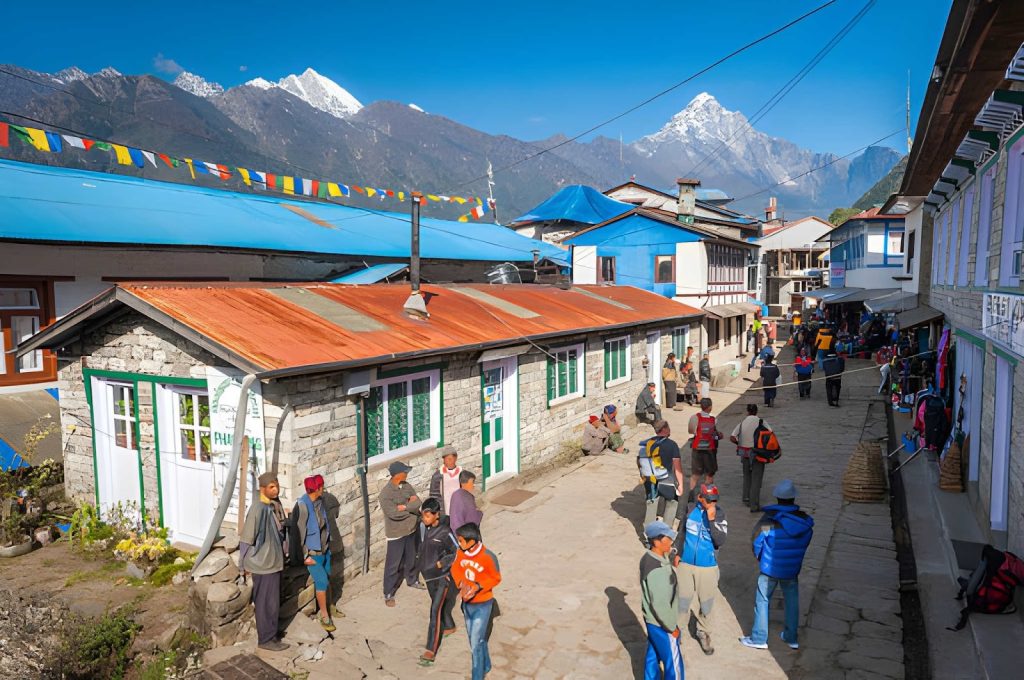
Being respectful & well-mannered enhances both your experience and the well-being of local communities. A few simple practices go a long way:
- Walking etiquette: Always walk clockwise around mani walls, stupas, and chortens. This is a sign of respect rooted in Buddhist tradition.
- Photography: Ask before photographing people, especially monks or elders. A smile and a simple gesture are often enough.
- Tipping norms: Tipping is appreciated but should feel natural, not transactional. Group tips at the end of the trek are common, and guides can advise on appropriate amounts.
- Behavior in monasteries: Dress modestly, remove hats, keep voices low, and avoid interrupting rituals.
Small gestures of awareness signal respect and help preserve the cultural integrity of the region. Always remember that cultural awareness is not separate from safety but directly influences it.
Hence, cultural understanding is very important on the Everest Base Camp trek
Cultural awareness improves communication, encourages mutual respect, and contributes to safer trekking decisions. Understanding local customs helps trekkers move through the region more thoughtfully and responsibly.
Knowing when villages slow down for festivals, understanding how Sherpas read weather signs, and respecting local knowledge all play a role in a successful trek. This is where the choice between guided and solo trekking becomes more than a logistical decision but a cultural one.
Guides do more than just navigation. Many guides actually come from these villages. They interpret local customs, manage altitude pacing, communicate with teahouse owners, and respond to subtle environmental cues that visitors often miss.
Solo trekkers, on the other hand, experience greater freedom but must face the full responsibility of cultural understanding, navigation, and various risks.
This brings us to the next consideration on the Everest Base Camp journey:
Guided Treks vs. Solo Treks to Everest Base Camp Trek
One of the most common questions trekkers ask is whether they should trek to Everest Base Camp with a group, a guide, or just alone. The answer is rarely absolute. The right choice depends on experience, comfort with risk, time, and what you want from the journey.
Rather than asking which option is “better,” the more useful question is, “Which is better for you?”
Guided Everest Base Camp Treks: When Structure and Support Matter
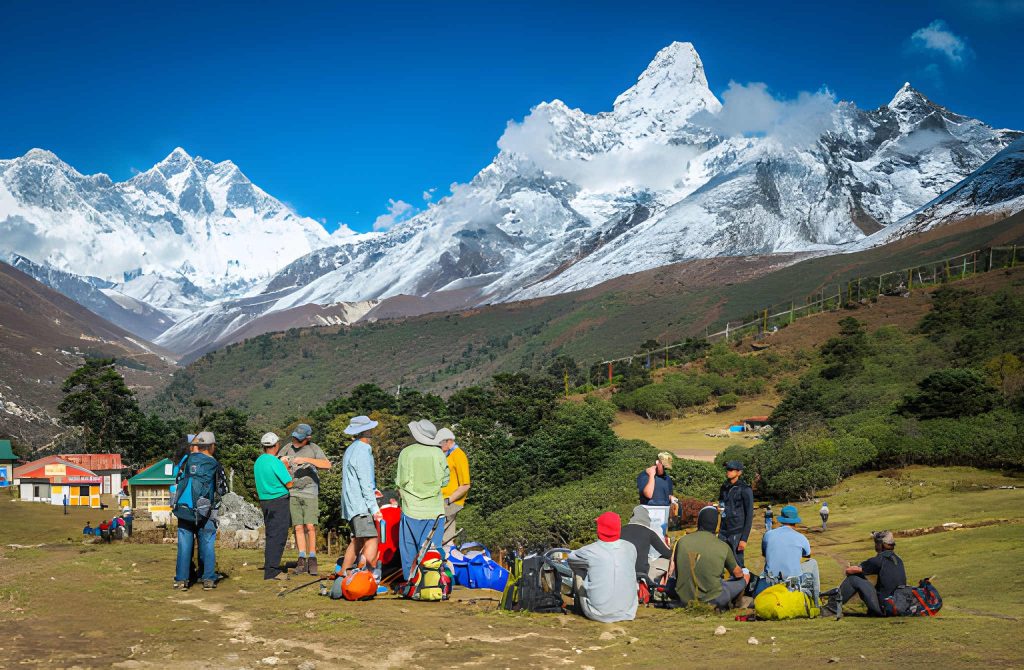
Guided treks are often recommended for good reason. But it’s not simply because they feel safer. Their real value lies in decision-making, pacing, and local insight.
Safety and Emergency Readiness
Experienced guides understand how weather shifts, trail conditions, and altitude affect trekkers differently. They can sense early signs of altitude sickness, adjust itineraries when needed, and handle emergency responses, including helicopter evacuations when necessary.
In remote areas where help is not always readily available, this local knowledge significantly reduces the risk.
Acclimatization and Pacing
One of the leading causes of failed Everest Base Camp treks is ascending too quickly. Guided itineraries are designed with acclimatization days and simple walking hours, helping trekkers adapt safely to increasing altitude.
Guides also make judgment calls, such as when to slow down, add rest, or return when required.
Cultural Context and Access
Guides provide more than navigation. They explain Sherpa customs, Buddhist traditions, village norms, and the cultural significance of monasteries and landmarks. This context turns the trek into a knowledgeable adventure and helps trekkers interact respectfully with local communities.
Reduced Mental Load
You don’t need to worry about permits, accommodations, daily planning, and logistics. This allows trekkers, particularly first-timers, to focus on the experience rather than constantly making decisions in a physically demanding environment.
Guided treks are especially well-suited for:
- First-time Everest Base Camp trekkers
- Those with no high-altitude trekking experience
- Travelers on tight schedules
- Trekkers prioritizing safety and cultural experience
Solo Everest Base Camp Treks: Independence With Real Responsibility
Solo trekking to the Everest Base Camp Trek is possible. You just need some great experience, preparation, and an honest self-assessment.
Who Solo Trekking Is Best For
This type of trekking is most suitable for trekkers who:
- Have prior high-altitude or mountain experience
- Are comfortable with navigation, logistics, and self-monitoring
- Understand the risks of delayed medical assistance
Benefits of Trekking Solo
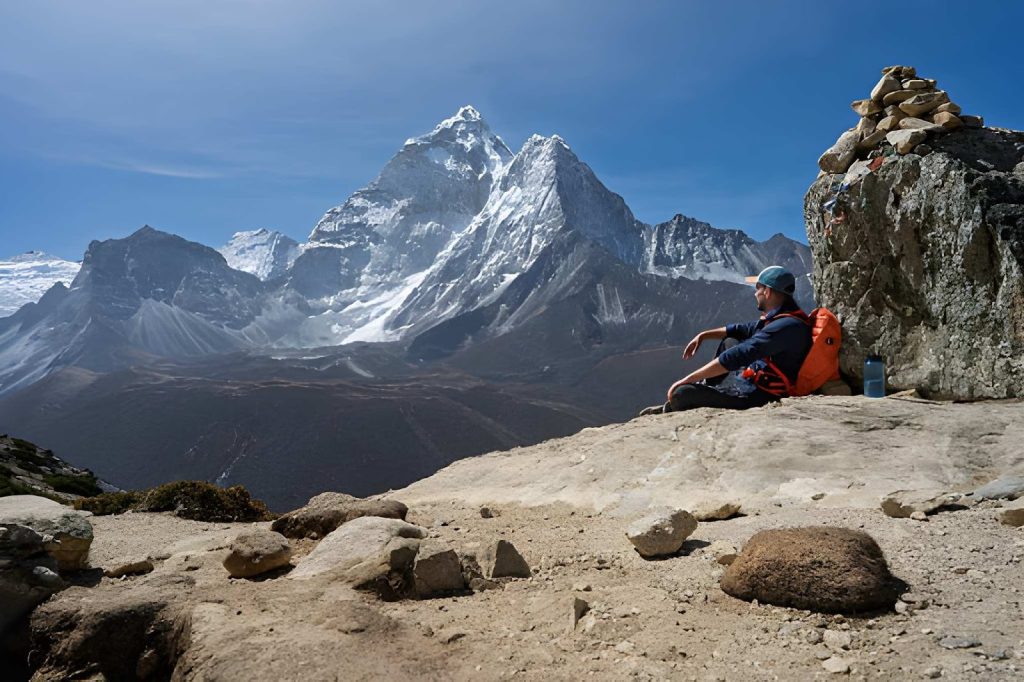
Solo trekkers enjoy complete control over pace, daily plans, and rest days. Costs are generally lower, and the sense of not having any restrictions can be deeply rewarding. For experienced hikers, the quiet moments between villages often become the most memorable part of the journey.
Risks and Trade-Offs
Trekking alone increases risk and dangers. Navigation errors, sudden weather changes, communication gaps, and delayed responses to altitude sickness can escalate quickly. Without a guide, you are fully responsible for recognizing when to rest, descend, or seek help.
Solo trekking is not inherently unsafe, but it does leave little room for misjudgment.
The 2024-2025 Reality: Regulations, Insurance, and Enforcement
Nepal introduced regulations requiring licensed guides in many trekking regions to improve safety. While enforcement has varied by region and route, permit checks and local compliance have increased recently.
Additionally, most travel insurance providers now require:
- Proof of licensed guides for coverage in certain areas
- Explicit high-altitude and evacuation coverage
Understanding these requirements before choosing a trekking style is essential.
A Simple Decision Matrix for Guided vs. Solo Trek
| Trekker Profile | Recommended Approach |
| First-time trekker | Guided |
| No high-altitude experience | Guided |
| Experienced Himalayan hiker | Solo or Semi-guided |
| Tight travel schedule | Guided |
| Budget-focused | Solo (with risk awareness) |
| Cultural immersion priority | Guided |
| Strong navigation and self-rescue skills | Solo |
Semi-Guided and Hybrid Options (Often Overlooked)
Many trekkers choose a middle ground of following a hybrid outlook. This is more of a recent trend, but it is slowly gaining popularity among common folks:
- Many trekkers hire a porter only
- Some are okay with using local guides for specific routes
- Few opt for logistics support while trekking independently
Hybrid approaches offer flexibility while reducing risk, and they are a very popular approach among experienced trekkers.
Final Perspective: Choose Awareness Over Ego
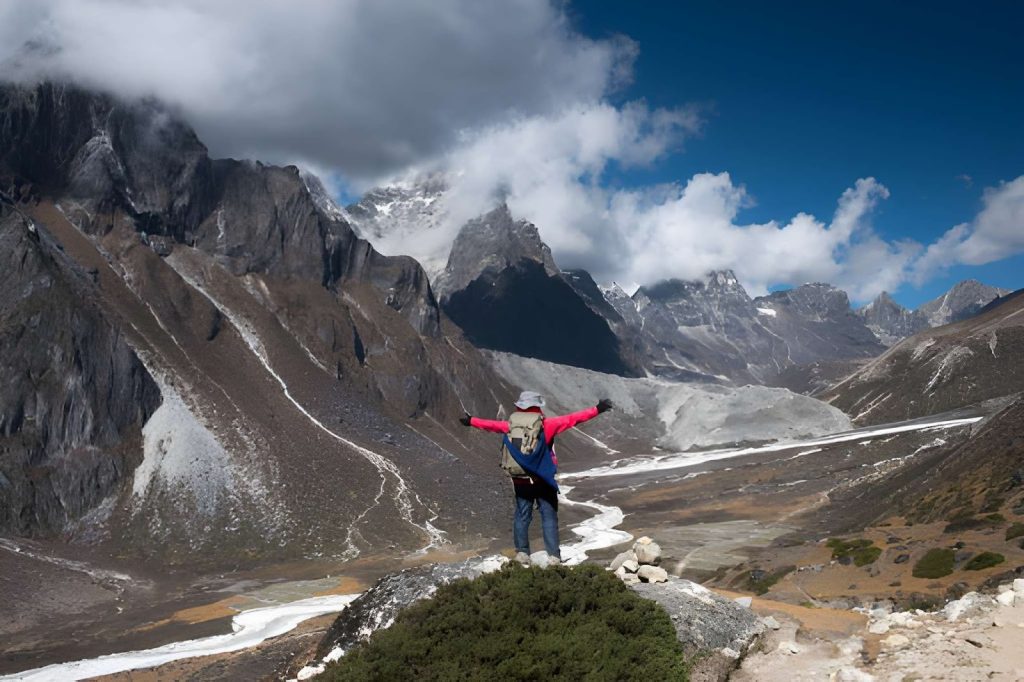
Reaching Everest Base Camp is not about proving toughness. It’s about respecting altitude, understanding your limits, and choosing the level of support that allows you to trek responsibly.
Whether guided or solo, the safest treks are led by your good judgment, not your bravado.
Safety, Health, and Insurance on the Everest Base Camp Trek
High-altitude trekking is not inherently dangerous, but it can be unforgiving to those with poor preparation. You should remember that most of the health issues on the Everest Base Camp trek aren’t from some dramatic accidents. They come from dehydration, poor hygiene, rushing the ascent, or misunderstanding insurance coverage.
Everyday Health on the Trail: What Actually Keeps You Well
Hydration and Water Safety
Dehydration is the most common problem trekkers face, and it often goes unnoticed until fatigue or headaches set in. At a certain altitude, your body loses water faster than normal, even if you don’t feel thirsty.
- Try to drink 3–4 liters of water per day. Aim for more on longer walking days.
- Boiled water is the safest option and widely available in teahouses.
- Filtered water (using bottle filters or UV purifiers) is effective and reduces plastic waste.
- Purification tablets are useful as backup, though the taste can be unpleasant.
Avoid drinking untreated tap or stream water, even if it looks clear.
Eating Well at Altitude
Food at altitude is about fuel, not variety. As elevation increases, digestion slows, and appetite often drops. Some trekkers even have digestive issues.
- Carbohydrate-rich meals are easier to digest and provide steady energy.
- Dal bhat (lentils, rice, and vegetables) is popular for a reason. It’s fresh, filling, and often refillable.
- Limit heavy meats and alcohol, especially above 3,500 meters.
- Eat small, regular meals even if you don’t feel hungry.
- Carry snacks if possible, like protein and energy bars. Make sure not to carry a lot of processed food that can make you thirstier.
Listening to your body matters more than finishing every plate.
Hygiene in Teahouse Conditions
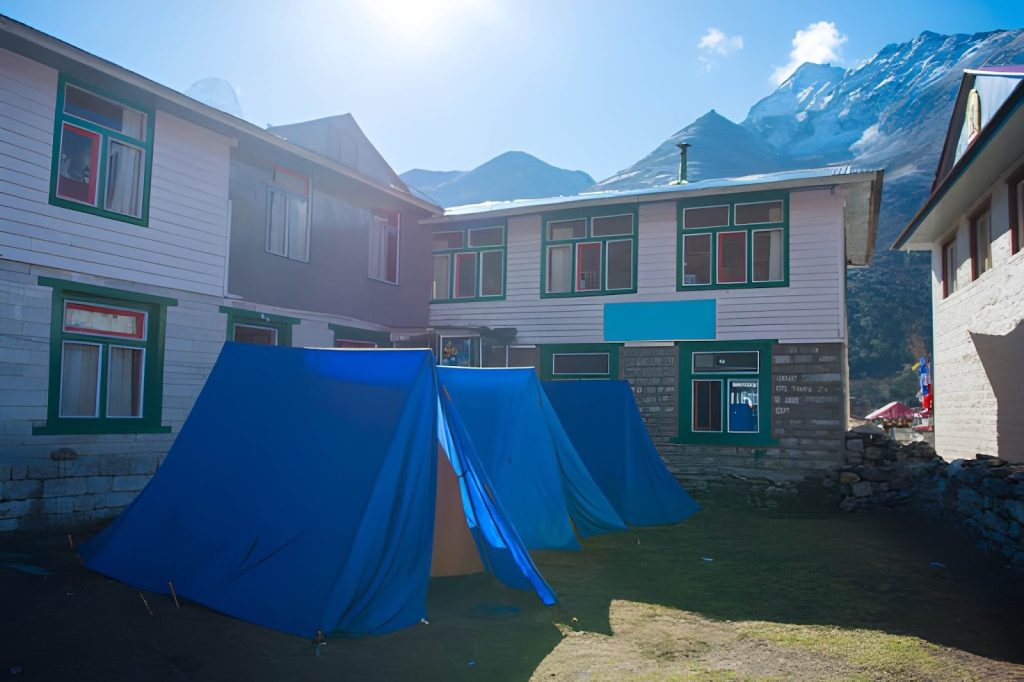
Mountain teahouses are welcoming but offer basic facilities. Shared dining spaces and limited water make hygiene especially important.
- Wash your hands with soap when possible. Don’t forget to use hand sanitizer before meals.
- Avoid touching communal food or utensils unnecessarily.
- Be mindful of the cleanliness of cups, bottles, and cutlery. Such small habits prevent stomach issues.
- Carry your personal hygiene supplies; don’t assume availability.
Good hygiene is one of the simplest ways to stay healthy on the trail.
Travel Insurance: Non-Negotiable for Everest Base Camp Trek
Many trekkers underestimate how specific travel insurance needs to be for a high-altitude trek like the Everest Base Camp. Standard policies are often insufficient.
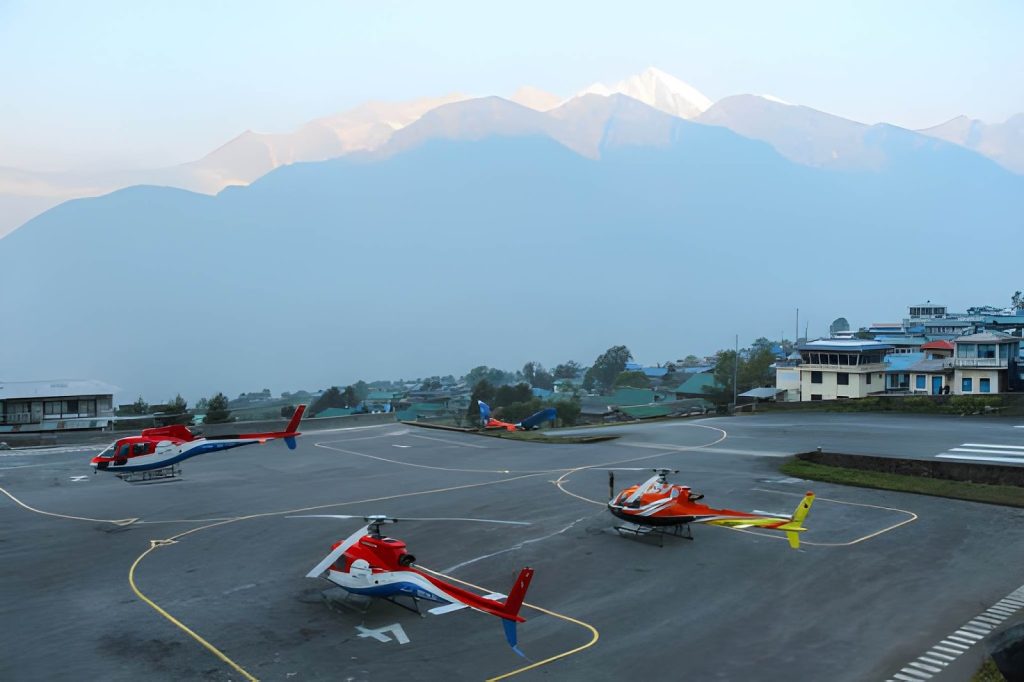
What Your Insurance Must Cover
Before trekking, confirm that your policy includes:
- High-altitude trekking coverage of at least 5,500 meters
- Helicopter evacuation and rescue
- Emergency medical treatment in Nepal
- Trip interruption due to illness or weather delays
If your policy does not explicitly state these, it likely does not cover them. These should always be non-negotiable.
Common Insurance Pitfalls to Avoid
Make sure to thoroughly check your insurance policy. Some of the common ways insurance companies can commit malice are
- Altitude caps are buried in fine print
- Trekking or “mountaineering” exclusions
- Evacuation is listed but not fully funded
- Lack of a clear verification process before rescue
Always carry a digital and printed copy of your insurance details.
How Emergency Evacuation Actually Works in the Everest Region
Helicopter evacuation is a safety net. You should not confuse it for convenience. Your understanding of how it works can help reduce panic and also be a lifesaver in the worst situations.
Who Decides an Evacuation
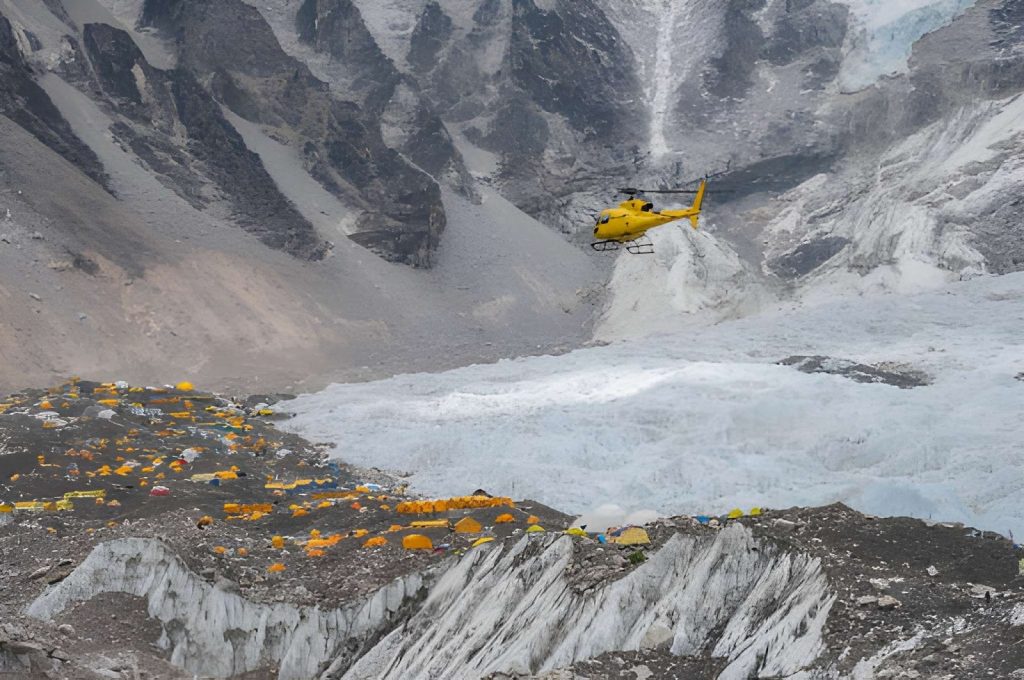
- On guided treks, the decision rests upon the guide. They do so with the consultation of a local doctor or health post before initiating the process.
- On solo treks, it depends on you, sometimes with much-needed advice from lodge owners or fellow trekkers.
- Early decisions lead to better outcomes. Waiting “to see if it passes” is risky at high altitude.
The Helicopter Evacuation Process Explained
- Symptoms are assessed first, and evacuation is deemed necessary.
- The insurance provider is contacted for verification and approval.
- Weather and visibility are checked, since flights depend on these conditions.
- The helicopter reaches the nearest viable landing point.
Evacuations do not operate like ambulances. Delays due to weather are common, and approval must come first.
What You Should Prepare in Advance
- Keep insurance policy numbers and emergency contacts accessible.
- Inform your guide or trekking partner of your coverage details.
- Carry a small cash reserve for unexpected expenses.
- Understand that evacuation is a medical decision, not a failure.
Safety Is a System, Not a Single Decision
Staying safe on the Everest Base Camp trek is about consistent, informed choices, such as hydrating well, eating sensibly, respecting altitude, and having proper insurance. Most trekkers never need emergency evacuation, but those who prepare rarely panic when challenges arise.
Remember that confidence comes from readiness, not luck.
Final Thoughts – Will you commit and push to the Everest Base Camp Trek?
All the ones who completed and those who are unable to attend. I will show you how you will feel after the completion of the EBC Trek
True Physical Achievement.
- You are 5,364 meters, much greater than in Europe or in North America.
- Travel 130 kilometres through difficult Himalayan routes.
- Endure the altitude pain and physical fatigue.
- Get every step not only with money but with hard work.
- This is not given to you; you actually do something difficult.
Deep Cultural Immersion
- Reside in Sherpa family-run teahouses and live with them.
- Experience Buddhist rituals in old monasteries such as Tengboche.
- Study communities that flourish at extreme elevations over time.
- Worship holy mountains, not only leisurely ones.
- Come back to reason and sanity about toughness, plainness, and what is really important.
Personal Development No One Tells You about It.
- Learn to be mentally tougher than you thought.
- Be truthful to yourself when elevation makes a charade of pretence.
- Gain and build confidence that is transferred to other life challenges.
- Learn to enjoy simple stuff in two weeks, only the basics.
- Establish relationships with walking companions via a common plight.
Perspective That Lasts
- After coming back, your daily “troubles” appear minor.
- Desires for material belongings tend to go down following such a meager way of life.
- You demonstrate that you are capable of dealing with major discomfort.
- It is a kind of touchstone of the trek: I have made it to the Everest Base Camp; I am capable of this.