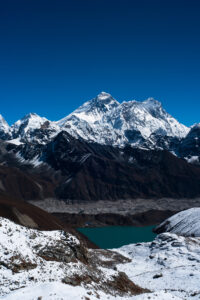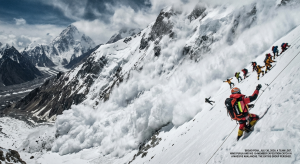
Every year, trekkers who are perfectly fit turn back before Everest Base Camp, not because their legs gave out, but because their bodies couldn’t adjust to the thin air fast enough. Altitude sickness in ebc trek doesn’t care about your gym routine or your marathon time. It cares about how fast you climbed and how well you listened to your body along the way.
If you’re planning the EBC trek, understanding altitude sickness in EBC Trek isn’t optional, reading is the single biggest factor standing between you and Kala Patthar.
What Altitude Sickness in EBC Trek Actually Is?
Above roughly 2,500m, the air holds less oxygen per breath. Your body needs time to adapt, producing more red blood cells, breathing faster, and adjusting how your blood carries oxygen. Altitude sickness in EBC trek occurs when you climb faster than your body can adapt.
On the EBC trek, you’re moving from Lukla (2,860m) to Everest Base Camp (5,364m) and Kala Patthar (5,545m) over roughly 12–14 days. That’s a huge elevation gain for a trek that doesn’t require any technical climbing skill, which is exactly why altitude sickness in EBC trek is the main safety concern.
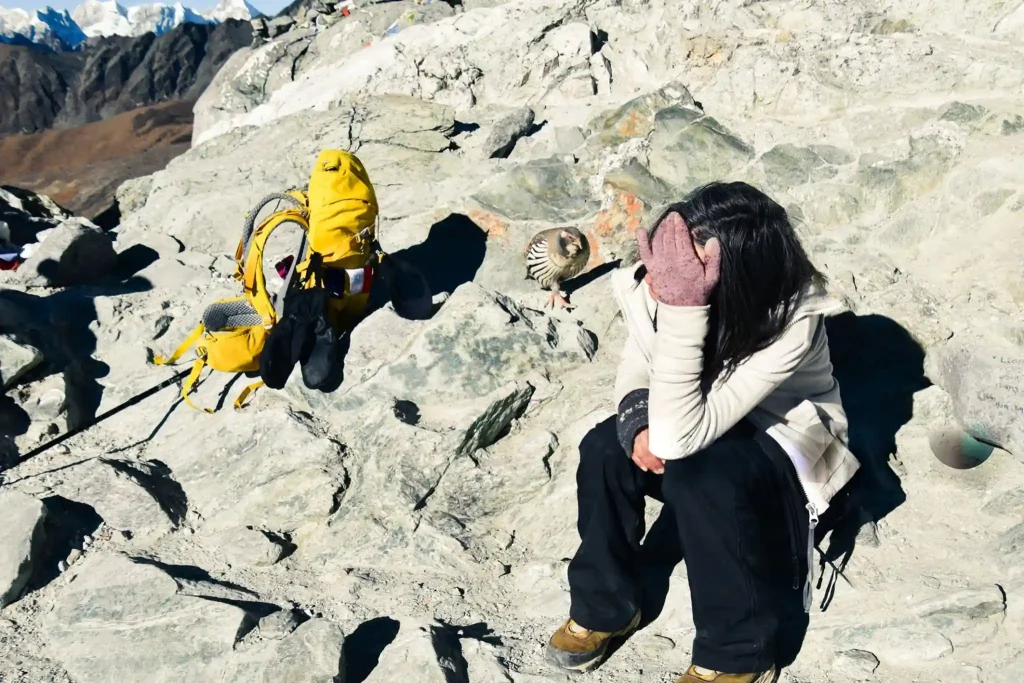
Why the EBC Route Carries Real Risk?
Unlike lower treks such as the Everest Panorama Trek or Poon Hill, the EBC trail spends multiple days above 4,000m and peaks near 5,550m at Kala Patthar. It’s not a steady climb, it’s a deliberate zigzag of gains and drops designed to let your body catch up with the altitude. Here’s exactly how the elevation profile looks on the standard itinerary:
| Day | Route | Overnight Altitude | Elevation Gain | Risk Level |
| 1 | Fly Kathmandu → Lukla, trek to Phakding | 2,610m | – (net descent from Lukla) | Low |
| 2 | Phakding → Namche Bazaar | 3,440m | +830m | Moderate — first big jump |
| 3 | Acclimatization day — Namche (hike to Everest View Hotel, 3,880m) | 3,440m | Day hike only, sleep same altitude | Low (helps adjustment) |
| 4 | Namche → Tengboche | 3,860m | +420m | Moderate |
| 5 | Tengboche → Dingboche | 4,410m | +550m | High — this is the jump that catches people off guard |
| 6 | Acclimatization day — Dingboche (hike to Nangkartshang Peak, 5,083m) | 4,410m | Day hike only, sleep same altitude | Low (critical rest day) |
| 7 | Dingboche → Lobuche | 4,940m | +530m | High |
| 8 | Lobuche → Gorak Shep → Everest Base Camp → back to Gorak Shep | 5,164m (Gorak Shep) | +224m sleeping, but full round trip to 5,364m (EBC) same day | Very High — hardest single day |
| 9 | Gorak Shep → Kala Patthar (5,545m) at dawn → descend to Pheriche | 4,240m | Peak of trek, then major descent | Very High morning, relief by evening |
| 10 | Pheriche → Namche Bazaar | 3,440m | Descent | Low — symptoms usually ease fast |
| 11 | Namche → Lukla | 2,860m | Descent | Low |
| 12 | Fly Lukla → Kathmandu | 1,400m | Descent | None |
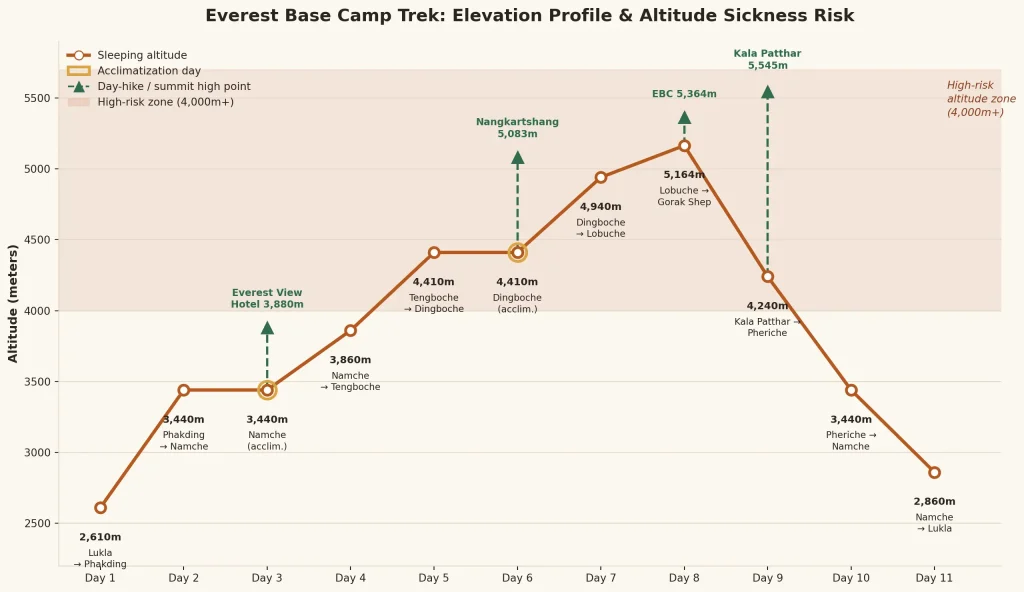
The two acclimatization days built into Namche and Dingboche aren’t padding, they’re load-bearing which more likely causes altitude sickness in EBC trek. Skip or shorten either one and you’re pushing your body through the two steepest sleeping-altitude jumps of the trip without a buffer. Day 5 (the climb to Dingboche) is where AMS symptoms most commonly first appear, and Day 8 is sleeping at Gorak Shep after touching Base Camp itself, which is the single largest 24-hour altitude exposure of the entire trek which can cause altitude sickness in EBC Trek .
Roughly half the trekking days on this route sit above the altitude where AMS becomes a genuine concern. This is the key difference between EBC and shorter regional treks, it’s not the distance that gets people, it’s the elevation curve that causes huge risk of altitude sickness in EBC trek.
The Three Stages: AMS, HAPE, and HACE
Acute Mountain Sickness (AMS) is the mild, common form. Most trekkers get some version of it, such as: headache, fatigue, mild nausea, and it resolves with rest and proper pacing.
High Altitude Pulmonary Edema (HAPE) is fluid building up in the lungs. It’s rare but serious, and it can develop within 24–48 hours if AMS is ignored and ascent continues.
High Altitude Cerebral Edema (HACE) is fluid on the brain. It’s the most dangerous form and can be fatal within hours if not treated with immediate descent.
The critical point: HAPE and HACE almost always start as ignored AMS. Nobody skips straight to the dangerous stage; they get there by pushing through the warning signs.
Symptoms to Watch For
| Mild (Normal AMS) | Moderate (Stop Ascending) | Severe (Descend Immediately) |
| Headache | Worsening headache, unresponsive to painkillers | Confusion, loss of coordination |
| Mild nausea | Vomiting | Inability to walk in a straight line |
| Fatigue | Loss of appetite | Extreme breathlessness at rest |
| Dizziness | Shortness of breath at rest | Gurgling cough, pink/frothy sputum |
| Poor sleep | Swelling in hands/face | Blue lips or fingertips |
A useful rule guide is: if symptoms worsen with rest instead of improving, that’s the line between “normal AMS” and “get this person down now.”
Prevention: What Actually Works?
1. Ascend slowly: The golden rule above 3,000m is no more than 300–500m of sleeping altitude gain per day. This is why the EBC itinerary isn’t a straight climb, its zigzag, with rest days built in.
2. Use your acclimatization days properly: Namche Bazaar (3,440m) and Dingboche (4,410m) are the two scheduled rest days on the standard route. “Rest day” doesn’t mean staying in bed; the “climb high, sleep low” principle means a short hike up and back down actually helps your body adapt faster than sitting still.
3. Hydrate aggressively: Altitude increases fluid loss through faster breathing. Aim for 3–4 litres of water a day, and treat dark urine as an early warning sign.
4. Consider Diamox (acetazolamide): Many trekkers start a low dose a day before reaching altitude, on their doctor’s advice. It speeds up acclimatization but isn’t a substitute for proper pacing; it buys margin, not immunity.
5. Avoid alcohol and sleeping pills at altitude: Both suppress breathing rate overnight, which is exactly what your body needs to increase.
6. Eat, even without appetite: Your body needs the calories to keep producing red blood cells and staying warm. Pack accordingly, see our full Nepal trekking equipment checklist for what to bring for high-altitude comfort and safety.
How Does the Season You Trek In, Change Your Altitude Sickness Risk ?
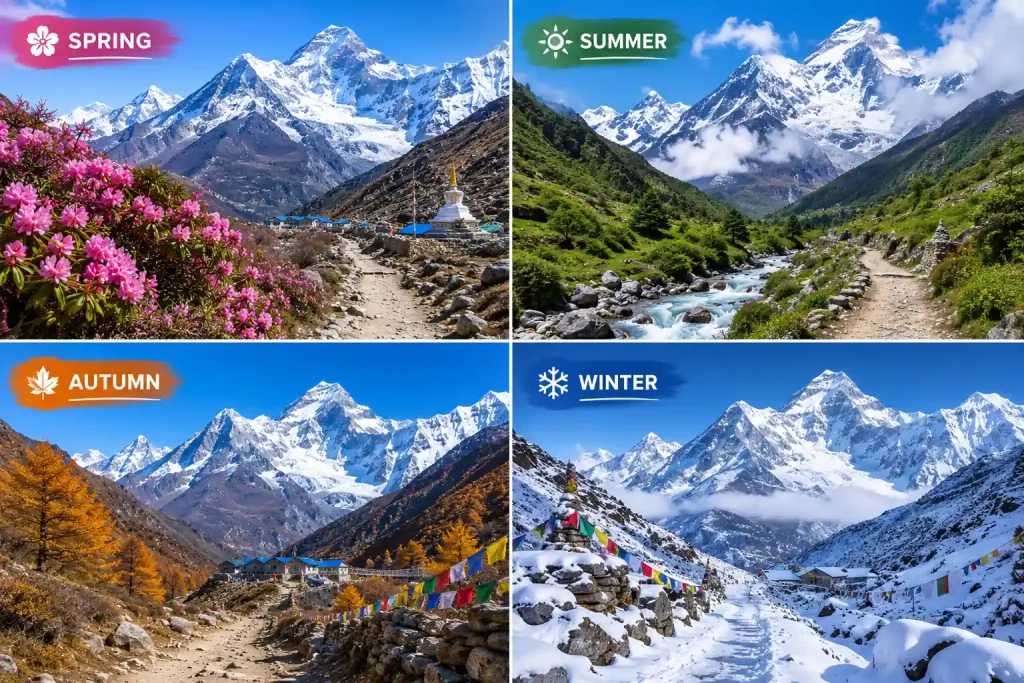
Most probably to avoid altitude sickness in EBC Trek things such as: climb slowly, hydrate and watching your symptoms are advised. But the season you trek in actually shifts the risk profile in ways worth knowing before you book. For a full breakdown of weather and crowd levels by season, see our best time to trek in Nepal guide, this section focuses specifically on how each season affects altitude sickness risk.
Autumn (Late September – November)
This is peak season for a reason, and altitude risk is at its most manageable here too. Stable high-pressure systems mean consistent weather, which matters more than people realise, sudden storms can force rushed itinerary changes, and rushed ascent is exactly what triggers AMS. Autumn’s biggest risk factor isn’t the cold, it’s crowding: teahouses fill up, and trekkers sometimes get pushed to push on to the next village rather than wait for a bed, disrupting the planned acclimatization pace. Book ahead and hold your itinerary firm.
Spring (March – May)
Similar altitude-sickness in EBC Trek profiles at autumn, with one added factor: afternoon haze and warming temperatures at lower elevations can mask how much you’re sweating and dehydrating on the first few days before Namche. Since dehydration compounds AMS symptoms, spring trekkers should be more deliberate about water intake on Days 1–2 than they might think necessary, precisely because it doesn’t feel as cold or extreme yet.
Winter (December – February)
Winter slightly changes the dynamics of altitude sickness in EBC Trek. Cold air is denser but holds less usable oxygen per breath at altitude, and your body burns more calories just maintaining core temperature and calories are also needed for acclimatization. Combine that with reduced appetite (cold suppresses hunger for many people), and you get a compounding effect: less fuel for your body’s adaptation process at exactly the time it needs more. Winter EBC trekkers should treat calorie intake as seriously as hydration, and expect that any given altitude will feel slightly harder to acclimatize to than the same altitude in autumn. On the plus side, teahouses are empty, so there’s no pressure to skip an acclimatization day for lack of beds.
Monsoon (June – Early September)
Most operators don’t run EBC treks in monsoon season because of trail conditions, not altitude risk specifically. But for context, the humidity and cloud cover at lower elevations can make early breathlessness harder to distinguish from general monsoon mugginess. If you’re considering an off-season EBC attempt, know that the usual visual and environmental cues (clear cold air, obvious exertion) are less reliable, so symptom self-monitoring becomes more important, not less.
When to Turn Back?
This is the part most trekkers underestimate. There are three non-negotiable rules experienced guides follow:
- If symptoms don’t improve after 24 hours of rest at the same altitude, descend. Don’t push on, hoping it clears at the next stop.
- If symptoms worsen at rest, descend immediately, even at night, even if it means turning around mid-trek.
- Never ascend with any moderate symptom present. “I’ll push through it” is how AMS becomes HAPE.
The mountain isn’t going anywhere. A guide who tells you to turn back isn’t being overcautious; they’re doing their job. This is one of the biggest reasons a trek with an experienced, licensed team matters more on EBC than almost any other Nepal route: real-time symptom judgment saves lives, and it’s not something you can Google your way through at 4,900m.
How This Is Built Into Our EBC Itinerary?
Every EBC package we run is structured around acclimatization first, schedule second, not the other way around.Our About Us team of licensed guides is trained to spot early AMS before it becomes a problem. That means:
- Two dedicated acclimatization days (Namche and Dingboche), with guided short hikes to higher elevation and back
- Daily symptom checks by your guide, trained in early AMS recognition.
- A conservative daily elevation gain that follows the 300–500m sleeping-altitude rule
- A clear descent protocol if any trekker shows moderate-to-severe symptoms
Conclusion
Altitude sickness in EBC Trek is the one part you can’t out-train, you can only out-plan it. A conservative itinerary, honest symptom-tracking, and a guide who isn’t afraid to say “we’re going down” are what actually get people safely to Base Camp and back.
Ready to plan your own trek safely? Browse our Nepal trekking packages or contact us for a personalized itinerary.